
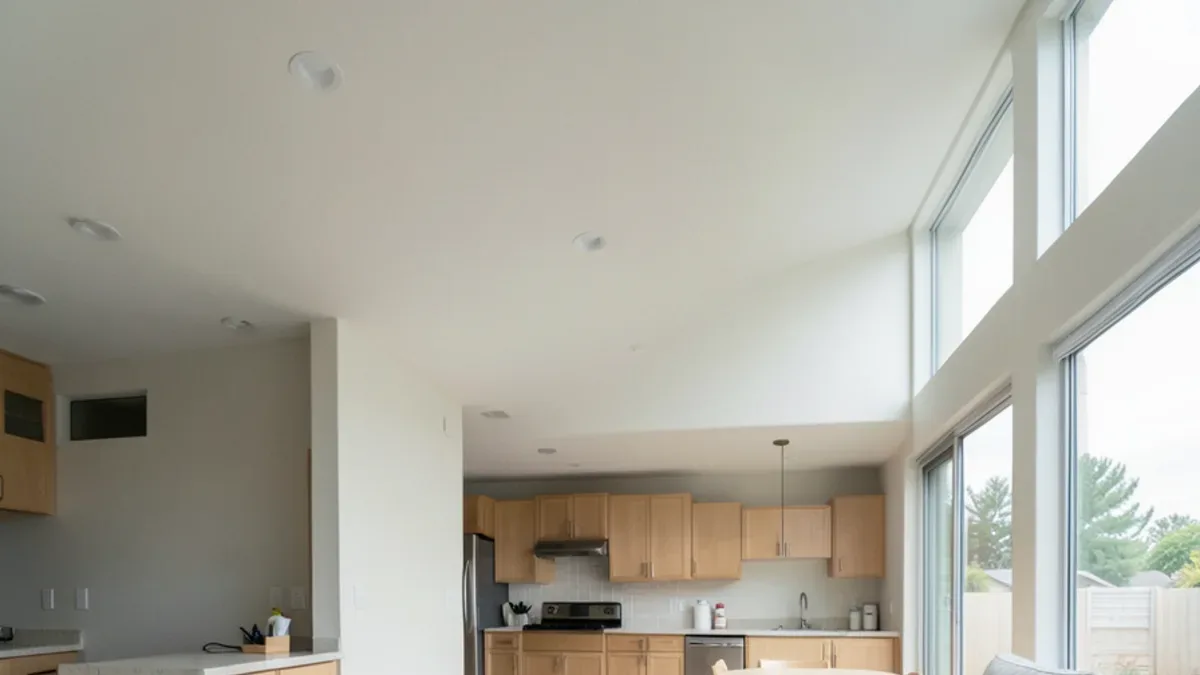
Engineered wood flooring, layer by layer
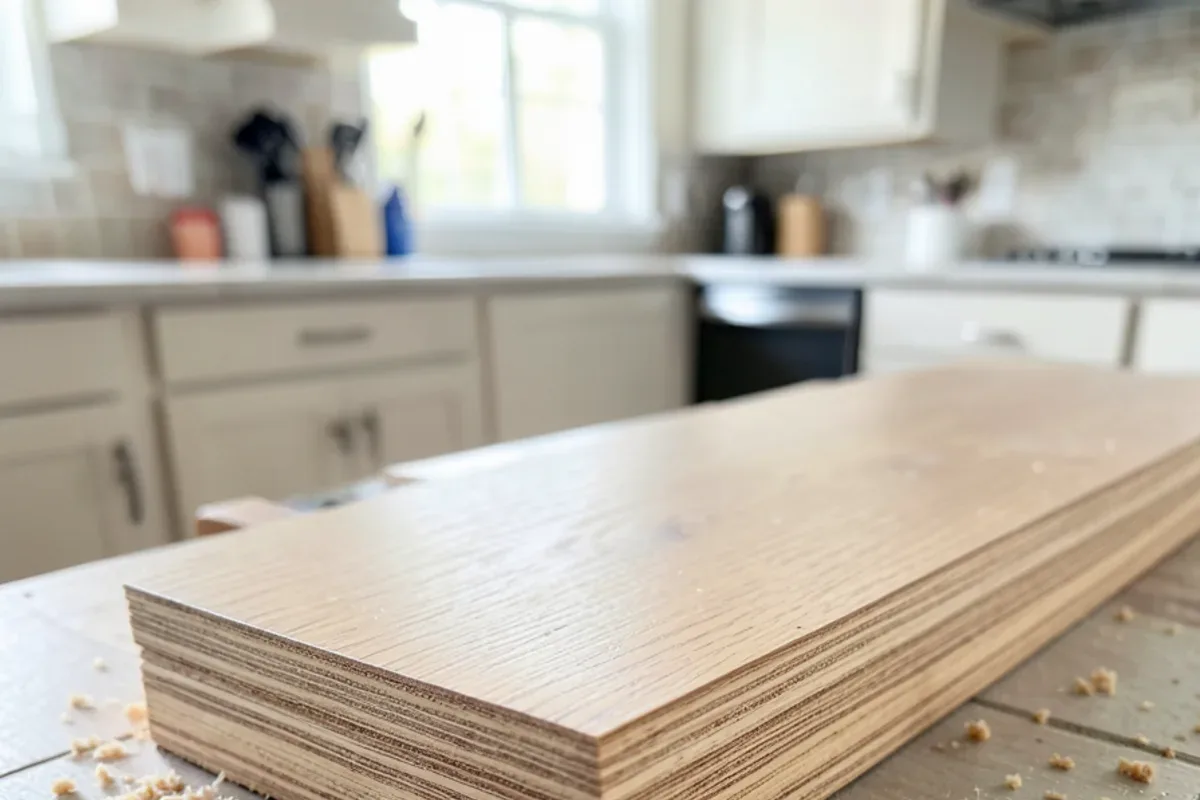
From the top, an engineered plank looks and feels like any other wood floor. The difference is underneath. Instead of one solid piece of timber, the board is built from layers whose grain runs in different directions, so seasonal movement in one layer is held in check by the next.
- Wear layer. The real hardwood surface, from thin veneers to several millimeters thick. This is what you see, walk on and, if it is thick enough, sand later.
- Core. Either multi-ply plywood or a high-density fiberboard. Plywood cores are generally more tolerant of moisture swings; fiberboard cores can be very flat and stable.
- Backing layer. A balancing ply on the bottom that keeps the board from bowing.
- Edge profile. Tongue-and-groove for nailing or gluing, or a click-lock edge for floating installations.
- Finish. Almost always factory-applied, often with a matte or brushed surface that hides wear.
Engineered vs solid hardwood: which suits your house?
Both are real wood floors. The choice usually comes down to the foundation, the width you want and how many times you expect to refinish. The solid hardwood flooring page covers the other side in detail.
| Question | Engineered | Solid |
|---|---|---|
| Over a concrete slab? | Yes, glued or floating with the right underlayment | Only over an added plywood subfloor |
| Wide planks of 7 inches and up? | Stays flatter through dry and humid seasons | More prone to gaps and cupping |
| Refinishing | Depends on wear layer; thin veneers cannot be sanded | Can be sanded several times over its life |
| Condo sound rules | Floating and glue-down systems pair with sound underlayment | Nailed floors need a subfloor and acoustic layer |
| Installation speed | Often faster, especially click-lock | Slower, plus sanding if unfinished |
Our article on engineered vs. solid hardwood in Southern California goes further into how each handles local humidity patterns.
Questions about engineered hardwood?
Call with your measurements and photos, or stop by Sherman Way to compare cabinets, counters, tile and flooring side by side.
- Showroom at 13259 Sherman Way, North Hollywood
- 20 Google reviews
- BBB rating A+
- Cabinets, counters, tile & floors in one place
Putting engineered hardwood over concrete in slab-built Valley homes
Thousands of post-war houses across the San Fernando Valley were built slab-on-grade, and many newer homes in Santa Clarita and Simi Valley were too. Concrete holds moisture and can release it for years, so slab work follows a set order.
Remove the old floor down to bare concrete
Carpet tack strip, old vinyl and adhesive residue come up. In pre-1980s homes, old vinyl tile and black mastic should be tested before removal because some contained asbestos.
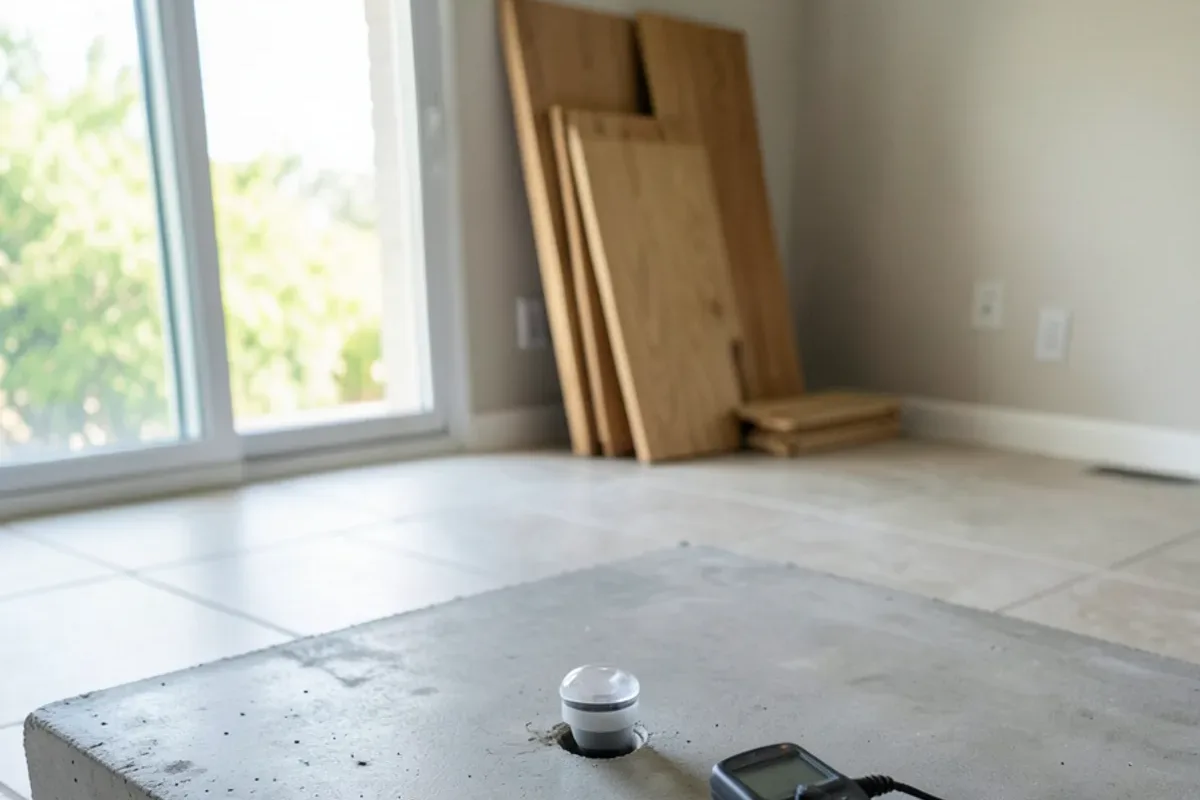
Test slab moisture
A calcium chloride test or in-slab relative humidity probes tell the installer whether the concrete is dry enough for the chosen product and adhesive.
Flatten the slab
High spots are ground down and low spots filled with a leveling compound, to the flatness tolerance in the product’s instructions.
Add a vapor barrier or moisture-control adhesive
Floating floors go over a vapor barrier underlayment; glue-down floors use an adhesive with a moisture rating suited to the test results.
Acclimate and lay out
Planks rest in the home as directed, then rows are planned so the last row is not a sliver against the wall.
Install and finish the edges
Expansion gaps are left at walls and hidden with baseboard or quarter round; transitions meet tile and carpet at doorways.
Floating engineered floor or glue-down?
A floating floor clicks together over an underlayment and is not attached to the slab. It goes in quickly, needs no adhesive, and can be lifted plank by plank if something under it ever needs attention. The trade-off is a slightly hollower sound and feel, which a good underlayment reduces.
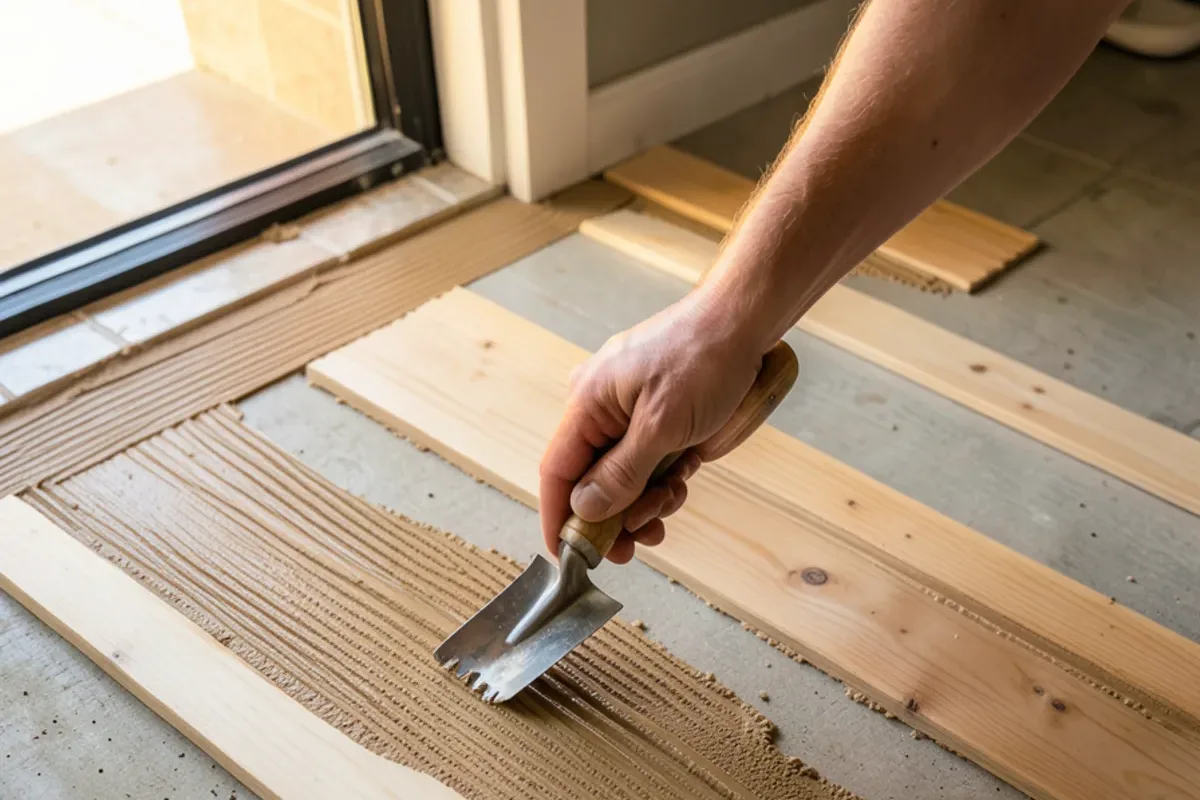
Glue-down engineered floors feel more solid and quieter underfoot, closer to a nailed floor, and they suit large open rooms where a floating floor might need extra expansion joints. They take longer, cost more in adhesive, and depend heavily on that slab moisture test. Over the raised wood subfloors found in many older and hillside homes, engineered boards can also be stapled or nailed just like solid wood.
Wide plank engineered boards for open floor plans
The current preference for long, wide, pale planks plays to engineered construction. A 7- to 9-inch board in solid oak can move enough in a dry Valley summer to open noticeable gaps; the cross-layered core keeps an engineered plank of the same width much flatter. That makes engineered wood a practical way to run one continuous floor from the entry through the living room and dining area.
Longer planks also mean fewer end joints, which reads as a calmer floor in big rooms. They need a flatter subfloor, though, because a long board bridges small dips instead of following them, so leveling work tends to matter more with wide plank products.
What sets engineered hardwood cost in Los Angeles?
- Wear layer thickness: thicker layers cost more but allow future sanding, which extends the floor’s life.
- Species and grade: white oak and exotic species usually cost more than common grades of red oak or maple.
- Core type: multi-ply plywood cores often sit above fiberboard cores in price.
- Board size and texture: wide, long, wire-brushed planks command a premium.
- Installation method: glue-down requires adhesive and more labor time than a floating install.
- Slab preparation: grinding, leveling compound and moisture mitigation can be a large share of a slab job.
Ask any quote to separate material, slab prep and installation labor, so you can see where the differences between bids come from.
Does an engineered wood floor need a permit, and who should install it?
Replacing one floor covering with another is normally cosmetic, so LADBS in the City of Los Angeles and most neighboring building departments don’t require a permit for it alone. Cutting out rotted subfloor framing or moving plumbing changes that. CSLB licenses floor installers under the C-15 (flooring and floor covering) classification, with framing repairs going to a B general building contractor; check numbers at cslb.ca.gov. Condo boards often want the underlayment’s sound rating in writing first.
Why shop for engineered floors at Adcom
- Wood, vinyl and laminate in one room. Compare an engineered plank directly with the wood-look alternatives before deciding which is right for a slab.
- Solid and exotic hardwood on hand too, so you can see whether the extra cost of solid wood buys anything for your house.
- Installation on request. Choose the floor, then have the material you selected installed, or take it to your own installer.
- Cabinets and counters nearby. Hold a plank against a cabinet door and a countertop sample in the same visit.
Engineered floors suit many places the showroom serves: slab-built tracts in Santa Clarita and Simi Valley, condos and apartments in Santa Monica where sound rules apply, and Valley neighborhoods within the City of Los Angeles.
What Google reviewers say
Quoted from public Google reviews. Adcom Kitchen & Flooring has 20 Google reviews; read them all on Google.
“Tony and his guys are awesome. We purchased our flooring and installation from him, and couldn’t be happier with the results. He helped us find a style that we would love, and the installation was well done.”
“Tony is the best. Great Value, and service. Tony stands behind his products. His granite installers went above and beyond and handcrafted a part of the counter top that required extra effort.”
“Great selection great service. Tony Jr. Was great he beat everyones prices and he stands by his word. Very easy to work with. If he doesn't have the tiles not to worry he'll find it and beat any price within reason.”
Engineered Hardwood around Los Angeles and Ventura counties
- Engineered Hardwood in Santa ClaritaSlab tracts in Valencia and Saugus get real wood after a moisture test, usually as engineered planks.
- Engineered Hardwood in Simi Valley1960s-80s slab houses along SR-118 often swap carpet for glue-down engineered oak.
- Engineered Hardwood in MoorparkHot inland summers stress solid boards, so a plywood-core engineered plank holds its seams better in these newer tracts.
- Engineered Hardwood in CastaicHeat near Castaic Lake makes acclimation and a stable core matter more than species.
- Engineered Hardwood in Santa MonicaCondo boards here commonly ask for an underlayment sound rating, which floating or glue-down engineered systems can be built to meet.
- Engineered Hardwood in Marina del ReyHarbor condos with HOA flooring rules and damp marine air suit engineered boards over solid wood planks.
- Engineered Hardwood in Thousand Oaks1960s-80s planned neighborhoods where wide engineered planks run through living and dining rooms.
- Engineered Hardwood in BurbankBungalows on raised subfloors can take nailed engineered boards to match oak elsewhere.
- Engineered Hardwood in Los AngelesValley slab homes near the showroom need grinding and leveling before long planks lie flat.
- Engineered Hardwood in FillmoreHot Santa Clara River Valley summers make engineered hardwood a steadier choice than solid boards in Fillmore's early-1900s homes.
Engineered Hardwood: common questions
Can engineered hardwood go over a concrete slab?
Yes, that is one of its main advantages. It can float over a vapor barrier underlayment or be glued down with a moisture-rated adhesive, after the slab passes a moisture test and is leveled. Slab-on-grade construction is common in post-war San Fernando Valley tracts, which is why many homeowners there pick engineered wood instead of solid boards.
Can engineered floors be refinished?
It depends on the wear layer. Thicker real-wood layers can be lightly sanded and refinished, sometimes more than once, while thin veneers can only be screened and recoated. Wire-brushed and hand-scraped textures are harder to sand evenly. If refinishing in 15 or 20 years matters to you, ask for the wear layer thickness of each product you compare.
Is engineered hardwood better for condos?
Often, yes. It can be installed floating or glued directly to a concrete deck, both of which pair with acoustic underlayments, and it avoids nailing into a shared structure. Most Los Angeles condo associations require approval and a minimum sound rating before hard flooring goes in, so get the HOA’s written requirements before choosing a product.
How thick should the wear layer be?
For a floor you hope to refinish at least once, look for a wear layer of roughly 2 millimeters or more, and thicker if you want multiple refinishes. Thin veneers are fine for a rental or a room you expect to change within a decade. Remember that a durable factory finish protects the wood far more day to day than wear layer thickness does.
Does engineered hardwood scratch more easily than solid?
No. Scratch resistance comes from the species and the finish, not from what is under the surface. An engineered white oak plank with a tough factory finish resists scratches about the same as a solid white oak board with a similar coating. A matte or brushed texture hides marks from pets and chair legs better than a high gloss in either type.
Can engineered hardwood handle a bathroom?
It is not a good fit for full bathrooms with showers or tubs, where splashes, steam and standing water can swell the edges. A powder room with no bathing may be acceptable with careful sealing at the toilet and doorway. For wet rooms, waterproof vinyl, porcelain tile or sealed natural stone are safer choices.
Request a engineered hardwood quote
Calling is fastest: (818) 765-9955. Prefer to write? Send the basics and the showroom will get back to you.
Related services
Helpful guides
Areas we serve
Ready to see it in person?
Bring your photos and measurements to the Sherman Way showroom, or call and talk it through first.
Adcom Kitchen & Flooring · 13259 Sherman Way, North Hollywood, CA 91605 · Get directions · Showroom hours
- Showroom at 13259 Sherman Way, North Hollywood
- 20 Google reviews
- BBB rating A+
- Cabinets, counters, tile & floors in one place