
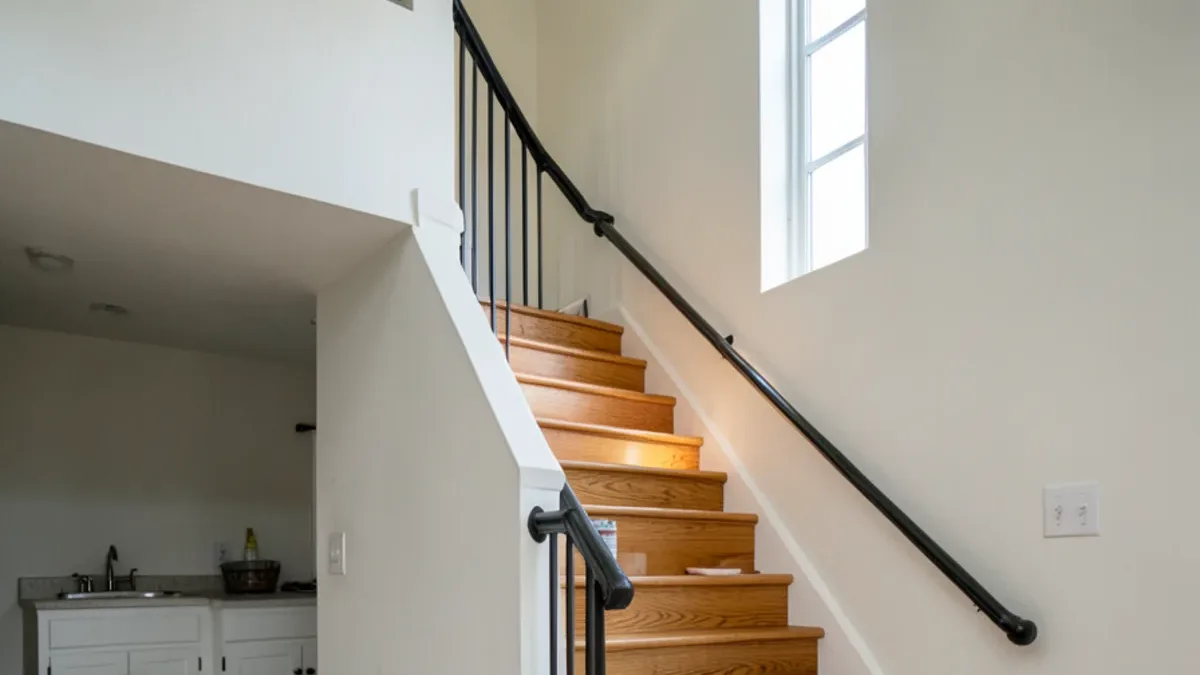
Stair treads, risers and nosings: the parts you are choosing
A staircase is not just floor material laid on steps. Each step has several parts, and each part is chosen separately.
- Treads are the horizontal surfaces you walk on. They take the heaviest wear in the house, concentrated at the front edge.
- Risers are the vertical faces between treads. They take scuffs from toes but little direct wear.
- Nosings are the rounded or squared front edges of the treads. They have to be strong, secure and matched to the floor.
- Landings are flat sections, usually covered with the same floor as the adjacent rooms.
- Skirt boards and stringers are the trim along the sides, often painted, which frame the finished look.
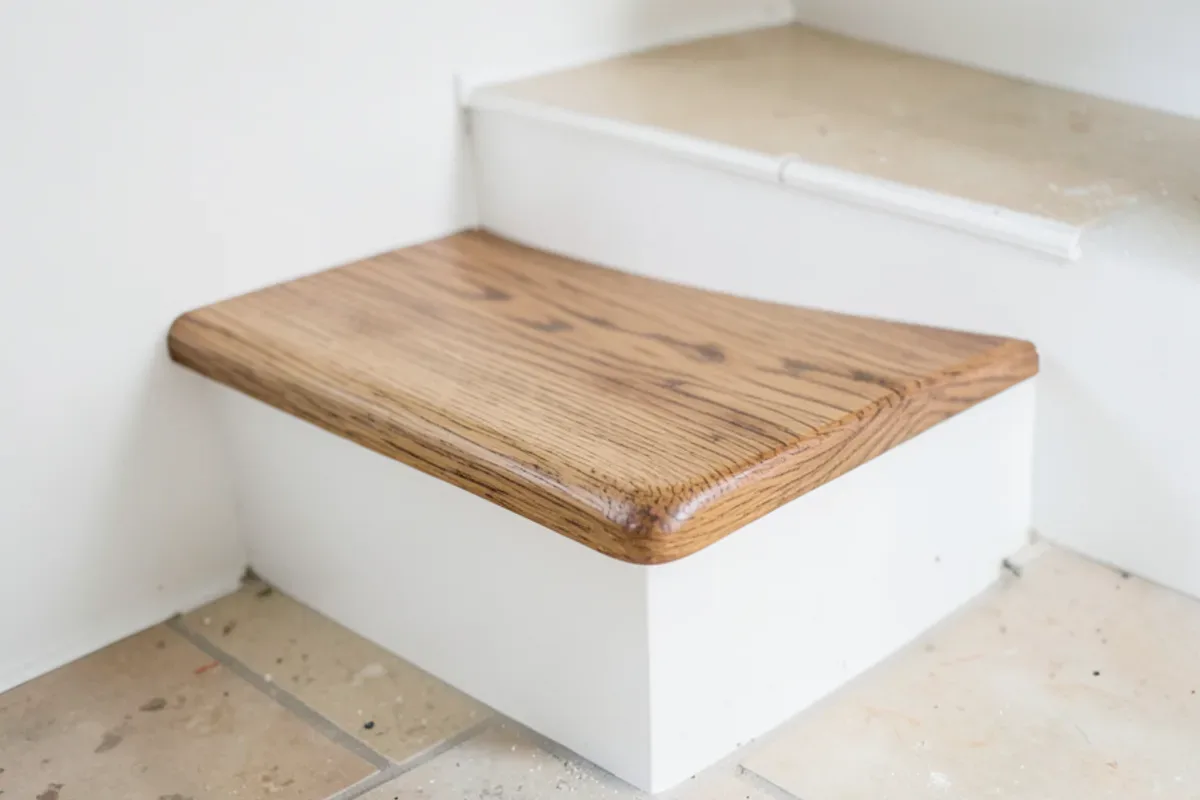
Hardwood stairs: solid treads and retrofit options
Solid hardwood stairs feel substantial and can be sanded and refinished many times. There are two common ways to get them.
| Approach | How it works | Best for | Trade-offs |
|---|---|---|---|
| Full replacement treads | Old treads are cut out and new solid treads installed on the existing stringers | Stairs with damaged or particleboard treads | More labor; best when stringers are accessible |
| Retrofit treads | Thinner hardwood treads with an integral nosing are glued and fastened over trimmed existing treads | Carpeted stairs with sound structure | Changes top and bottom step heights slightly |
| Refinish existing treads | Original hardwood is sanded and coated | Stairs that already have good wood | Only possible if the wood is solid and thick enough |
Stair treads in red or white oak match the most common floors; harder species and exotic woods are available for a darker or more striking stair. Prefinished treads save days of sanding and finish fumes in an occupied house.
Questions about stair flooring?
Call with your measurements and photos, or stop by Sherman Way to compare cabinets, counters, tile and flooring side by side.
- Showroom at 13259 Sherman Way, North Hollywood
- 20 Google reviews
- BBB rating A+
- Cabinets, counters, tile & floors in one place
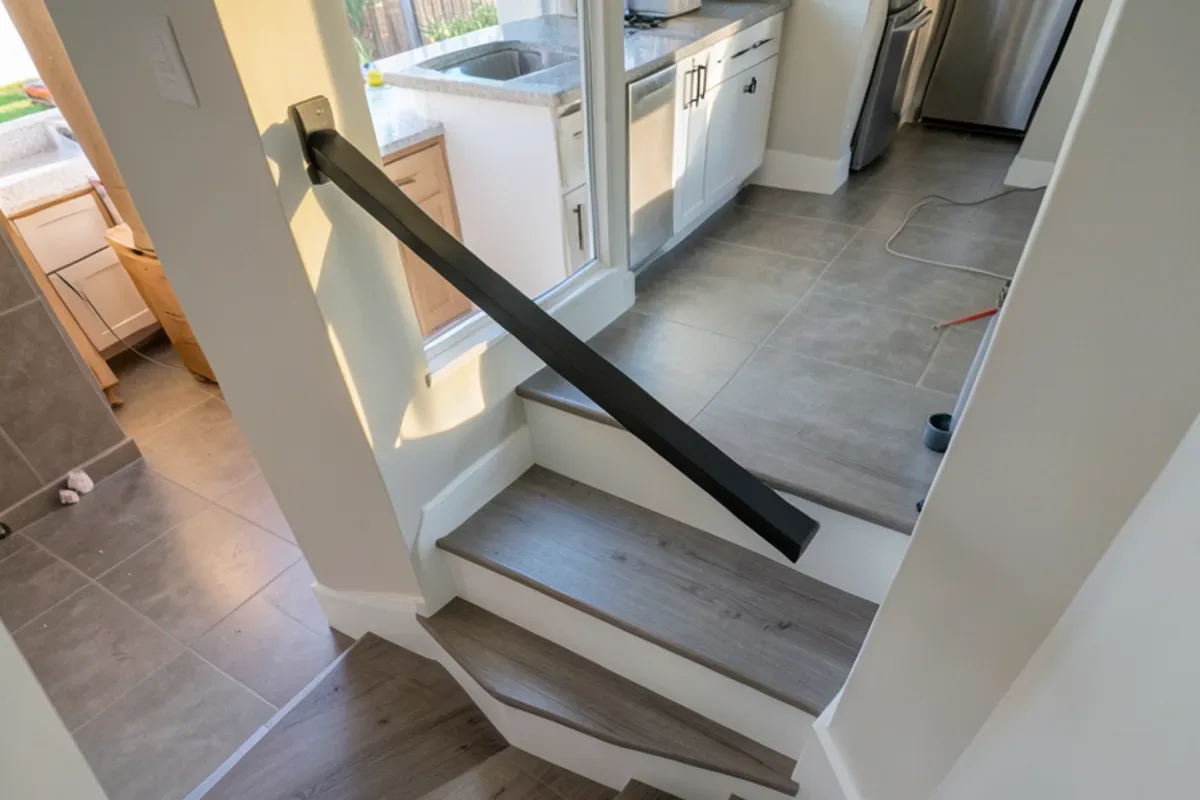
Vinyl stair nosing and LVP-covered steps
When a house gets new waterproof vinyl plank, the stairs can be covered to match. Vinyl planks are cut and glued to each tread and riser, and a matching stair nosing is fitted at the front edge. Two nosing styles are common: an overlap nosing that sits on the tread edge, and a flush nosing that sits level with the plank on the tread for a cleaner line.
- Always glue on stairs. Floating vinyl cannot float on a step; planks and nosings are adhered and often mechanically fastened.
- The nosing must be solid. A rounded old tread edge is usually trimmed square so the nosing sits fully supported.
- Color match: buy nosings in the same product line and color as the floor, at the same time, to avoid dye lot differences.
- Grip: check the texture of the plank surface; a matte, embossed finish is safer underfoot than a smooth one.
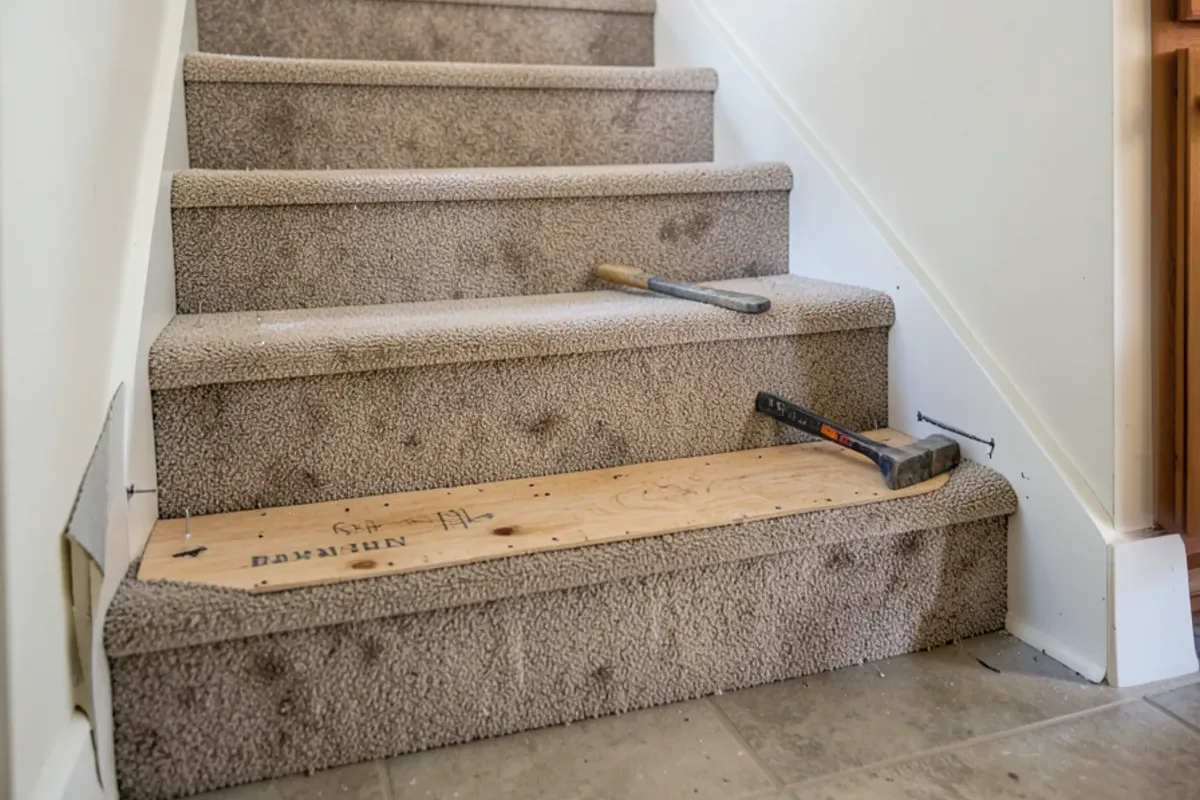
What happens when you go from carpet to hardwood stairs?
Pulling up stair carpet is one of the most common stair remodels, and what is underneath decides the plan. In some older Los Angeles homes, there is finished oak under the carpet that only needs cleanup and refinishing. In many tract homes from the 1970s onward, the treads are rough plywood or particleboard that were never meant to be seen, and they must be covered or replaced.
- Lift the carpet at one tread and riser first to see what is there.
- Count the tack strip and staple holes; they will need filling if the wood is to stay visible.
- Check whether the tread overhang has been cut flush, which rules out simple refinishing.
- Decide what happens to the landing and upper hallway, since they often need a matching floor too.
- Look at the handrail and balusters; new treads can make old spindles look dated.
Signs a staircase needs more than new covering
- A nosing that moves or clicks underfoot, meaning the fasteners or glue have let go.
- Squeaks on several treads, often from loose treads rubbing the stringer.
- Finish worn to bare wood at the front edge of every step while the sides still look new.
Stair risers: painted, wood-matched or tiled
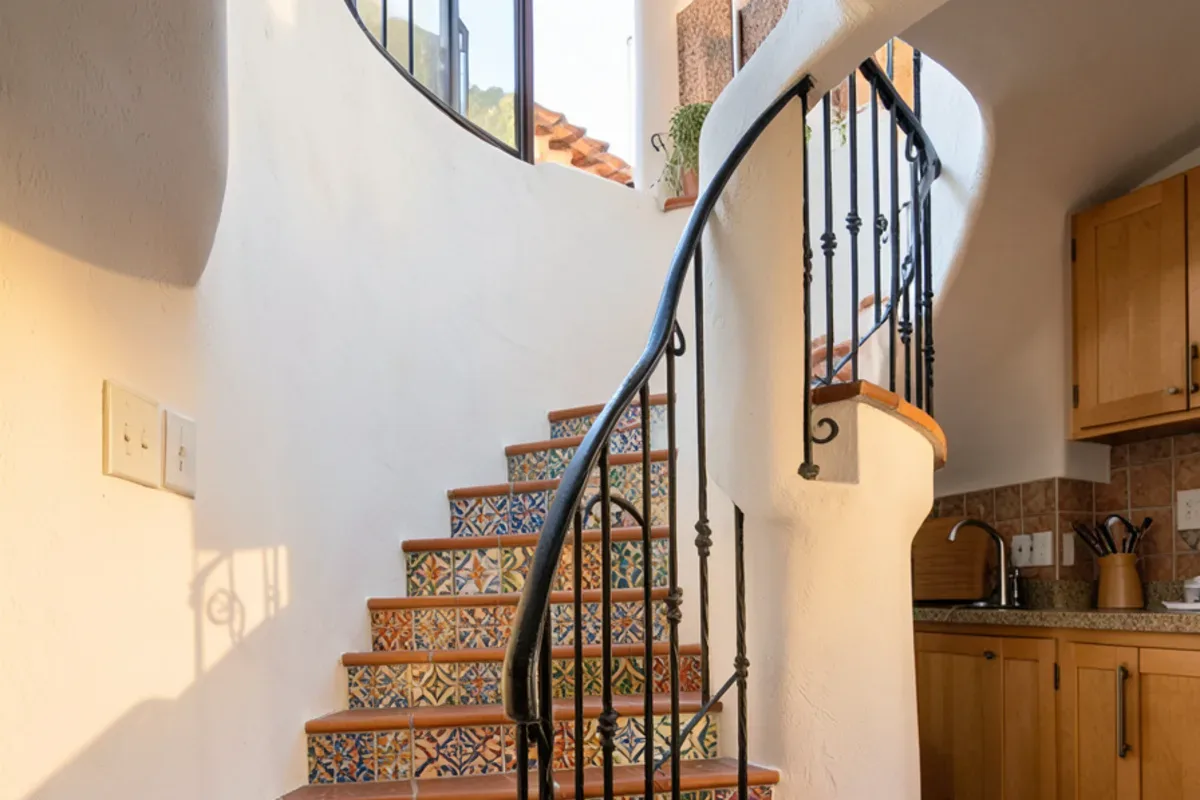
Risers are an easy place to add contrast. White painted risers with wood treads are a classic look in older homes and are simple to touch up. Wood risers that match the treads give a warmer, continuous look. In Spanish-style houses, decorative tile on the risers of an entry stair is a long-standing tradition.
New treads and nosings on the existing structure count as finish work. Rebuilding stringers, changing the layout or replacing a railing normally needs a permit from LADBS in the City of LA or the local building department. CSLB’s C-15 license covers floor coverings and C-6 covers finish carpentry such as treads and rails; verify either on cslb.ca.gov.
Planning stair flooring in Los Angeles homes: how a stair remodel comes together
Photograph and count
Count treads, risers and landings, note any open sides, curves or pie-shaped winder steps, and photograph them for the showroom visit.
Match the floors above and below
Choose stair material together with the flooring at the landing and both floors, so nosings and colors match.
Decide treads, risers and nosing style
Pick the tread finish, a riser color or material, and the nosing profile in the same visit.
Measure each step
Older stairs are rarely identical, so each tread is measured individually before ordering custom pieces.
Install from the top down or bottom up
Old coverings come off, the structure is checked, and new parts go on with adhesive and fasteners. Installation is available on request.
Finish and cure
Allow adhesives and any site-applied finish to cure before heavy use; ask how long before you can carry furniture up.
What makes one staircase cost more than another?
- Number of steps and landings: stairs are typically priced per step rather than per square foot.
- Material: solid hardwood treads cost more than vinyl or carpet; exotic species more again.
- Open sides and returns: a tread exposed on one side needs a finished return end, which adds labor.
- Winders and curves: pie-shaped steps are cut individually and take longer.
- Removal and prep: old carpet and staples, trimming nosings and leveling treads.
- Railings: new balusters or handrails are a separate trade and a separate cost.
Why plan your stairs with the rest of the floor at Adcom?
- The floor and the stairs from one selection. Hardwood, waterproof vinyl and carpet are all on display, so nosings and colors match the main floor.
- Exotic and domestic wood for treads. Oak alongside imported species for a darker or more distinctive stair.
- Installation on request, for buyers who want the stairs done with the main floor.
- Tile for risers in the same building, for Spanish-style or decorative stairs.
Two-story homes in Santa Clarita and Stevenson Ranch, hillside split-levels in Glendale, and larger homes in Calabasas all bring stair projects to the showroom.
What Google reviewers say
Quoted from public Google reviews. Adcom Kitchen & Flooring has 20 Google reviews; read them all on Google.
“Tony and his guys are awesome. We purchased our flooring and installation from him, and couldn’t be happier with the results. He helped us find a style that we would love, and the installation was well done.”
“Tony is the best. Great Value, and service. Tony stands behind his products. His granite installers went above and beyond and handcrafted a part of the counter top that required extra effort.”
“Great selection great service. Tony Jr. Was great he beat everyones prices and he stands by his word. Very easy to work with. If he doesn't have the tiles not to worry he'll find it and beat any price within reason.”
Stair Flooring around Los Angeles and Ventura counties
- Stair Flooring in Hermosa BeachNarrow-lot walk-street homes spread living space over several levels, so stairs see heavy traffic.
- Stair Flooring in Redondo BeachTownhomes here often switch carpeted stairs to vinyl plank with flush nosings matching the main floor.
- Stair Flooring in Manhattan BeachRebuilt multi-level homes on small lots often specify solid oak treads to match wide-plank floors.
- Stair Flooring in Diamond BarHillside builder homes from the 1960s-80s often hide plywood treads under worn stair carpet.
- Stair Flooring in Stevenson Ranch1990s two-stories with curved or winder stairs where pie-shaped steps are measured one by one.
- Stair Flooring in Santa ClaritaTract two-stories in Valencia and Saugus commonly pull stair carpet and cover the treads in hardwood or vinyl.
- Stair Flooring in Glendale1920s Spanish-style homes suit tiled risers; hillside split-levels need short flights matched to two floors.
- Stair Flooring in CalabasasOpen-sided stairs in larger planned-community homes need finished return ends on every exposed tread.
- Stair Flooring in Hacienda HeightsSplit-level homes in Hacienda Heights have short flights between levels, so stair treads and nosings must match the new main-floor planks.
Stair Flooring: common questions
Can vinyl plank be installed on stairs?
Yes. Vinyl planks are cut to fit each tread and riser and glued in place, with a matching stair nosing on the front edge. Floating installation is not used on stairs. Choose nosings from the same product line as your floor, buy them in the same order, and check that the plank surface has enough texture to be safe underfoot.
How are stair nosings matched to the floor?
Most hardwood, engineered and vinyl lines offer nosings made to match their floor, in the same color and finish, which is the most reliable match. For solid wood floors finished on site, nosings and treads can be stained along with the floor. Order nosings together with the flooring so dye lots match, and confirm the nosing style suits the step edge.
Is it worth replacing stair carpet with hardwood?
Often, if the rest of the house is getting hard flooring. Hardwood stairs are easier to keep clean, don’t trap pet hair and allergens, and look continuous with a new floor. They are louder and can be slippery in socks, so many owners add a runner. Plan for the extra cost of treads and finished return ends on open-sided stairs.
How long does a stair flooring job take?
A typical straight flight of 12 to 15 steps covered in vinyl or carpet is often completed in a day. Replacing or retrofitting hardwood treads usually takes longer, and site-finished treads add drying time between coats. Winder steps, open sides and landings add time. Ask about timing when ordering any custom treads.
Can old stair treads be refinished instead of replaced?
If they are solid hardwood with enough thickness and no deep damage, yes. Sanding and refinishing old oak treads, then painting the risers, is a cost-effective update in many older Los Angeles homes. Particleboard or plywood treads under carpet cannot be refinished and need retrofit treads, vinyl or new carpet instead.
Are winder or curved stairs harder to cover?
Yes, because every pie-shaped step is a different size and angle, so each tread is templated and cut individually. Carpet handles curves most easily, while hardwood and vinyl take more time and produce more waste. Expect a higher per-step cost for winders, and measure each one carefully before ordering material.
Request a stair flooring quote
Calling is fastest: (818) 765-9955. Prefer to write? Send the basics and the showroom will get back to you.
Related services
Helpful guides
Areas we serve
Ready to see it in person?
Bring your photos and measurements to the Sherman Way showroom, or call and talk it through first.
Adcom Kitchen & Flooring · 13259 Sherman Way, North Hollywood, CA 91605 · Get directions · Showroom hours
- Showroom at 13259 Sherman Way, North Hollywood
- 20 Google reviews
- BBB rating A+
- Cabinets, counters, tile & floors in one place