
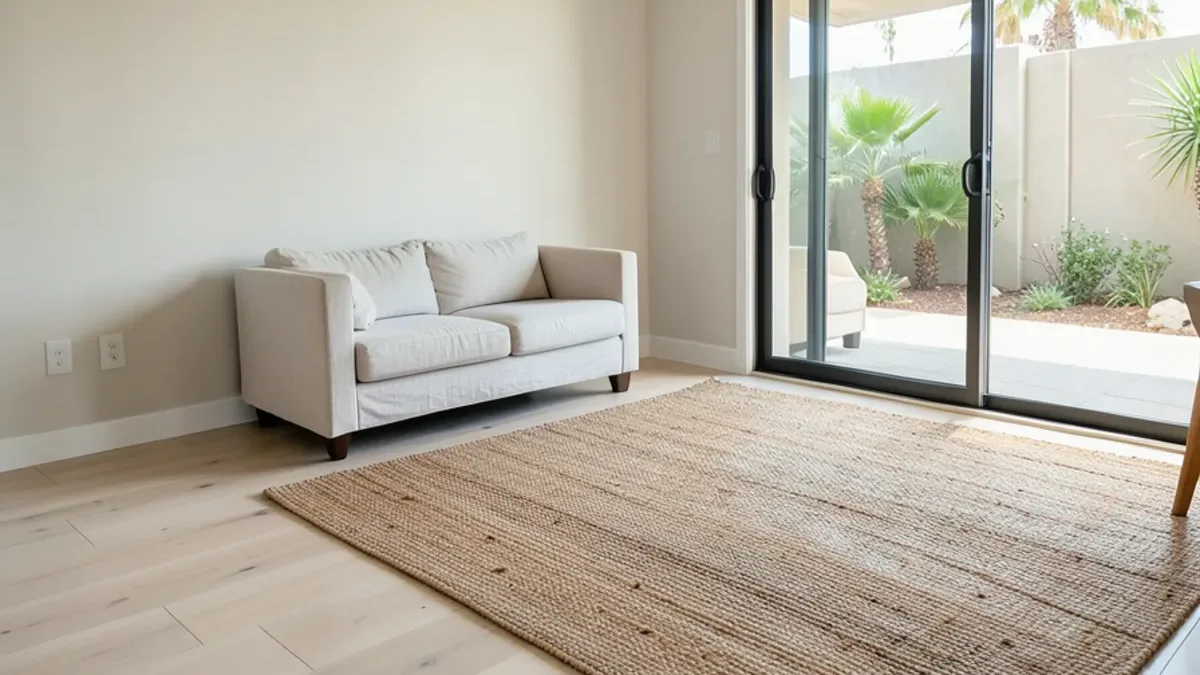
What separates engineered from solid wood flooring?
The surface you walk on is the same species in both cases. The difference is what sits underneath.
- Solid hardwood is one piece of wood through its full thickness, commonly about three-quarters of an inch, milled with a tongue and groove.
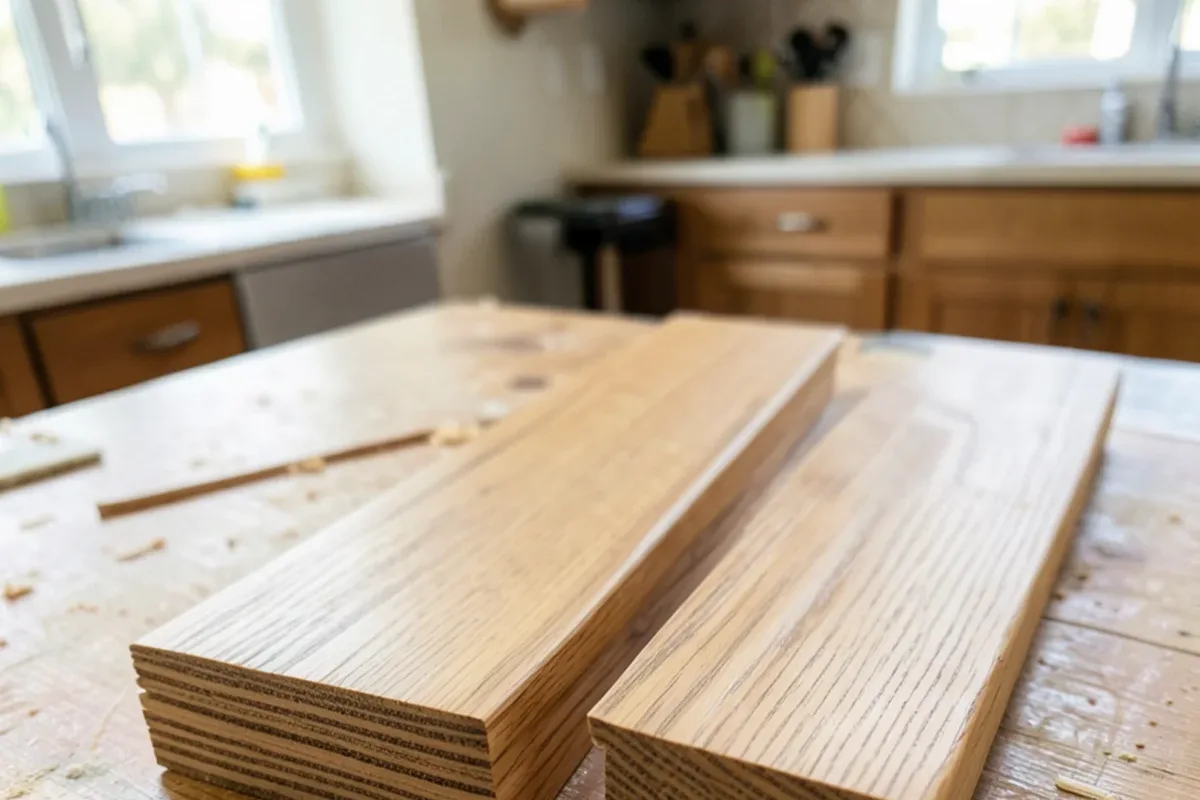
- Engineered hardwood has a top layer of real hardwood, called the wear layer, bonded to a core of cross-laminated plywood or another stable wood-based core. The layers run in different directions, which limits how much the board can swell and shrink.
- Wear layer thickness on engineered boards varies widely between products; it decides how many times the floor can be sanded later.
Wood gains and loses moisture with the air around it. A solid plank moves mainly across its width, which is why wide solid planks are more likely to gap in dry weather and cup in damp weather. Engineered construction resists that movement, so wide, long boards are far more practical in engineered form.
Want to see the options in person?
The Sherman Way showroom has cabinets, counters, tile and flooring on display side by side. Call before you come and say what you're working on.
- Showroom at 13259 Sherman Way, North Hollywood
- 20 Google reviews
- BBB rating A+
- Cabinets, counters, tile & floors in one place
Engineered vs solid hardwood at a glance
| Question | Engineered hardwood | Solid hardwood |
|---|---|---|
| Over a concrete slab | Glue-down or floating; common choice | Not usually laid directly on slab; needs a wood subfloor system |
| Over a raised wood subfloor | Nail, staple, glue or float | Traditional nail-down; ideal |
| Wide planks (7 inches and up) | Stable and widely available | More prone to gapping and cupping |
| Seasonal humidity swings | Moves less | Moves more; acclimation is critical |
| Sanding and refinishing | Limited by wear layer; some boards allow one or more refinishes | Can be sanded several times over its life |
| Radiant floor heat | Many products are approved for it | Generally not recommended |
| Condos with sound rules | Pairs with acoustic underlayments | Harder to install on concrete decks |
| Prefinished options | Almost always prefinished | Available prefinished or site-finished |
Why do slab homes and condos usually point to engineered?
A large share of the San Fernando Valley and Santa Clarita Valley was built on concrete slabs, from post-war tracts to newer subdivisions. Nailing solid boards to concrete is not possible, and laying a plywood subfloor over the slab first raises the floor height, which affects doors, the dishwasher and transitions to tile. Engineered boards can be glued directly to a flat, moisture-tested slab or floated over a pad.
Condos raise a second issue: noise. Many buildings in Santa Monica and elsewhere along the Westside have HOA rules requiring a sound-rated underlayment under hard floors. Engineered boards work with those underlayments; solid planks over a concrete deck are far more involved. Get the HOA’s written requirement before picking a floor, because the board, the pad and the installation method all affect compliance.
Climate adds the third push. Inland communities such as Santa Clarita see very dry summer and autumn air, and Santa Ana winds can drop indoor humidity sharply for days. Near the ocean, the marine layer keeps humidity higher for much of the year. Engineered boards ride out those swings with less gapping and cupping, which is why engineered hardwood is the default recommendation for many SoCal rooms.
When is solid hardwood still the better buy?
Solid wood has not lost its place. It is a strong choice when:
- The house has a raised foundation with a sound plywood or board subfloor, as many pre-war bungalows and hillside homes do.
- You want to match or extend existing oak strip flooring in an older home, where solid boards can be woven into the original floor.
- You plan to stay for decades and want a floor that can be sanded down and refinished several times.
- You want a site-finished floor with a custom stain mixed on the job.
- Plank widths are moderate, such as traditional 2¼-inch to 5-inch boards, which handle humidity swings well.
Browse the full hardwood flooring range, including exotic species, if you are leaning toward solid wood for a raised-floor house.
How many times can each floor be refinished?
This is where the honest comparison lives. A solid three-quarter-inch floor has wood above the tongue that allows multiple full sandings over many decades. An engineered floor can only be sanded as far as its wear layer allows: a thin layer may allow none, while a thick layer may allow one or more. Between full refinishes, either floor can be screened and recoated to refresh the finish without removing wood.
In practice, many busy households never fully sand a floor more than once or twice, so a thick-wear-layer engineered board often matches the realistic life of a solid floor. Ask for the wear layer measurement on every engineered sample you consider.
What an engineered label leaves out
Two engineered boards can share a species, a width and a price tag and still behave very differently for twenty years. The spec sheet usually lists the wear layer; it rarely explains how that layer was cut or what the core is made of, and those two details say more about the floor than the color name.
| Detail | Options you will see | Why it matters |
|---|---|---|
| How the top layer is cut | Rotary-peeled, sliced, or sawn | Rotary peeling unrolls the log and can give a wide, plywood-like grain; sliced and sawn faces look and age most like solid boards |
| Core | Multi-ply plywood, lumber core, or fiberboard core | More plies running crosswise generally mean a flatter, more stable board; fiberboard cores dislike standing water |
| Factory finish | UV-cured urethane, often with aluminum oxide | Very tough, but harder to recoat; the surface needs special abrading or a bonding product before a fresh coat will stick |
| Edge | Micro-bevel, beveled or square | Bevels hide small height differences; deep bevels collect grit in kitchens |
Floating or glued: an honest trade-off
Over a Valley slab, engineered boards are either glued down or floated over a pad. Floating is faster, avoids adhesive and can be easier to lift if a leak ever soaks it, but it sounds and feels slightly hollow underfoot. Glue-down feels most like a traditional wood floor, though replacing a damaged board takes more work. Either way the slab gets a moisture test first, because the adhesive or the pad only performs within the maker’s stated limits.
Three things to check on a sample board
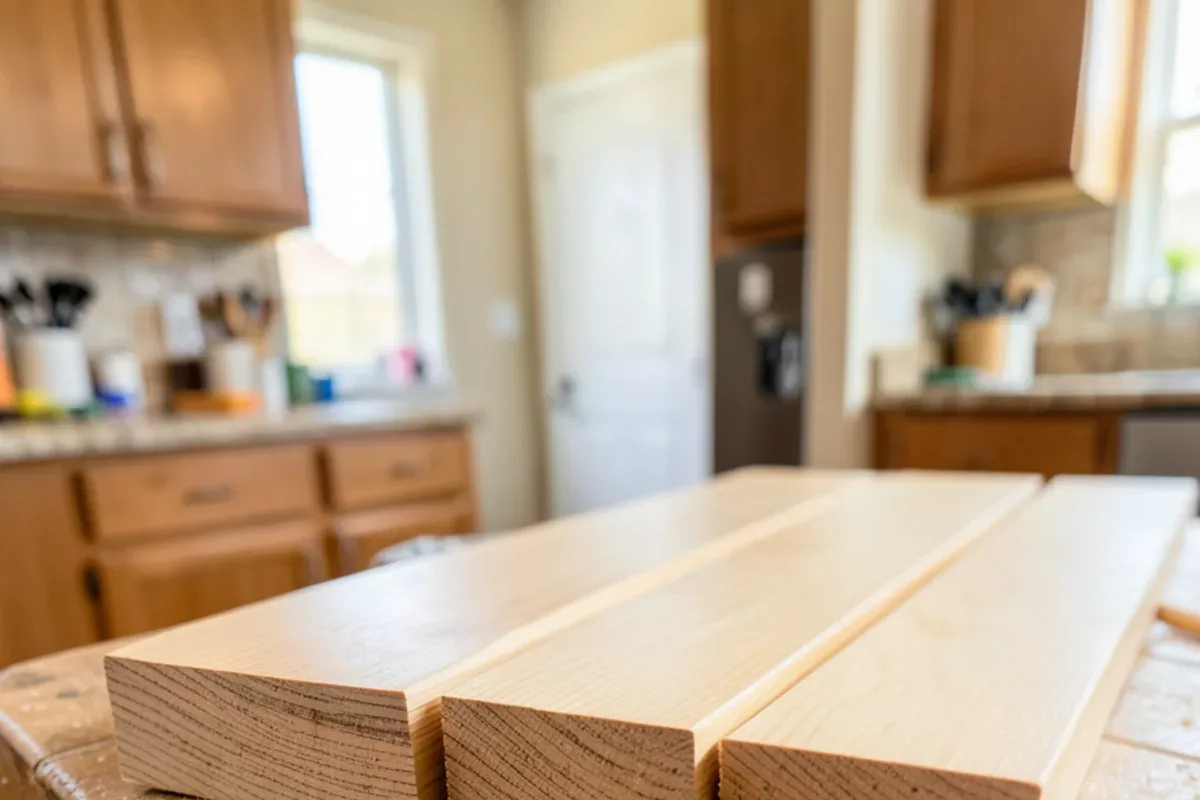
Wood samples in a showroom can be flipped, measured and compared in ways a website cannot show. Before falling for a color, look at these:
- Turn it over and look at the edge. On engineered boards you can see the wear layer and core. A thicker top layer and a multi-ply core are signs of a board that will stay flat.
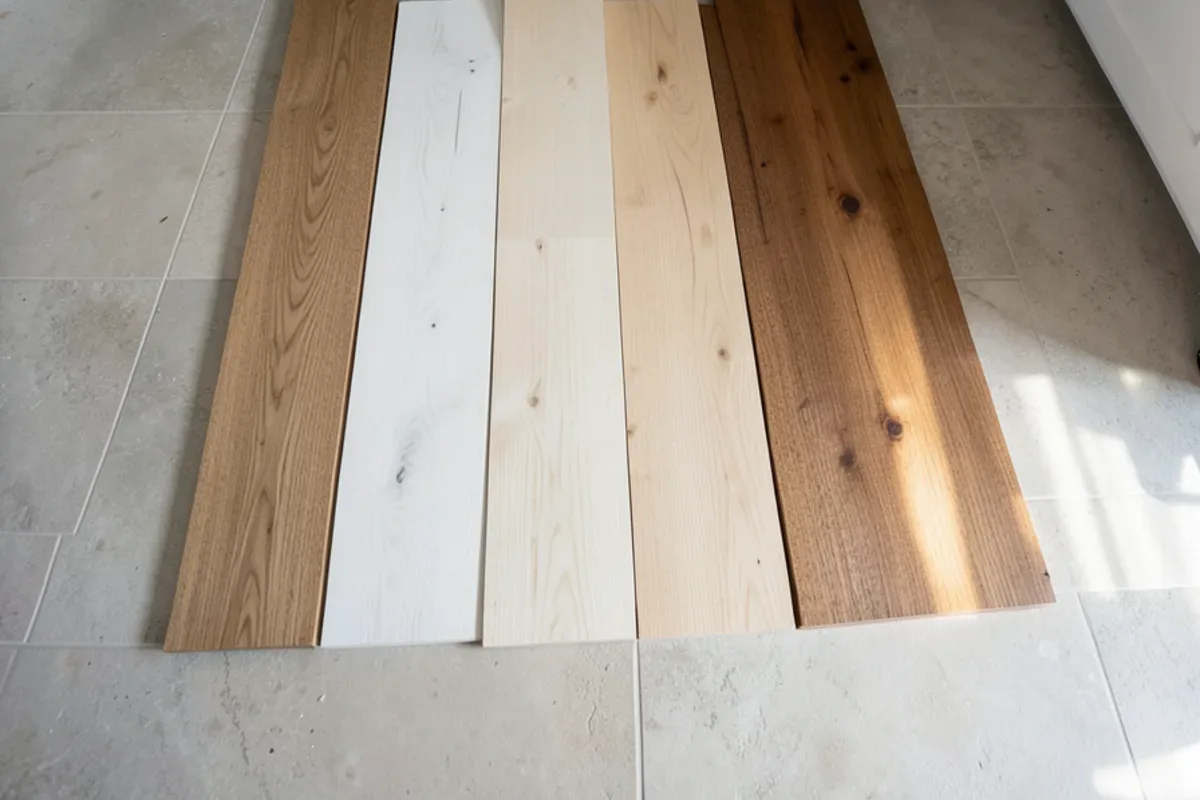
- Lay several boards together. Wood varies by nature. Five or six boards side by side show the real range of color and knots far better than one perfect plank.
- Hold it next to your cabinets and counter. Oak with a warm finish can look orange beside cool gray cabinets; a natural or white-washed finish may sit better.
Having hardwood next to tile, vinyl and laminate in one room also makes it easy to price a hybrid plan, such as engineered wood in living areas and tile in the kitchen and baths.
Choosing your wood floor at Adcom
Note whether your home sits on a slab or a raised foundation, measure the rooms, and bring a cabinet door or counter sample if you have one. Compare engineered hardwood and solid hardwood side by side, and ask about flooring installation if you want the boards you buy put down for you.
Quick answers
Is engineered hardwood real wood?
Yes. The surface layer is real hardwood of the species named on the box, such as oak, hickory or walnut, and it is sanded, stained and finished like any wood floor. Only the core is built differently, using cross-laminated layers that keep the board stable. That is different from laminate, which uses a printed image of wood over a fiberboard core.
Can engineered wood go in a kitchen?
It can, with sensible precautions. A durable factory finish, a mat at the sink, prompt cleanup of spills and a check of the dishwasher and refrigerator lines all help. Engineered boards resist moisture movement better than solid wood, but neither likes standing water. In homes where leaks are a real worry, waterproof vinyl or tile in the kitchen is the safer choice.
Does engineered wood need acclimation like solid wood does?
Usually less, but it still needs a check. Cross-laminated cores move less, so many engineered products need only a short adjustment period, while solid boards may need longer. The reliable test is a moisture meter reading of the boards and subfloor against the maker’s range. In a Valley home during a dry spell, skipping that check is how gaps appear weeks later.
Do engineered floors work on second floors of older raised homes?
Usually very well. Engineered boards can be nailed or stapled to a wood subfloor just like solid wood, and their thinner profile can help where floor height is tight at stairs or doors. The installer should fix squeaks, check for flatness and screw down loose subfloor sections first, since the new floor will only be as stable as the structure below it.
Can a factory-finished engineered floor be recoated later?
Usually, yes, but it takes more preparation than a site-finished floor. Many factory finishes contain aluminum oxide and are so hard that a new coat will not bond without careful abrading or a special bonding product. Ask the flooring maker which recoat method it approves, and plan the refresh before wear reaches bare wood in busy paths like kitchen-to-patio routes.
Sources
- National Wood Flooring Association (NWFA) — Installation, acclimation and moisture guidelines for wood floors
- Wood Floors (NWFA consumer site) — Consumer information on solid and engineered wood flooring
- Contractors State License Board (CSLB) — License lookup for flooring contractors
About this guide
Written by the team at Adcom Kitchen & Flooring, a kitchen cabinet, countertop, tile and flooring showroom at 13259 Sherman Way in North Hollywood. Rules and figures from outside sources are attributed; confirm current requirements with your building department or the agency named.
Related services
Service areas
More on this topic: Flooring
Talk to the showroom before you buy
Call with your measurements and photos, or stop by Sherman Way to compare cabinets, counters, tile and flooring side by side.
Adcom Kitchen & Flooring · 13259 Sherman Way, North Hollywood, CA 91605 · Get directions · Showroom hours
- Showroom at 13259 Sherman Way, North Hollywood
- 20 Google reviews
- BBB rating A+
- Cabinets, counters, tile & floors in one place