
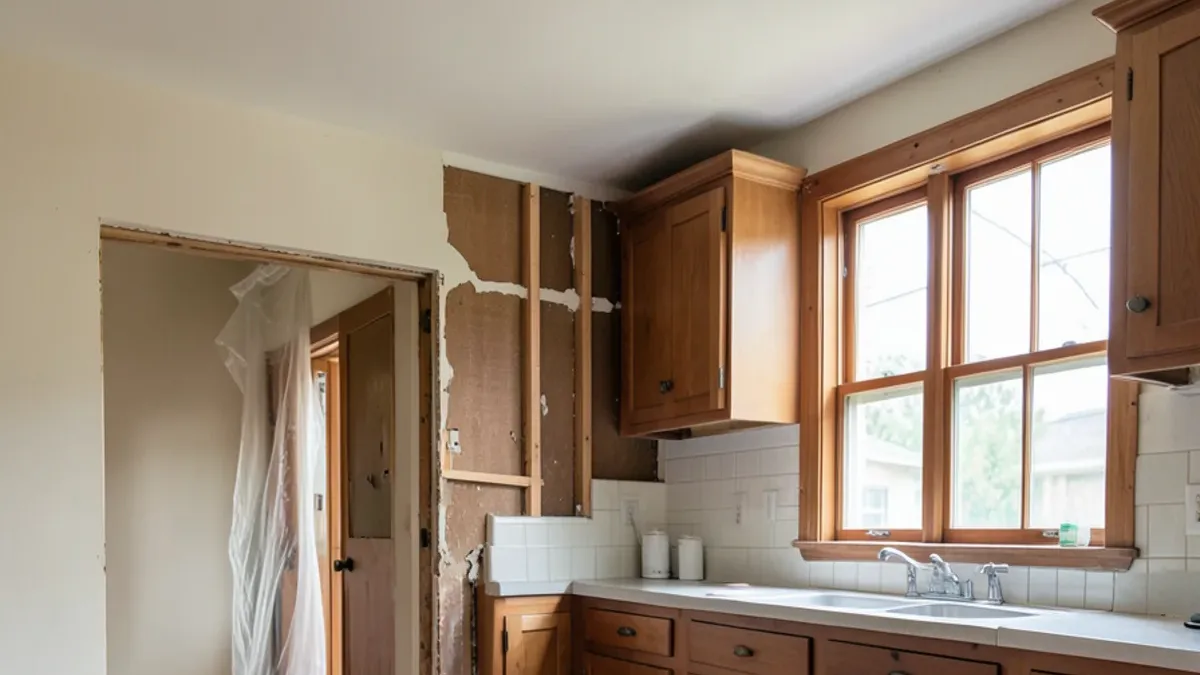
What should you expect when remodeling older homes in Los Angeles?
Bungalows from the 1910s and 1920s, Spanish revival homes from the 1920s and 1930s, and postwar ranch houses each have their own patterns. The table lists what owners commonly find once demolition starts.
| What you find | Common in | What it means | Who handles it |
|---|---|---|---|
| Lead-based paint | Homes built before 1978 | Lead-safe work practices for paid work that disturbs paint | An EPA-certified renovation firm |
| 9x9-inch vinyl tile, old sheet vinyl or black mastic | Floors laid from roughly the 1920s to the 1980s | Possible asbestos; test before removal | A certified asbestos consultant and abatement contractor |
| Galvanized steel supply pipe | Pre-1960s plumbing | Rust inside the pipe, low pressure, leaks at joints | A licensed plumber (C-36) |
| Knob-and-tube or ungrounded wiring | Pre-war and early postwar homes | Kitchens need modern dedicated circuits | A licensed electrician (C-10) |
| Plaster and lath walls | Most pre-1950 homes | Walls out of plumb; heavy cabinets need anchoring into studs | Builder and cabinet installer |
| Sloped or bouncy floors | Raised-foundation homes | Leveling or sistering joists before new flooring | Builder, then flooring installer |
Want to see the options in person?
The Sherman Way showroom has cabinets, counters, tile and flooring on display side by side. Call before you come and say what you're working on.
- Showroom at 13259 Sherman Way, North Hollywood
- 20 Google reviews
- BBB rating A+
- Cabinets, counters, tile & floors in one place
How do lead paint rules affect a kitchen or floor project?
Federal lead rules are strict here. A contractor disturbing over six square feet of interior paint in a house built before 1978 needs EPA firm certification and must work lead-safe: containment, no open-flame burning or high-speed sanding without controls, and careful cleanup. Pulling original cabinets, removing baseboard to install new flooring and cutting into painted walls for a range hood all count.
- Ask each contractor for their EPA lead-safe firm certification before work begins.
- Keep children and pregnant family members out of the work area.
- Plan for plastic containment and HEPA cleanup in the schedule.
Why test old floor tile before pulling it up?
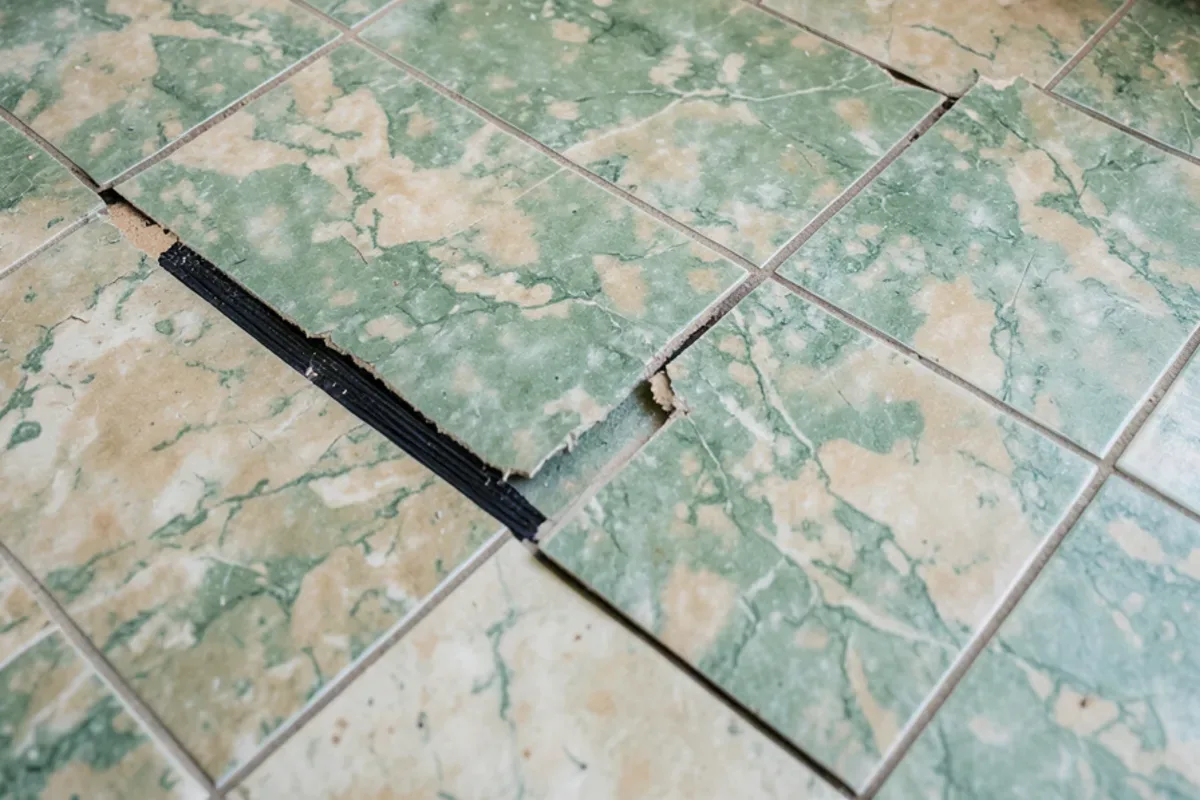
Vinyl floor tiles, sheet vinyl backing and the black adhesive beneath them were often made with asbestos for decades. Intact, they are relatively stable; broken, sanded or scraped, they can release fibers. In the South Coast Air Quality Management District, which covers Los Angeles County’s urban areas, Rule 1403 requires an asbestos survey before renovation that disturbs suspect material.
Sometimes the simplest route is to leave sound old tile in place and install a new floor over it, if the height works at doorways and appliances. Otherwise, abatement comes first and the flooring installation follows on a clean subfloor.
What do galvanized pipe and old wiring mean for a new kitchen?
Galvanized steel supply lines corrode from the inside, which shows up as low pressure, rusty water and pinhole leaks. If the kitchen walls are open anyway, replacing the supply lines to the sink and dishwasher is far cheaper now than after new cabinets and tile go in. Old cast-iron or clay drain lines deserve a camera inspection for the same reason.
Modern kitchens also need dedicated circuits for appliances and countertop outlets that older wiring cannot supply. Both upgrades need licensed trades and a permit; City of Los Angeles addresses file with LADBS, while South Pasadena and Huntington Park each issue their own.
Which inspections should come before design in an older house?
The cheapest time to learn about an old house is before anyone draws a cabinet. Owners who test first rarely face a mid-project stop; those who skip it often pay for the same discovery twice. A sensible order:
Lead inspection
A lead inspector or risk assessor certified by the California Department of Public Health can test painted trim, cabinets and windows, often with an XRF analyzer, so you know which surfaces need lead-safe handling.
Asbestos survey
A Cal/OSHA-certified asbestos consultant samples suspect floor tile, mastic, plaster texture and duct wrap in the areas you plan to disturb, which also satisfies the survey step under the air district’s rule.
Sewer and drain camera
A plumber runs a camera through the main line and kitchen drain to look for root intrusion, cracked clay or sagging cast iron.
Electrical evaluation
An electrician checks the panel’s capacity and condition and whether the existing wiring can be extended or must be replaced for new kitchen circuits.
Foundation and crawlspace
On a raised foundation, check whether the house is bolted to its foundation and the short cripple walls are braced. If a retrofit is needed, it belongs before new floors, since the work happens directly below them.
For the last item, the California Earthquake Authority’s Earthquake Brace + Bolt program has offered grants of up to $3,000 toward a retrofit on qualifying older houses in eligible ZIP codes, which is worth checking before you budget the work yourself.
Fitting new finishes to an old house: showroom lessons
Older homes reward choosing finishes with the house in mind, and seeing them together under one roof makes that easier. A few patterns hold up:
- Plan for walls that are not square. Fillers and scribe molding hide gaps on stock cabinets; custom kitchen cabinets can be built to an out-of-plumb wall.
- Choose period-friendly profiles. Shaker doors, subway or hex tile and simple stone counters sit comfortably in a 1920s kitchen.
- Check under the carpet. Many older Los Angeles houses have original oak strip floors that can be refinished, which changes what you need to buy.
- Mind the floor height. New tile over an old floor can leave a lip at the doorway to an original hardwood hall; plan thresholds in advance.
Restore, replicate or replace? Weighing original details
An older house usually has something worth keeping, and the hard part is deciding how much new work should imitate it. There is no single right answer, but the trade-offs are predictable.
Original oak strip floors
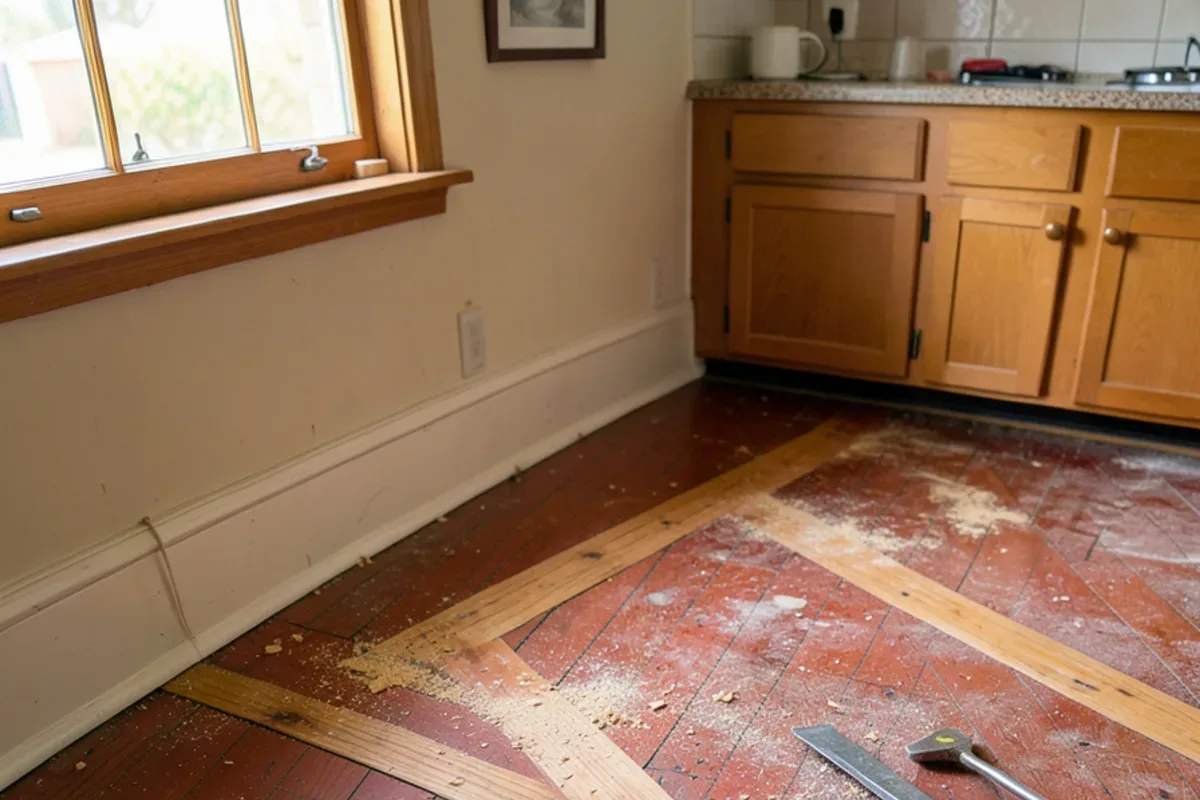
Many pre-war and postwar Los Angeles houses have narrow red or white oak strip flooring, commonly around 2-1/4 inches wide. Where a wall comes out or a floor register moves, new strips can be woven into the old floor and the whole area sanded and finished together so the patch disappears. It costs more than laying a new floor over the top, but it keeps one continuous floor through the house.
Vintage bathroom and kitchen tile
Colored glazed tile from the 1920s to the 1950s is hard to match exactly. Keeping a sound original wall and replacing only the floor is often the best compromise; if tile must be patched, salvaged pieces from a closet or behind a fixture match better than new production.
Built-ins and cabinets
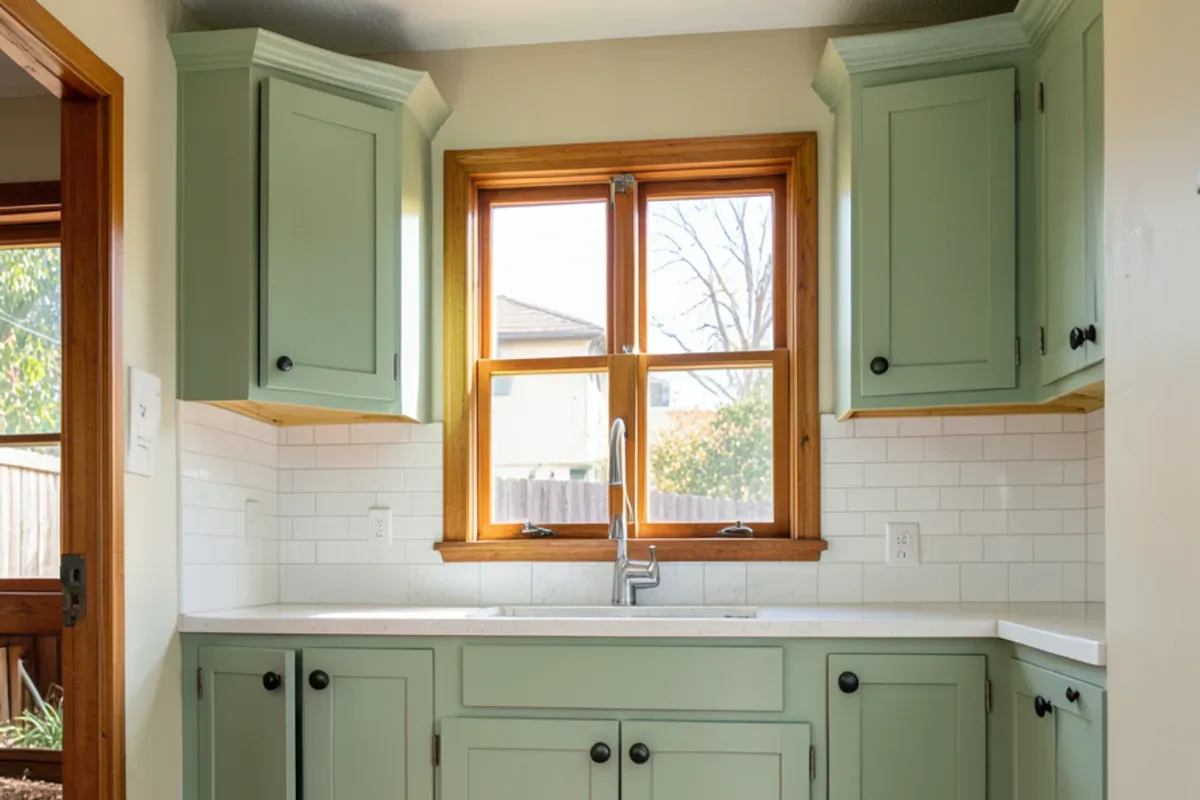
Original cabinets are often solid wood with painted finishes that test positive for lead. Restoring them means lead-safe stripping; replacing them with new Shaker or slab doors in a period-friendly color is usually faster, at the cost of the original character.
Inside a City of Los Angeles Historic Preservation Overlay Zone, review generally focuses on exterior changes visible from the street, so most interior kitchen and floor decisions remain yours. South Pasadena runs its own historic review, so confirm what it covers for your address.
Older homes in South Pasadena, Huntington Park and the City of LA
South Pasadena, about 30 minutes (21 miles) from the North Hollywood showroom, is known for Craftsman and period revival houses, and its own city reviews permits and historic changes. Huntington Park, about 35 minutes (22 miles) away, has many older bungalows and small multi-unit buildings and also issues its own permits. Neighborhoods across the City of Los Angeles go through LADBS.
Where to start on an older-home remodel
Test first, then design. Once lead, asbestos, plumbing and wiring are understood, the whole-house remodel page covers choosing cabinets, counters, tile and floors for the rebuild, and the flooring installation page explains subfloor prep on settled raised foundations. Verify every contractor’s license on the CSLB lookup before signing.
Quick answers
How do I know if my old floor tile contains asbestos?
Only a lab test can confirm it. A certified asbestos consultant takes small samples of the tile and the adhesive beneath and sends them for analysis. Nine-inch square tiles and black mastic are common suspects in older Los Angeles homes. Do not sand, scrape or break suspect tile before results come back.
Can new flooring go directly over old vinyl tile?
Often, if the old tile is well bonded, flat and dry, and the extra height works at doors, appliances and adjoining rooms. Floating vinyl plank and some engineered floors are common choices over old tile. Leaving it in place avoids disturbing possible asbestos, but check the new product’s installation instructions for approved substrates.
Should galvanized pipes be replaced during a kitchen remodel?
In most cases, at least the sections inside the walls you are opening. Galvanized pipe corrodes from the inside and fails unpredictably, and replacing it after new cabinets, counters and tile are installed means tearing into finished work. A licensed plumber can advise whether a whole-house repipe makes sense under a permit.
Are original hardwood floors worth saving in an older home?
Frequently, yes. Solid oak strip floors from the 1920s through the 1950s can often be sanded and refinished several times. Check thickness at a floor vent, look for pet or water damage, and remember that sanding painted edges or old finishes in a pre-1978 home falls under lead-safe rules.
Sources
- U.S. EPA: Lead Renovation, Repair and Painting Program — Lead-safe rules for paid work in pre-1978 homes
- South Coast Air Quality Management District (Rule 1403, asbestos) — Asbestos survey and handling requirements for renovation
- Los Angeles Department of Building and Safety (LADBS) — Plumbing, electrical and building permits in the City of Los Angeles
- Contractors State License Board (CSLB) — License lookup for plumbers, electricians and builders
- Earthquake Brace + Bolt — Grants toward seismic retrofits of older raised-foundation houses
About this guide
Written by the team at Adcom Kitchen & Flooring, a kitchen cabinet, countertop, tile and flooring showroom at 13259 Sherman Way in North Hollywood. Rules and figures from outside sources are attributed; confirm current requirements with your building department or the agency named.
Related services
Service areas
More on this topic: Home Remodeling
Talk to the showroom before you buy
Call with your measurements and photos, or stop by Sherman Way to compare cabinets, counters, tile and flooring side by side.
Adcom Kitchen & Flooring · 13259 Sherman Way, North Hollywood, CA 91605 · Get directions · Showroom hours
- Showroom at 13259 Sherman Way, North Hollywood
- 20 Google reviews
- BBB rating A+
- Cabinets, counters, tile & floors in one place