
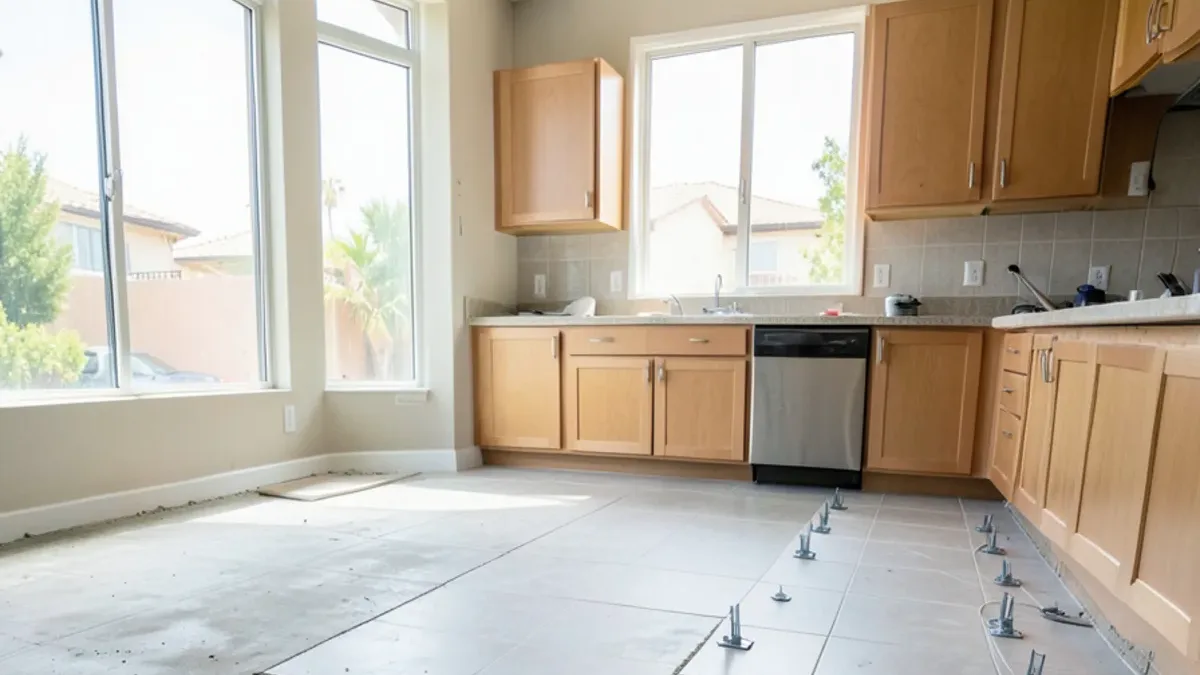
What tile installation covers, and what belongs to other trades
Tile work is a sequence: remove what’s there, prepare the surface, set the tile, grout, seal and clean up. Installation on request handles that sequence for tile bought at the showroom, including:
- Floor tile installation: kitchens, baths, laundry rooms, halls and whole-house porcelain plank floors.
- Wall and backsplash tile: from a short kitchen backsplash to full-height feature walls.
- Bathroom tile installation: tub surrounds, shower walls and floors over a waterproofed base.
- Small-format and mosaic work: niches, borders and sheet mosaic tile on floors and walls.
- Tile replacement: swapping cracked, hollow-sounding or dated tile in a floor, wall or backsplash.
What prep does a surface need before tile goes down?
Most failed tile jobs fail underneath. Cracked grout, hollow spots and popped tiles usually trace back to a surface that moved, wasn’t flat or held moisture.
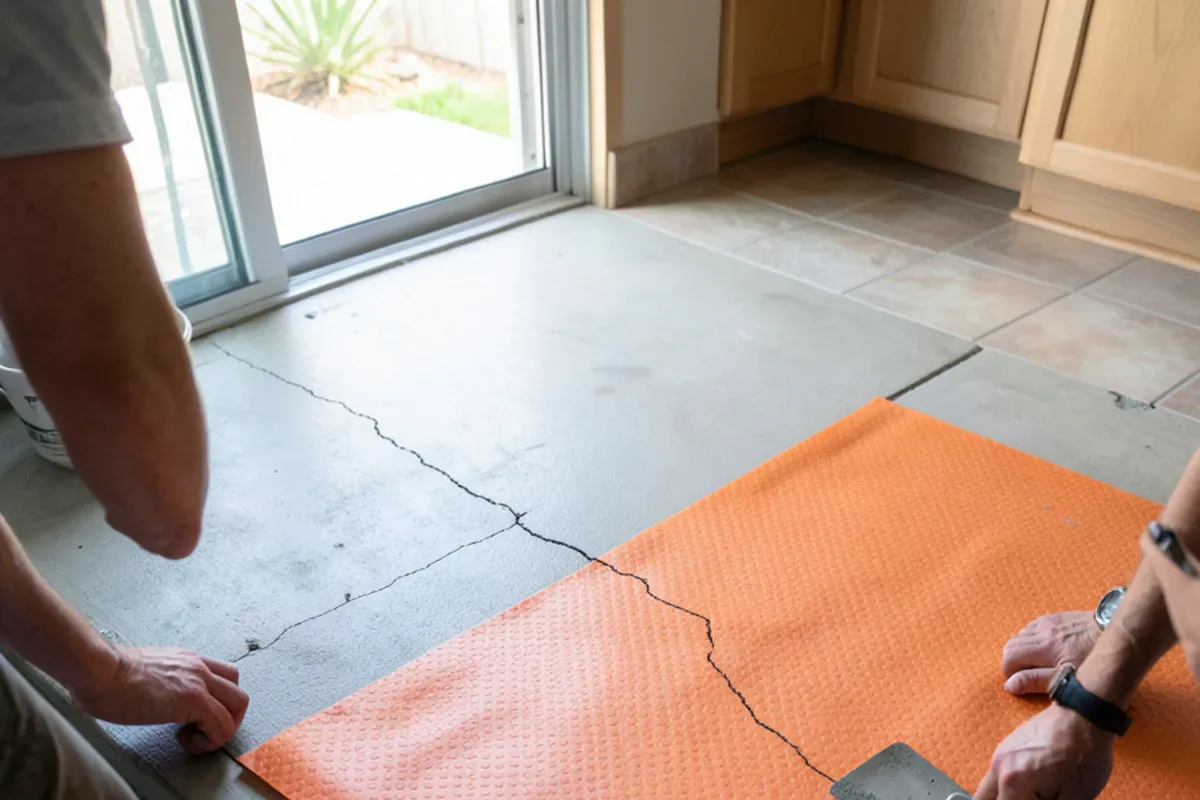
- Concrete slabs: cleaned of old adhesive, cracks addressed with a crack-isolation or uncoupling membrane, low spots filled with self-leveling underlayment.
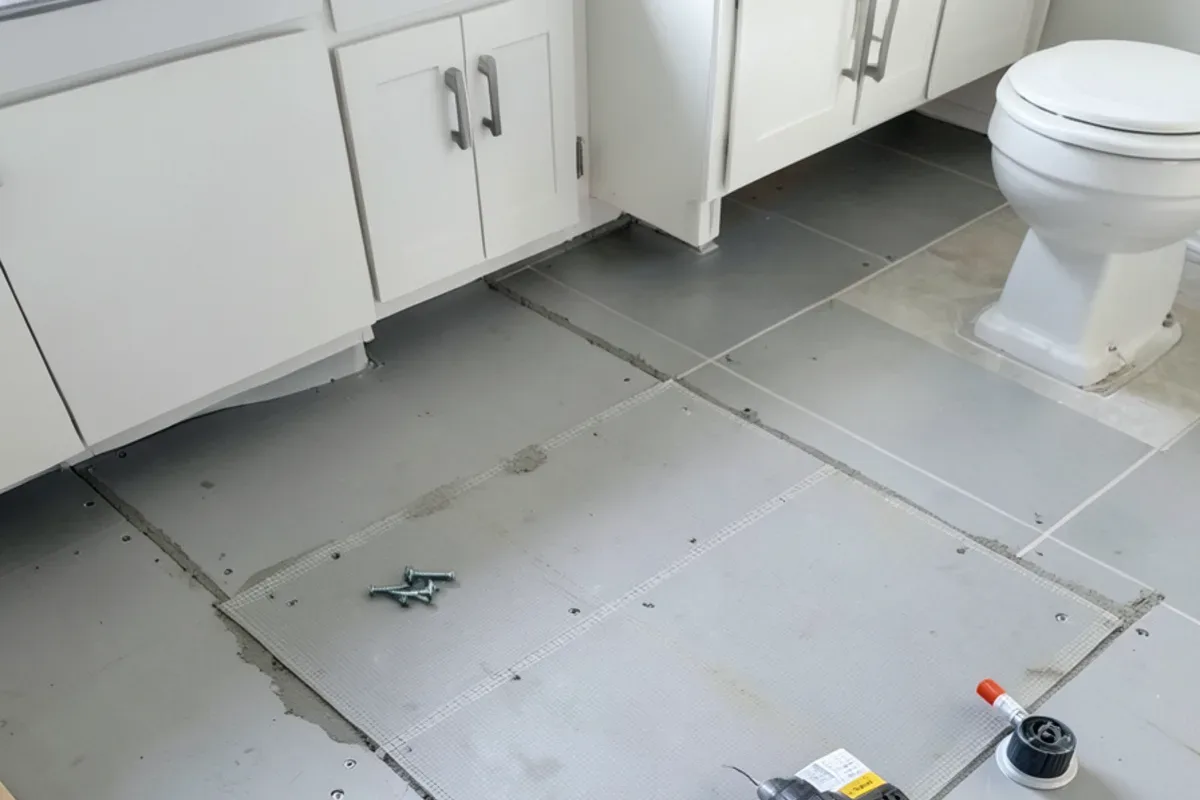
- Wood subfloors: stiff enough for the tile (stone needs a stiffer floor than porcelain), with cement backer board or a rated membrane on top, never tile straight onto plywood without the right system.
- Walls: drywall is acceptable for dry backsplashes; wet areas need cement board or a waterproofed substrate.
- Flatness: large-format tile (a side of 15 inches or more) needs a flatter surface than small tile, per ANSI A108.02.
- Older homes: in pre-1978 houses, disturbing painted walls falls under the EPA RRP lead-safe rule; old 9-inch floor tiles and black mastic should be tested for asbestos before removal.
How Los Angeles houses change the prep
- Post-war Valley slab homes: decades of settling and the 1994 Northridge earthquake left many slabs with hairline cracks, so an uncoupling membrane over the crack is cheap insurance.
- Raised-foundation bungalows: older joists can bounce underfoot; stone and large porcelain often need the floor stiffened before backer board goes down.
- Upper-floor condos: many buildings require a sound-control underlayment under hard flooring, so check the HOA rules before ordering.
- Sunny rooms and long runs: tile expands with heat, so perimeter and field movement joints are left open and caulked rather than grouted.
Questions about tile installation?
Call with your measurements and photos, or stop by Sherman Way to compare cabinets, counters, tile and flooring side by side.
- Showroom at 13259 Sherman Way, North Hollywood
- 20 Google reviews
- BBB rating A+
- Cabinets, counters, tile & floors in one place
Tile installation in Los Angeles, from showroom order to finished floor
Select the tile and setting materials
Choose tile, grout, trim pieces and the right thinset for the tile type at the showroom on Sherman Way.
Measure and confirm quantities
Final measurements include cuts, pattern waste and spares, so there is enough tile from one production lot.
Clear the room and remove old surfaces
Furniture and appliances come out, and old tile, vinyl or carpet is removed if it is part of the scope.
Prepare the substrate
Leveling, backer board, membranes and waterproofing go in according to the tile and the room.
Lay out, set and level
The layout is snapped from the room’s center lines so cuts at the walls are balanced, then tile is set and leveled.
Grout, seal and clean
After the thinset cures, joints are grouted, movement joints caulked and stone or grout sealed as needed.
Hand back the room
You get care instructions for the materials used and leftover tile to keep for future repairs.
How long does floor tile installation take?
The size of the room matters less than the number of cure times stacked up. Each material has its own wait, printed on the bag or the label, and skipping one is how grout cracks and tiles shift.
| Stage | What happens | What sets the wait |
|---|---|---|
| Demolition | Old flooring or tile removed | How it was bonded; mud-set tile takes longest |
| Leveling and membranes | Self-leveler poured, membranes or backer board installed | Leveler and membrane cure times on the label |
| Setting | Tile set in thinset | Thinset cure before grouting, often overnight |
| Grouting | Joints filled and cleaned | Grout cure before heavy use or sealing |
| Sealing | Grout and stone sealed | Sealer cure before wet mopping |
A single bathroom floor often spans a few days because of those waits, while a whole-house plank floor is scheduled room by room so you can keep living in part of the home.
Tile replacement: repairing instead of redoing
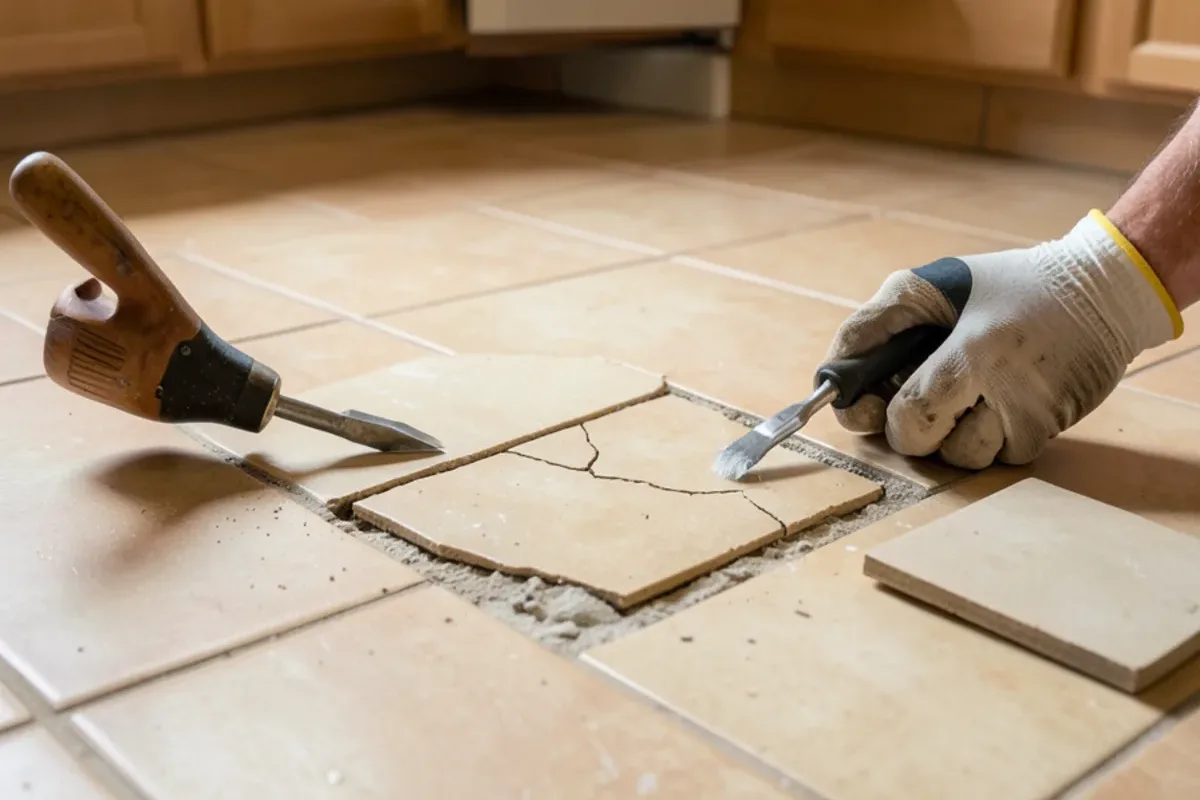
One cracked tile doesn’t always mean a new floor. If the crack came from a dropped pan, the tile can usually be cut out, the old thinset ground away and a spare set in its place. If several tiles sound hollow when tapped or the cracks line up across the floor, the problem is underneath, a slab crack or a flexing subfloor, and it will keep coming back until that is fixed.
The hardest part of tile replacement is matching. That is why keeping a box of spares matters so much; without one, bring a loose piece to the showroom. Google reviewers describe staff tracking down tile that wasn’t in stock, and when an exact match is gone, a contrasting border or a full room redo can look better than a near miss.
What affects tile installation cost?
- Removal of existing surfaces: mortar-bed tile and glued vinyl take far longer to remove than click flooring.
- Substrate repair: leveling, new backer board, membranes and subfloor stiffening are often the largest variable.
- Tile size and pattern: large-format tile and small mosaics are slower to set than mid-size tile in a straight lay; diagonal and herringbone add cuts.
- Wet areas: shower waterproofing, niches and curbs add materials and steps.
- Material type: natural stone needs special thinset, careful cutting and sealing.
- Access and detail: many doorways, toilets, cabinets and outlets to cut around add hours.
For background on how materials compare in price and durability, see porcelain vs. ceramic vs. natural stone tile.
Looking for a tile installer near me? What to check first
- License: a tile contractor in California should hold a C-54 (ceramic and mosaic tile) or appropriate general license; look it up on the CSLB site at cslb.ca.gov.
- Written scope: demolition, prep, waterproofing, setting materials, grout type and sealing should each be listed.
- Product match: the installer should follow the tile maker’s instructions for setting material and joint width.
- Spares and care sheet: ask to keep leftover tile and the product names used.
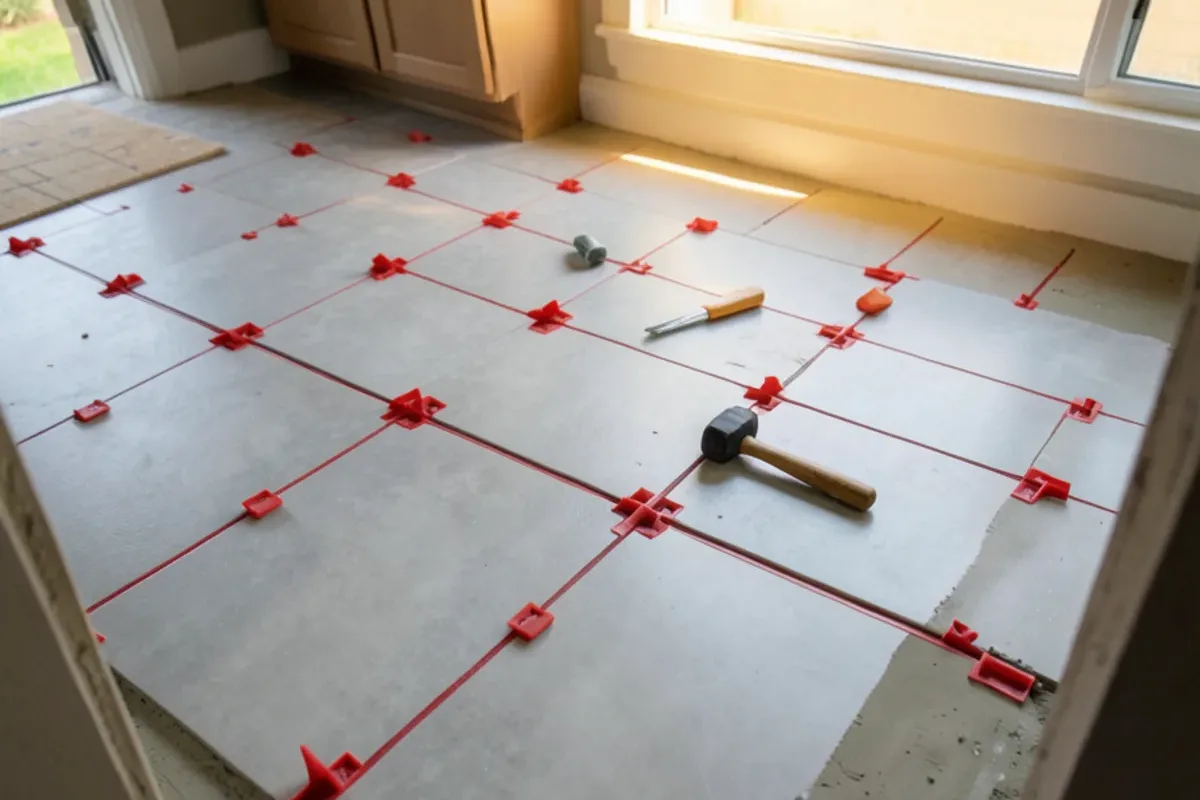
Buying from the showroom and arranging installation in the same place keeps the tile, grout and setting materials in one order, alongside cabinets, counters and flooring when the project includes them. Homeowners come from across the area, including Burbank, Glendale, the city of San Fernando at the north end of the Valley and neighborhoods throughout Los Angeles. Read grout color and sealing before choosing grout.
What Google reviewers say
Quoted from public Google reviews. Adcom Kitchen & Flooring has 20 Google reviews; read them all on Google.
“Great selection great service. Tony Jr. Was great he beat everyones prices and he stands by his word. Very easy to work with. If he doesn't have the tiles not to worry he'll find it and beat any price within reason.”
“Tony and his guys are awesome. We purchased our flooring and installation from him, and couldn’t be happier with the results. He helped us find a style that we would love, and the installation was well done.”
“They have a huge selection of kitchen cabinets, tiles and flooring. But the best part is their service. Tony Jr. is beyond reasonable, honest and he went out of his way to make sure we get the products and meet our deadlines. Highly recommended!”
Tile Installation around Los Angeles and Ventura counties
- Tile Installation in Los AngelesPost-war Valley slabs with settlement and earthquake hairline cracks that need a membrane before tile.
- Tile Installation in PasadenaRaised-foundation Craftsman homes where bouncy joists need stiffening under stone or large porcelain.
- Tile Installation in San FernandoEarly-1900s bungalows where old 9-inch floor tile and black mastic should be tested before removal.
- Tile Installation in West HollywoodCondo buildings that may require sound-control underlayment and set work hours for floor tile.
- Tile Installation in MoorparkHot inland summers make perimeter movement joints essential on long porcelain plank runs.
- Tile Installation in East Los AngelesEarly-1900s bungalows and duplexes permitted through LA County, often with uneven wood subfloors under old linoleum.
- Tile Installation in Redondo BeachBeach-city townhomes where porcelain replaces wood floors that move with marine air.
- Tile Installation in Compton1920s–50s homes where layers of later flooring must come off before tile can be set flat.
- Tile Installation in La VerneOld Town homes and newer hillside tracts mixing raised floors and slabs in one tile job.
- Tile Installation in South San Gabriel1950s homes between Rosemead and Monterey Park often have old tile on mortar beds, so demolition and floor leveling become part of the job.
Tile Installation: common questions
How long does a tile floor installation take?
Plan on several days for a typical bathroom or kitchen floor, mostly because of cure times between demolition, leveling, setting, grouting and sealing. A larger whole-house floor is usually done in stages, room by room. The exact schedule depends on the products and the condition of the slab or subfloor, so ask for a timeline once the scope is set.
Can tile be laid over existing tile?
Sometimes. The old tile must be flat, firmly bonded and crack-free, then cleaned and scuffed for the new thinset. The added height can cause problems at doors, appliances, toilet flanges and transitions to other floors. On many Los Angeles slabs, removing the old tile and checking the concrete underneath gives a more reliable floor.
What prep does a subfloor need before tile?
A wood subfloor needs to be stiff, flat and covered with cement backer board or a rated membrane; natural stone requires a stiffer floor than porcelain. A concrete slab needs to be clean, flat and treated for cracks, often with an uncoupling membrane. Large-format tile needs the flattest surface of all, within 1/8 inch over 10 feet.
When can I walk on new tile?
Light foot traffic is usually allowed once the thinset has cured, often about 24 hours, but check the label on the setting material and grout. Wait longer before moving heavy furniture or appliances back, and follow the sealer’s cure time before wet mopping. Rapid-setting materials shorten these waits and are common in kitchens that need to reopen quickly.
Do you install tile bought from another store?
The installation Adcom offers is for products selected and bought at the North Hollywood showroom, which keeps the tile, setting materials and scope in one order. If you already own tile from elsewhere, call the showroom team to ask whether it can be included. Either way, check that you have enough from a single lot before work starts.
Can one cracked tile be replaced without redoing the floor?
Usually, yes. The damaged tile is cut out, old thinset and grout removed, and a spare set and grouted in place. The challenge is matching color, which is why spares from the original order are so valuable. If many tiles are cracking in a line, the cause is likely a slab crack or subfloor movement that has to be addressed first.
Request a tile installation quote
Calling is fastest: (818) 765-9955. Prefer to write? Send the basics and the showroom will get back to you.
Related services
Helpful guides
Areas we serve
Ready to see it in person?
Bring your photos and measurements to the Sherman Way showroom, or call and talk it through first.
Adcom Kitchen & Flooring · 13259 Sherman Way, North Hollywood, CA 91605 · Get directions · Showroom hours
- Showroom at 13259 Sherman Way, North Hollywood
- 20 Google reviews
- BBB rating A+
- Cabinets, counters, tile & floors in one place