
What is each floor actually made of?
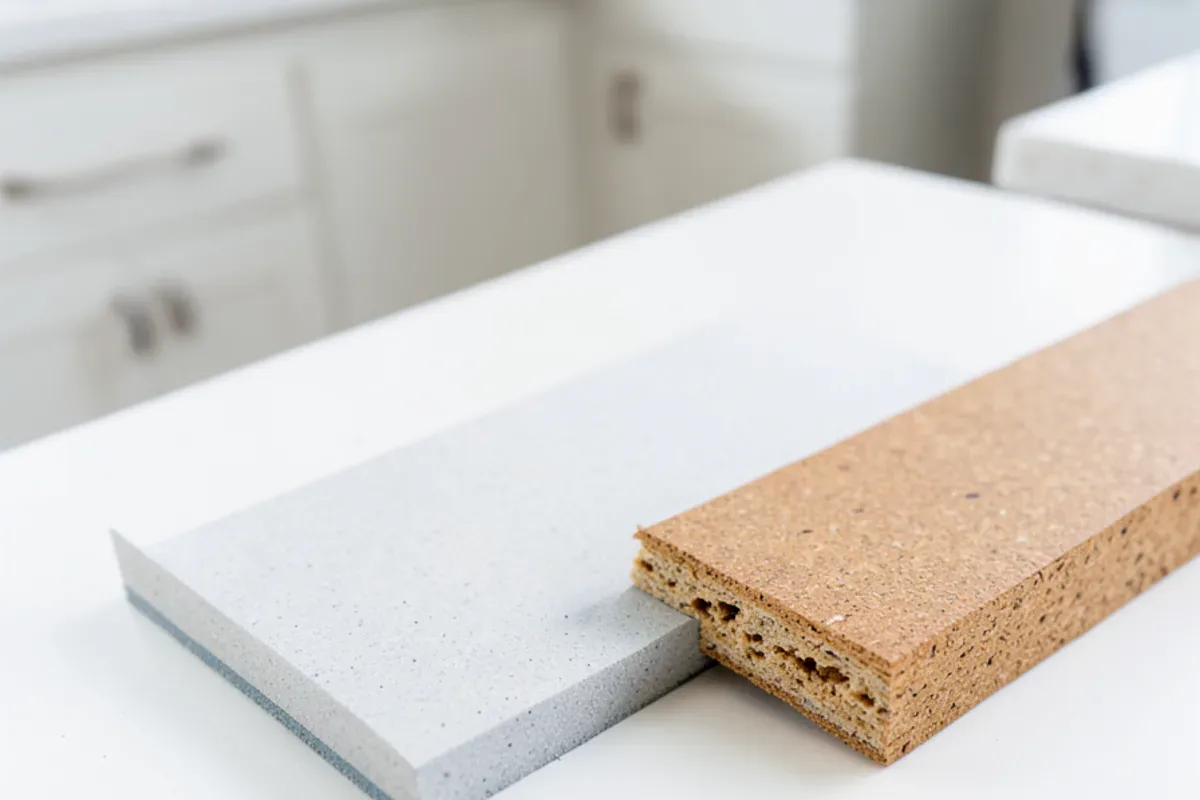
The names get blurred in ads, so it helps to know the layers. Both are photographic floors: a printed image of wood or stone sits under a clear protective top.
- Laminate: a melamine wear layer over a printed décor paper, bonded to a core of high-density fiberboard (HDF), with a balancing backer. The HDF core gives it a rigid, solid feel and its hardness, and it is also why laminate has historically disliked standing water.
- Rigid-core vinyl (SPC): a vinyl wear layer and print film over a dense stone-plastic composite core. Thin, stiff and dimensionally stable in heat.
- WPC vinyl: a foamed vinyl-plastic core that is a little thicker and softer underfoot than SPC.
- Flexible glue-down vinyl: thin planks glued to a prepared floor, common in commercial spaces and condos with sound rules.
Because laminate cores are wood fiber, California’s formaldehyde limits for composite wood products apply to them. Ask for the product’s compliance labeling when you compare, and check whether a vinyl option carries an indoor-air-quality listing if that matters to you.
Want to see the options in person?
The Sherman Way showroom has cabinets, counters, tile and flooring on display side by side. Call before you come and say what you're working on.
- Showroom at 13259 Sherman Way, North Hollywood
- 20 Google reviews
- BBB rating A+
- Cabinets, counters, tile & floors in one place
Which one actually handles water?
Vinyl is the clear winner on water. The planks themselves do not swell, so a dog bowl tipped over or a leaking dishwasher line does not ruin the floor, although water that gets under any floating floor can still feed mold on the subfloor and must be dried out.
Laminate has improved. Many current lines use sealed edges and water-repellent cores and are sold as water-resistant for a set number of hours. That is helpful for spills that get wiped up, not for a bathroom floor that is wet daily or a slow leak behind a refrigerator. Read the manufacturer’s terms carefully, since water coverage conditions vary by product and some exclude full bathrooms.
Vinyl vs laminate flooring for scratches, dents and noise
Here the comparison turns the other way. Laminate’s melamine top is very hard, which makes it good at resisting the fine scratches caused by grit, pet claws and rolling chairs. Vinyl’s wear layer is softer; it resists scuffs, but heavy furniture legs and dropped cast iron can leave dents in it, especially on WPC.
| Question | Waterproof vinyl | Laminate |
|---|---|---|
| Water on the surface | Unaffected | Fine if wiped; can swell if water sits at seams |
| Fine scratches from grit and pets | Good; thicker wear layers hold up longer | Very good; hard melamine surface |
| Dents from furniture or dropped pans | Can dent; use wide felt pads | Resists denting well |
| Sound when walked on | Quieter, softer tone | Can sound hollow without a good underlayment |
| Feel underfoot | Slightly warmer and softer | Firmer, more like wood |
| Texture realism | Good, improving | Often the more convincing embossed grain |
| Sun and heat | Rigid core handles heat well; some flexible vinyl can fade or move | Stable; prolonged direct sun can fade some prints |
Laminate is often graded on an abrasion class (AC) scale, and vinyl is often compared by wear-layer thickness in mils. Neither number tells the whole story, but a higher figure in the same price band usually means better durability in a busy hallway.
Where does each floor fit around the house?
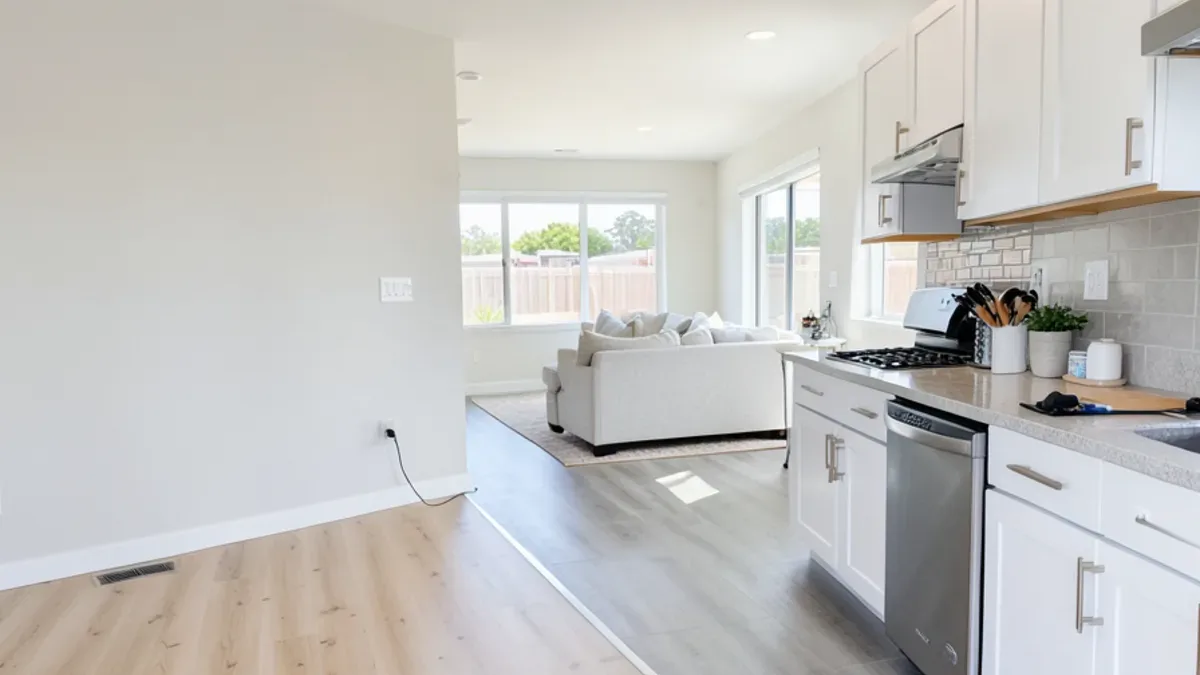
Plenty of homes in Burbank and across Los Angeles use both: vinyl where it is wet and laminate where it is dry. A transition strip at each doorway separates them.
- Kitchen, bathrooms, laundry, mudroom: waterproof vinyl flooring.
- Living room, bedrooms, office: laminate flooring for its scratch resistance and wood-like feel, or vinyl if you prefer one floor throughout.
- Rental units and ADUs: vinyl in most cases, because tenants and turnovers are unpredictable.
- Condos with sound rules: check the HOA’s acoustic requirement before choosing either; the underlayment usually decides compliance.
- Sunrooms and rooms with big west windows: rigid-core vinyl or laminate rated for sunlight, with shades during summer afternoons.
What the plank-in-hand test tells you
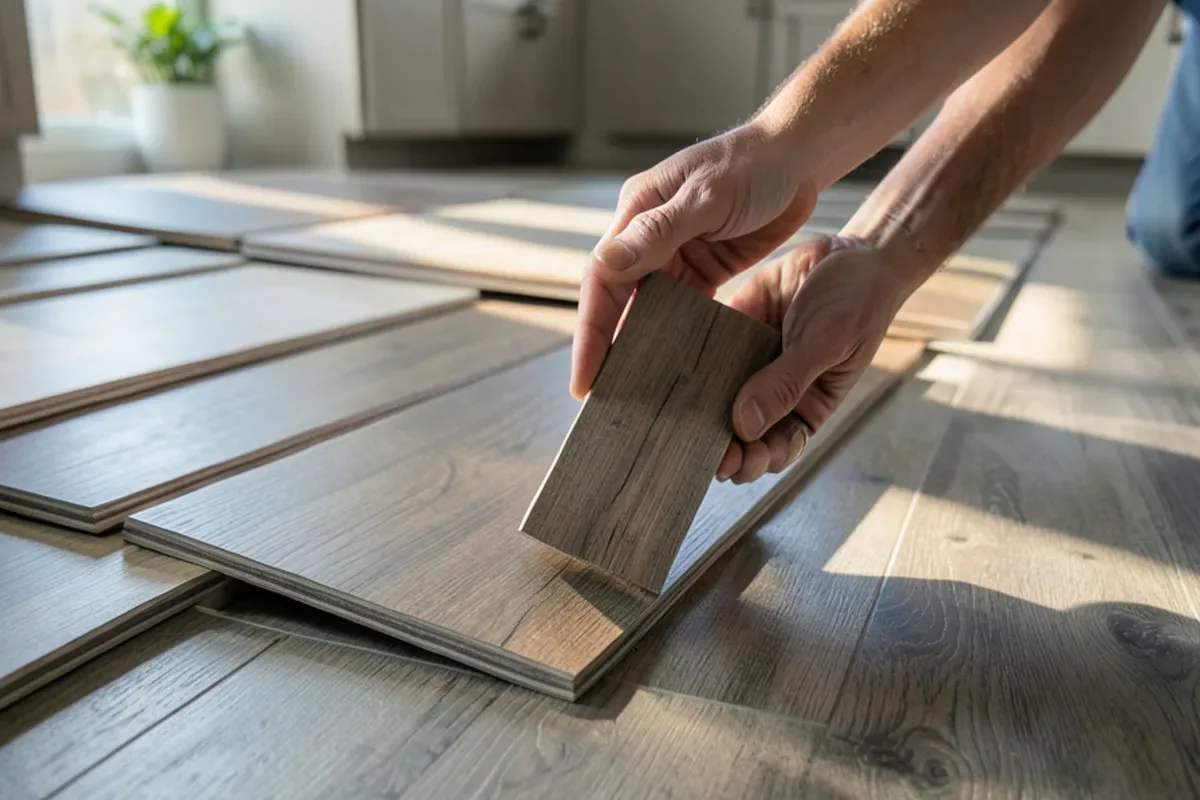
Photos online make every gray plank look the same. Holding samples on the showroom floor reveals differences that matter once the floor is down.
- Tap a laminate sample and a vinyl sample with a knuckle; the sound difference is close to what you will hear walking in socks.
- Run a fingernail across the surface. Embossed-in-register texture, where the grain follows the print, looks far more real at a low angle.
- Look for repeating knots by laying four or five boxes’ worth of planks out together, not a single board.
- Check the edge: a small beveled edge hides minor height differences between planks on an older, slightly uneven floor.
- Compare thickness and attached pad. A thicker rigid core bridges small dips better, though it still needs a reasonably flat floor.
With vinyl, laminate, hardwood and tile on display together, you can also see whether the budget stretches to an engineered wood in the living room while vinyl handles the kitchen.
Is installation different for each?
Both usually float on click-lock joints over a flat floor, so installation time and preparation are similar. The main differences are acclimation, which laminate often needs more of, and expansion gaps, which both need at walls and cabinets. Neither should be pinned under heavy kitchen islands unless the manufacturer allows it. Removing old carpet, tack strip or tile and leveling the floor often takes longer than laying the new planks.
Why floating floors fail, and how to prevent it
When a vinyl or laminate floor comes back as a complaint, the plank itself is rarely the cause. The same handful of installation shortcuts shows up on both materials, and every one of them is cheaper to prevent than to repair.
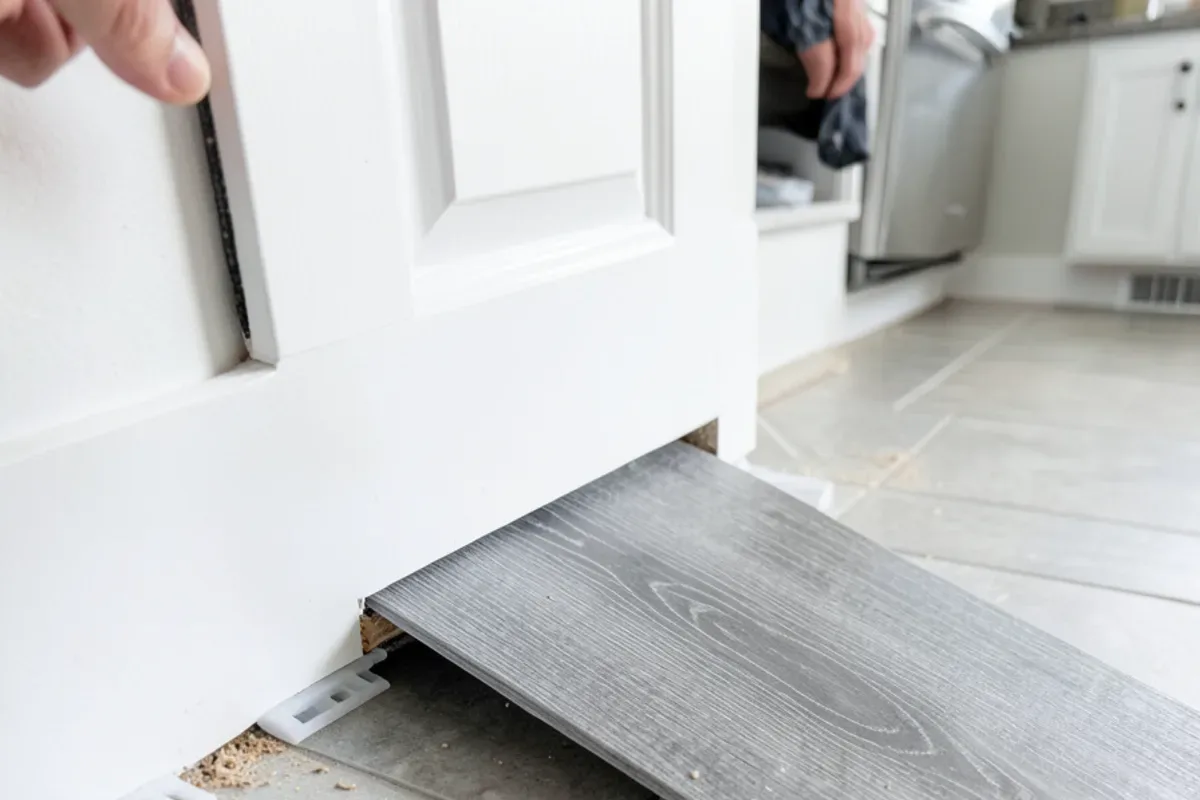
- Pinched edges. A floating floor has to move. Planks pressed tight under a door casing, a kitchen island or a heavy built-in can’t expand on a hot day, and the seams lift into a ridge, often at a doorway.
- An uneven base. Many click-plank makers specify flatness within about 3/16 inch over 10 feet. Where a floor dips more than that, the joints flex with each step, start to click or squeak, and can eventually break.
- Old tile left in place. Laying planks over ceramic tile can work if the tile is solid and flat, but deep grout lines and broken tiles show up through thin vinyl as faint lines and soft spots.
- Skipped acclimation. Laminate stored in a hot garage and installed straight into an air-conditioned house can shrink and open small gaps in the first weeks.
A short prep checklist before the planks go down
- Floor checked with a long straightedge and dips filled with a patching or leveling compound.
- Slab moisture tested on concrete floors, with the specified vapor barrier ready.
- Door casings undercut so planks slide beneath them with room to move.
- Appliances pulled out so flooring continues under the refrigerator and range where the maker requires it.
- Expansion gap planned at every wall, cabinet base and pipe.
- A few spare boxes set aside from the same production run.
Picking your plank at Adcom
Bring room sizes and a note of which spaces get wet, and compare the waterproof vinyl and laminate lines side by side. If you want the floor you pick put down for you, flooring installation is available on request.
Quick answers
Can laminate go in a bathroom?
Only with caution. A powder room with a sink and toilet is more forgiving than a full bath with a shower or tub, where splashes and steam reach the floor every day. If you love laminate, choose a line that the manufacturer specifically allows in bathrooms and caulk the perimeter as directed. Otherwise waterproof vinyl or porcelain tile is the safer floor.
Does luxury vinyl plank fade in strong Southern California sun?
Quality rigid-core vinyl holds color well, but any floor can fade or heat up behind a large unshaded west or south window. In Valley homes with afternoon sun, use blinds, solar screens or UV-filtering window film, and leave the expansion gap the manufacturer specifies so the planks have room to move on hot days.
Which is easier to replace if one plank gets damaged?
Both are click-together floors, so a damaged plank near a wall can be unclicked and replaced fairly easily. A plank in the middle of a room is harder; installers often cut it out and glue in a new one. Keep a box of spares from the original order, since prints and colors change between production runs.
Can vinyl or laminate go over existing tile?
Often, yes. If the old tile is firmly bonded, flat and has no cracked or hollow-sounding pieces, many floating floors can go over it once deep grout lines are skim-coated. The added height affects door clearances, the dishwasher opening and transitions to other rooms, so measure those first before deciding to leave the tile in place.
Why does a new floating floor click or feel hollow in spots?
Clicking or a hollow feel almost always means the base underneath is not flat enough, so the planks flex at the joints with each step. Many click-plank products ask for flatness within about 3/16 inch over 10 feet. On older Valley slabs and raised wood floors, filling dips before installation prevents it; afterward, the fix is lifting that area and leveling it.
Sources
- North American Laminate Flooring Association (NALFA) — Laminate flooring performance standards and consumer information
- Resilient Floor Covering Institute (RFCI) — Industry association for vinyl and other resilient flooring
- California Air Resources Board: Composite Wood Products Program — Formaldehyde emission limits for composite wood products such as HDF
About this guide
Written by the team at Adcom Kitchen & Flooring, a kitchen cabinet, countertop, tile and flooring showroom at 13259 Sherman Way in North Hollywood. Rules and figures from outside sources are attributed; confirm current requirements with your building department or the agency named.
Related services
Service areas
More on this topic: Flooring
Talk to the showroom before you buy
Call with your measurements and photos, or stop by Sherman Way to compare cabinets, counters, tile and flooring side by side.
Adcom Kitchen & Flooring · 13259 Sherman Way, North Hollywood, CA 91605 · Get directions · Showroom hours
- Showroom at 13259 Sherman Way, North Hollywood
- 20 Google reviews
- BBB rating A+
- Cabinets, counters, tile & floors in one place