
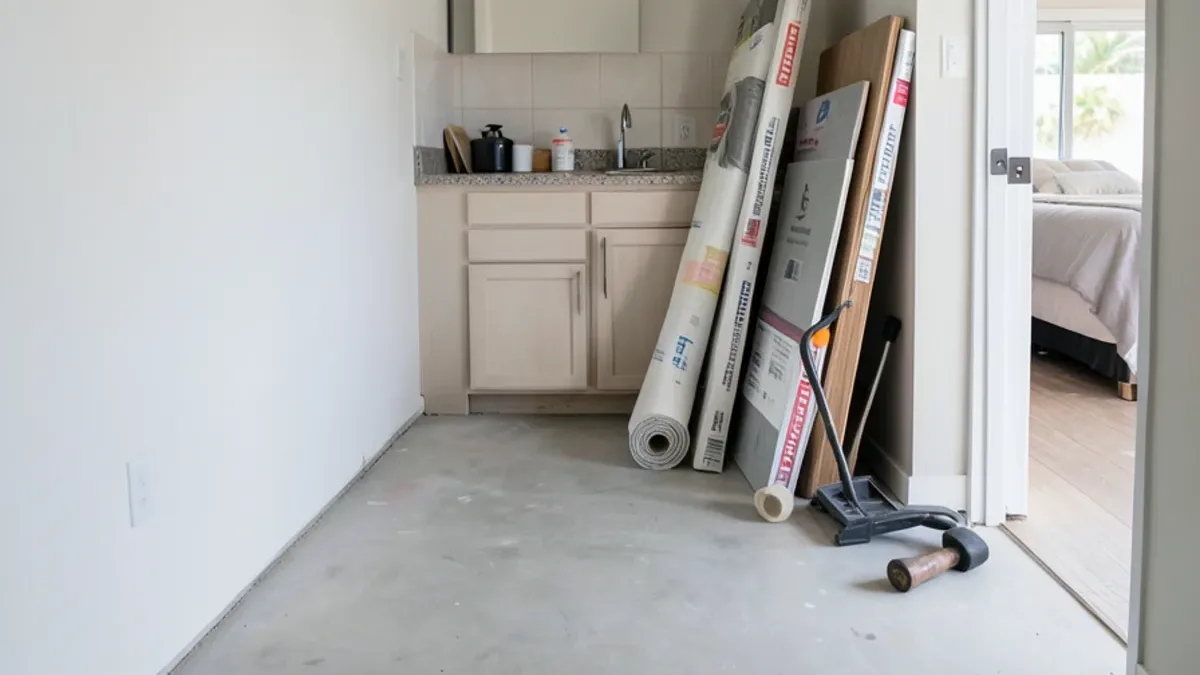
How long does flooring installation take for each material?
The table gives general ranges for an average-sized room or a small group of rooms with a prepared floor. Large homes, stairs and complex layouts take longer, and every installer works at a slightly different pace.
| Floor | Installation itself | Waiting or curing | Back to normal use |
|---|---|---|---|
| Carpet | Often a few rooms in a day | Little; ventilate for new-carpet smell | Same day in most cases |
| Click vinyl or laminate | About a day per few rooms | None after installation | Usually right away |
| Glue-down vinyl or engineered wood | A day or two | Adhesive set time per the maker | Light use soon; heavy furniture later |
| Prefinished nail-down hardwood | One to a few days | None for the finish | Usually right away |
| Site-finished hardwood | Install, then sanding and several coats | Drying between coats; full cure takes longer | Several days to a week or more before rugs and heavy furniture |
| Porcelain or stone tile | Setting over one or more days | Thinset cure before grouting; grout cure after | Several days for full use |
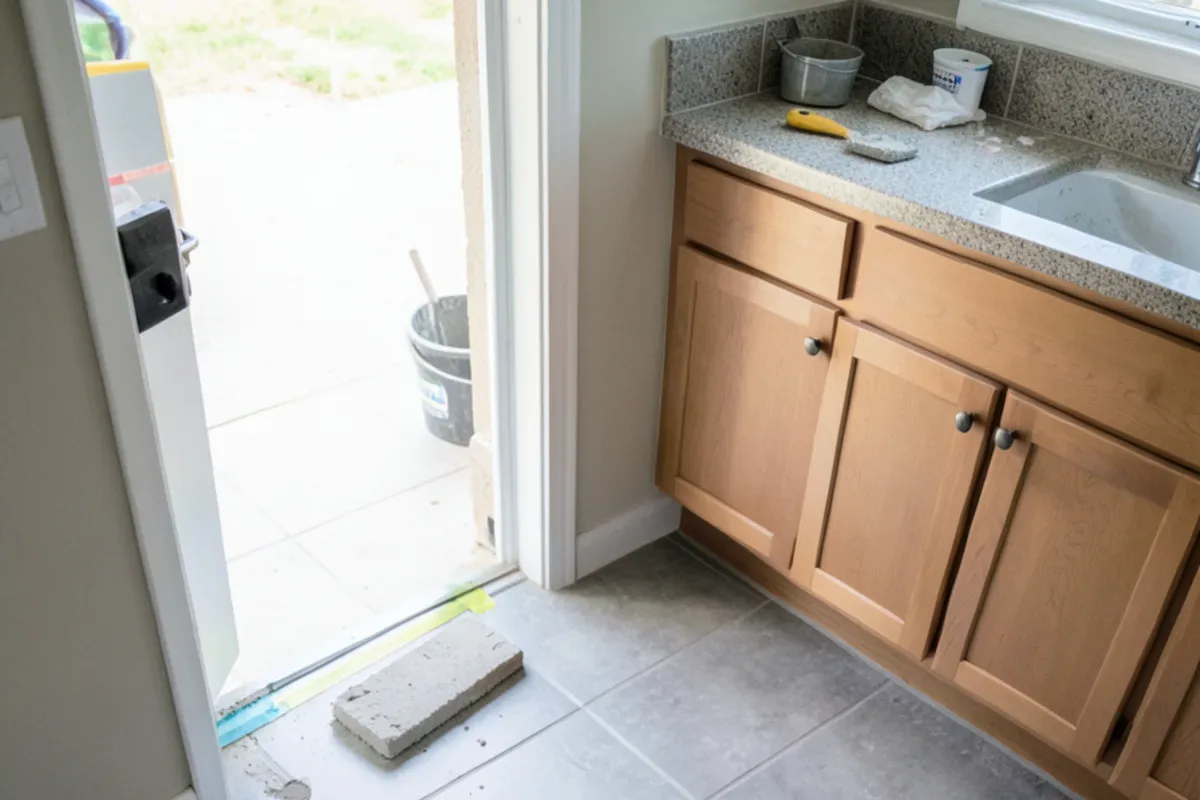
Want to see the options in person?
The Sherman Way showroom has cabinets, counters, tile and flooring on display side by side. Call before you come and say what you're working on.
- Showroom at 13259 Sherman Way, North Hollywood
- 20 Google reviews
- BBB rating A+
- Cabinets, counters, tile & floors in one place
What has to happen before installers start?
- Choosing and ordering. In-stock material moves faster than special orders. Find out when the material is due to land, and hold off on booking tear-out until that date is firm.
- Acclimation. Wood and some laminates need time inside the home to adjust to its humidity. The installer checks moisture content rather than going by a fixed number of days.
- Clearing the rooms. Furniture, closet floors, items under beds and anything on the floor must be moved.
- Tear-out and disposal. Carpet and pad come up quickly; glued tile, mortar beds and old glued vinyl can take a full day or more.
- Preparation. Leveling, crack treatment, moisture testing and subfloor repairs happen now, and some need drying time.
Which steps add days you might not expect?
- Self-leveling compound. Uneven Valley slabs often need it, and it must dry before flooring goes on top.
- Slab moisture. If a test shows high moisture, a mitigation product or vapor barrier is applied first.
- Subfloor damage. Soft spots by a toilet or dishwasher mean cutting out and replacing sections before the new floor.
- Suspect old flooring. Some old resilient tile and black adhesives may contain asbestos. Testing, and abatement by a specialist if needed, comes before demolition.
- Stairs. Each step is measured and fitted by hand, so a staircase can take as long as several rooms.
- Baseboards and paint. Removing and reinstalling base, then caulking and touching up paint, is often the last day of the job.
A sample schedule for a three-bedroom refresh
Here is how a common job might flow: carpet in bedrooms, click vinyl in the living areas and hall, on a slab that needs some leveling. Real projects vary.
Day 1: tear-out
Old carpet, pad and tack strip come up, the slab is cleaned, and high and low spots are marked.
Day 2: preparation
Grinding and leveling compound in the worst areas; drying time per the product.
Day 3: hard flooring
Underlayment and vinyl planks go down through the living room and hall, working toward the bedrooms.
Day 4: carpet and transitions
New tack strip, pad and carpet in the bedrooms; transition strips at each doorway.
Day 5: trim and cleanup
Baseboard or shoe molding, final cleanup and moving furniture back.
Finish, adhesive and weather: the timing trade-offs
The fastest schedule is not always the best floor, and the slowest step is often the one that protects the result. These are the trade-offs worth understanding before you set move-in or party dates around a floor.
Waterborne or oil-modified hardwood finish
On site-finished hardwood, the finish type sets the pace. Many waterborne polyurethanes can take a second coat the same day and have a lower odor, so a floor can be coated in fewer days. Oil-modified finishes usually allow about one coat per day, smell stronger and amber the wood over time, which some owners want on red oak. In both cases the floor is dry to walk on long before it is fully cured, so follow the maker’s timing for rugs and heavy furniture.
Hot Valley days and damp coastal mornings
Adhesives, thinset, grout and finishes all list temperature and humidity ranges. A dry, hot day in the Valley can make them set faster than intended, so crews work smaller areas, while a long marine-layer stretch near the coast slows drying and can push grouting or the next coat back a day. Closing windows and running the air conditioning within the product’s limits often keeps the plan on track.
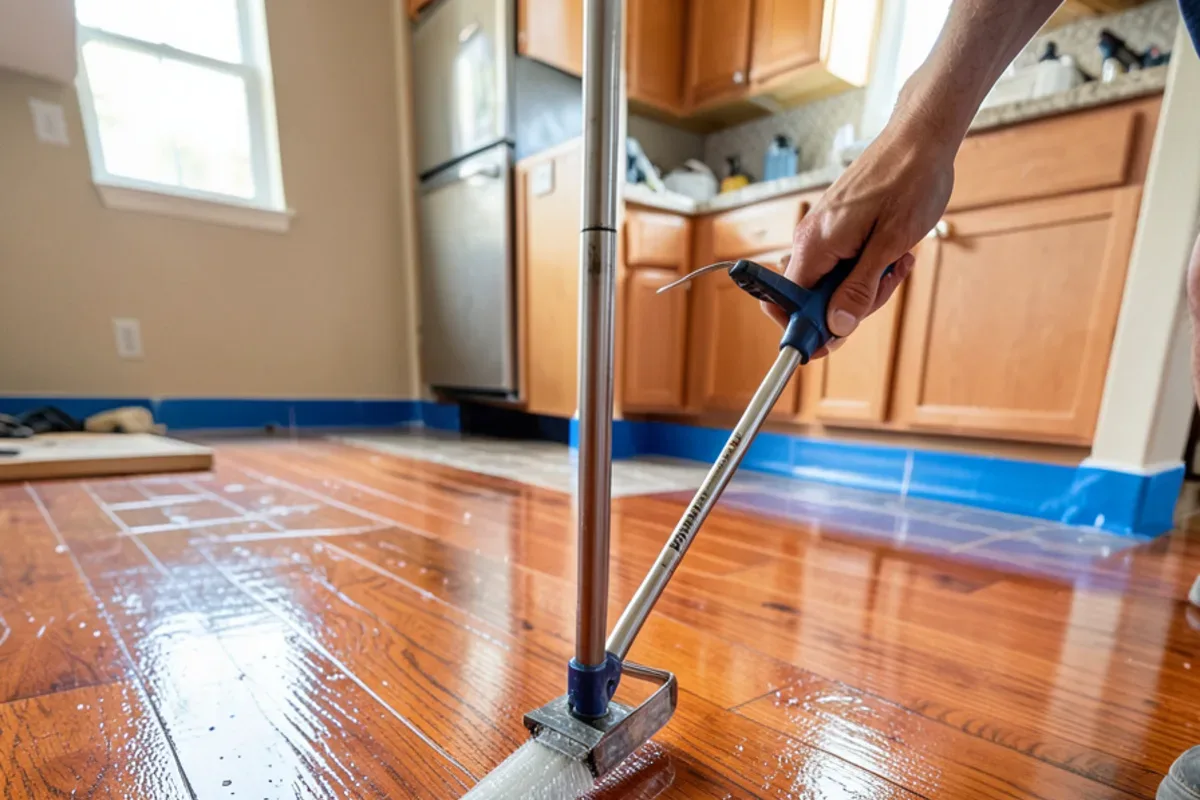
Scheduling tips from the flooring desk
Most delays on flooring jobs are avoidable. These are the points that come up most often when people plan an install after choosing material in the showroom:
- Measure every room, closet and stair before ordering so a short shipment does not stop the job halfway.
- Order all the material at once from the same production lot so colors match.
- Schedule painters before the floor goes in, not after, to avoid drips and ladder scratches.
- Plan around appliance deliveries; a refrigerator rolled over fresh tile grout or a curing finish is a common mistake.
- Keep pets and kids out of the work area, especially during glue-down and finishing days.
For carpet, the pace is usually quickest of all, which is why rentals and bedrooms are often done in a single visit.
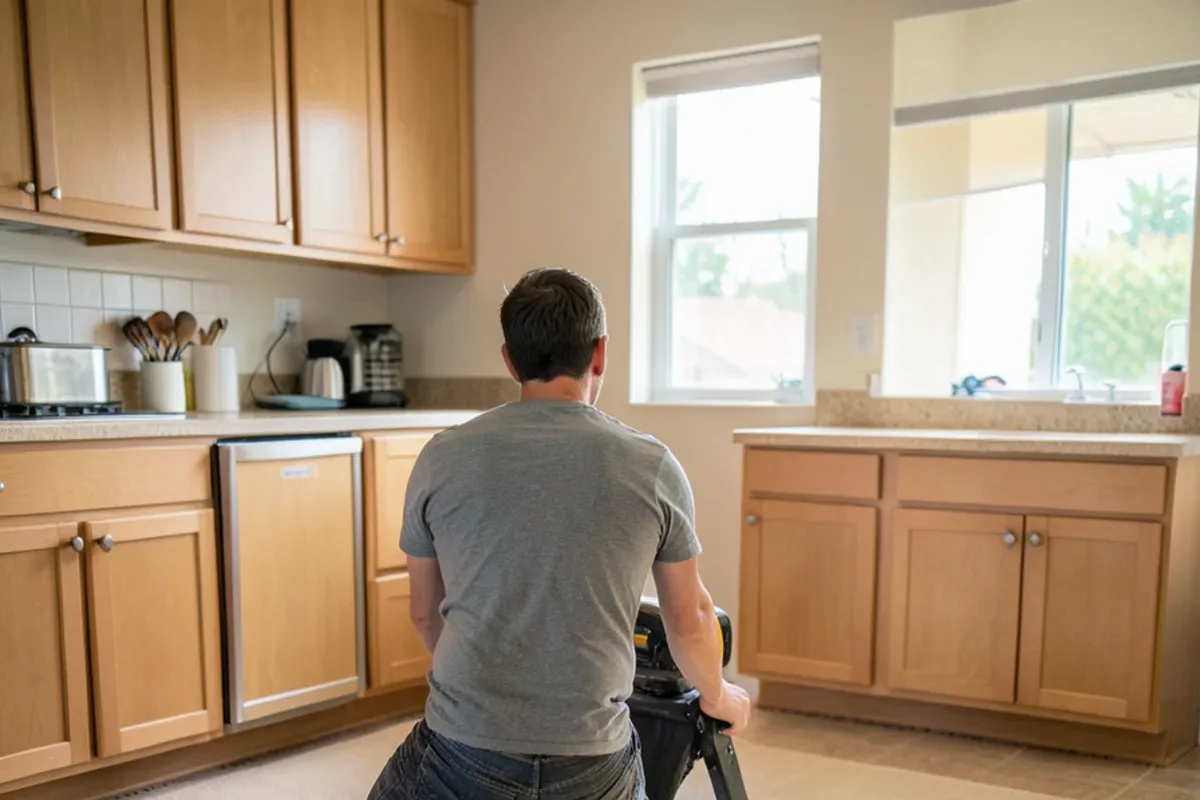
How the house itself changes the schedule
Two jobs with the same square footage can differ by days because of the building. When asking how long your project will take, describe the house as well as the floor.
| House type | What adds time | How to plan for it |
|---|---|---|
| Condo or apartment | HOA working hours, elevator booking, limits on noisy cutting | Get the building rules in writing and book the elevator before setting a start date |
| Two-story home with a staircase | Hand-fitting every tread and riser, carrying material upstairs | Schedule the stairs as their own stage, usually last |
| Pre-war raised-floor bungalow | Screwing down old board subfloors, planing humps, many small rooms and doorways | Allow a preparation day before any new boards go in |
| Post-war slab tract | Grinding and self-leveler over settled areas, slab moisture testing | Test the slab early so mitigation does not surprise the schedule |
| Occupied home with pets | Moving furniture room by room, keeping animals out of curing areas | Work in phases and keep one finished room as a base |
Can you stay home while new floors go in?
Usually yes, with some planning. Working room by room lets families keep bedrooms usable while living areas are done. Days with heavy dust, strong adhesive or finish odors, or tile cutting are the ones to avoid. During site finishing of hardwood, plan to stay off the floor entirely until the finish is dry enough to walk on, and follow the product’s guidance on when rugs and furniture can return. Open windows and run fans where the product instructions allow.
Planning your install with Adcom
Homeowners from Burbank and across Los Angeles can choose hardwood, vinyl, laminate, carpet or tile in one visit, then have it put in through flooring installation on request. Bring measurements, photos of the current floors and stairs, and any dates you need to work around, and ask about expected arrival and scheduling when you order.
Quick answers
How many days should hardwood sit in the house before installation?
There is no fixed number that fits every home. Installers measure the moisture content of the boards and the subfloor and wait until they are within the range the manufacturer specifies. In a dry Valley summer or during Santa Ana winds, that can take longer than in a mild coastal month. Engineered wood often needs less adjustment than solid planks.
How soon can furniture go back on new floors?
On click vinyl, laminate, carpet and prefinished hardwood, furniture can usually go back as soon as installation and cleanup are done. Glue-down floors may need the adhesive to set before heavy items return. Tile grout and site-applied wood finishes need the longest wait, so follow the product’s instructions and add felt pads to every leg before moving pieces back.
Is carpet installation faster than hard flooring?
Usually, yes. Carpet does not need acclimation, tolerates minor floor imperfections and goes down quickly once old carpet and pad are removed, so several bedrooms are often finished in a day. Stairs, patterned carpet that must be matched at seams, and rooms with many corners slow it down. Hard floors need flatter preparation, which adds time.
Does hot or humid weather change how long new floors take to finish?
Yes. Adhesives, thinset, grout and wood finishes each list a temperature and humidity range, and conditions outside it speed up or slow down setting. Hot, dry Valley days can make products set too fast, while damp marine-layer weeks near the coast slow drying between coats. Running the air conditioning within the product’s limits keeps the schedule closer to plan.
Is a waterborne finish faster than an oil-based finish on hardwood?
Usually. Many waterborne polyurethanes allow more than one coat in a day and have less odor, so a site-finished floor can be completed sooner. Oil-modified finishes typically allow about one coat per day and give oak a warmer amber tone. Either way, dry-to-walk is not full cure, so wait the finish maker’s stated time before rugs and heavy furniture go back.
Sources
- National Wood Flooring Association (NWFA) — Acclimation and moisture testing guidance for wood floors
- Carpet and Rug Institute (CRI) — Carpet installation and indoor air quality information
- Tile Council of North America (TCNA) — Tile installation methods and materials
- U.S. EPA: Asbestos — Testing and handling older flooring that may contain asbestos
About this guide
Written by the team at Adcom Kitchen & Flooring, a kitchen cabinet, countertop, tile and flooring showroom at 13259 Sherman Way in North Hollywood. Rules and figures from outside sources are attributed; confirm current requirements with your building department or the agency named.
Related services
Service areas
More on this topic: Flooring
Talk to the showroom before you buy
Call with your measurements and photos, or stop by Sherman Way to compare cabinets, counters, tile and flooring side by side.
Adcom Kitchen & Flooring · 13259 Sherman Way, North Hollywood, CA 91605 · Get directions · Showroom hours
- Showroom at 13259 Sherman Way, North Hollywood
- 20 Google reviews
- BBB rating A+
- Cabinets, counters, tile & floors in one place