
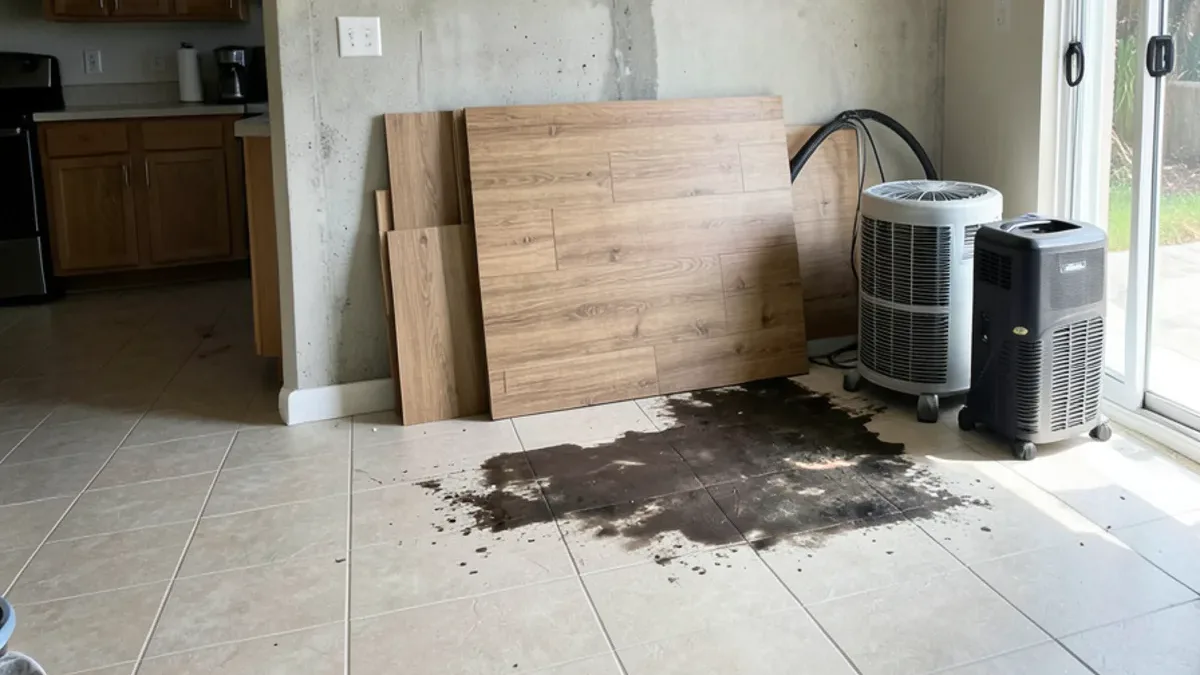
What should you do first when you find a wet floor after a leak?
- Keep people and pets off slick surfaces, and switch off breakers to any outlet or appliance the water has reached, without standing in water to do it.
- Close the valve at the appliance: the washer box, water heater cold inlet, ice maker line or toilet supply.
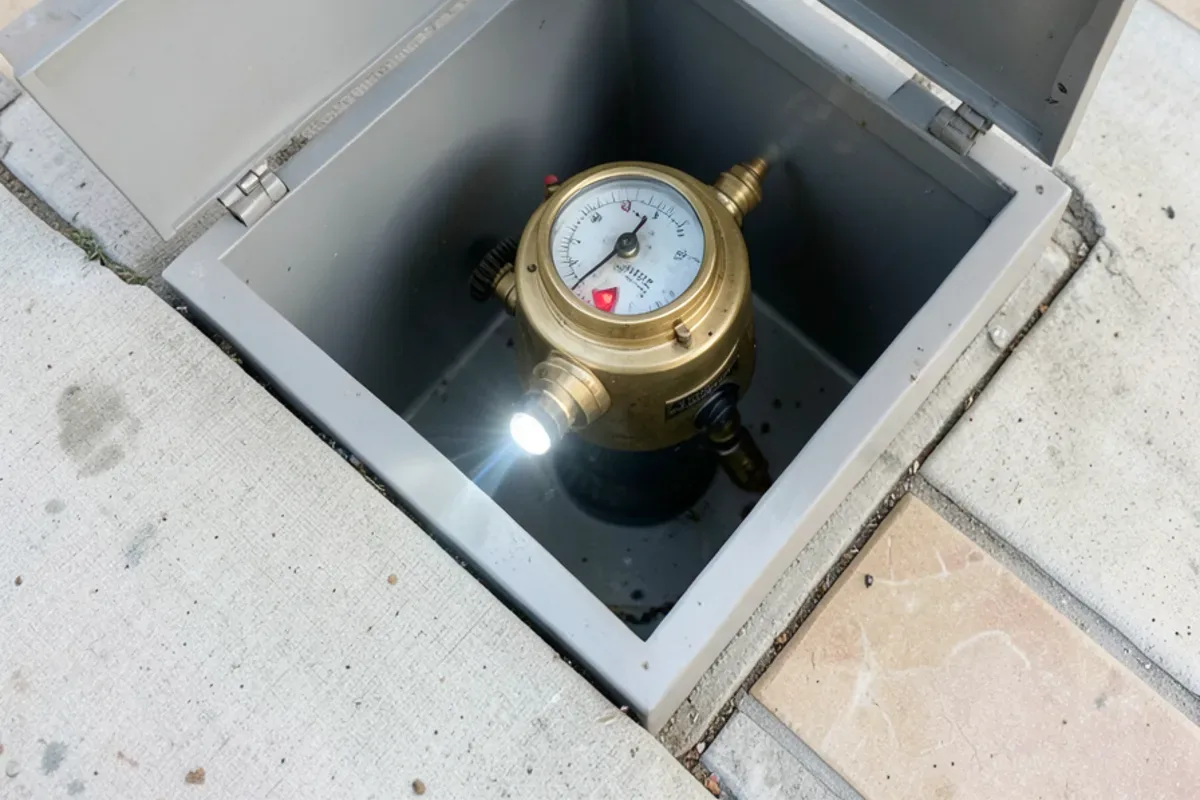
- If water keeps appearing with no visible source, close the main shut-off and see whether the meter stops moving.
- Photograph and video the wet area, the source and any stained baseboards before moving anything.
- Call your insurance company to report the loss and ask how they want mitigation handled.
- Call a licensed water-mitigation company to extract water and dry the structure; a licensed plumber repairs the pipe or appliance connection.
Want to see the options in person?
The Sherman Way showroom has cabinets, counters, tile and flooring on display side by side. Call before you come and say what you're working on.
- Showroom at 13259 Sherman Way, North Hollywood
- 20 Google reviews
- BBB rating A+
- Cabinets, counters, tile & floors in one place
How can you tell whether it is a slab leak?
Many Southern California houses are built on concrete slabs with supply pipes running through or beneath the concrete. When one of those lines fails, water rises through the slab instead of dripping from a fixture. Common signs:
- A warm patch of floor, usually from a leaking hot water line
- The sound of running water when every fixture is off
- A water bill noticeably higher than usual
- Damp carpet, cupping wood or lifting planks far from any appliance
- A water heater that runs more often than it should
A quick check: turn off every tap and appliance, then watch the small leak indicator on your water meter. If it still spins, water is going somewhere. A leak detection specialist or plumber can pinpoint it with acoustic and thermal tools.
How are slab leaks usually repaired?
There are three common approaches, and each affects your floor differently. A licensed plumber (C-36) will recommend one. Repiping is permitted work: LADBS handles it inside Los Angeles city limits, and other cities run their own plumbing permits.
| Repair method | What happens | Effect on flooring |
|---|---|---|
| Spot repair through the slab | The plumber opens the concrete above the leak and repairs the pipe | A section of floor is removed and must be patched or replaced |
| Reroute | The failed line is abandoned and a new one runs through walls or the attic | Little floor removal, but drywall is opened |
| Whole-house repipe | All supply lines are replaced, usually overhead | Floors largely untouched; walls and ceilings patched |
Not every wet floor is a slab leak: other sources to rule out
Before anyone breaks concrete, the plumber or leak detection technician works through the more ordinary causes. Where the water shows up, and when, is the best clue. Knowing the usual suspects helps you describe the problem clearly when you call.
| Source | Where water usually appears | Who handles it |
|---|---|---|
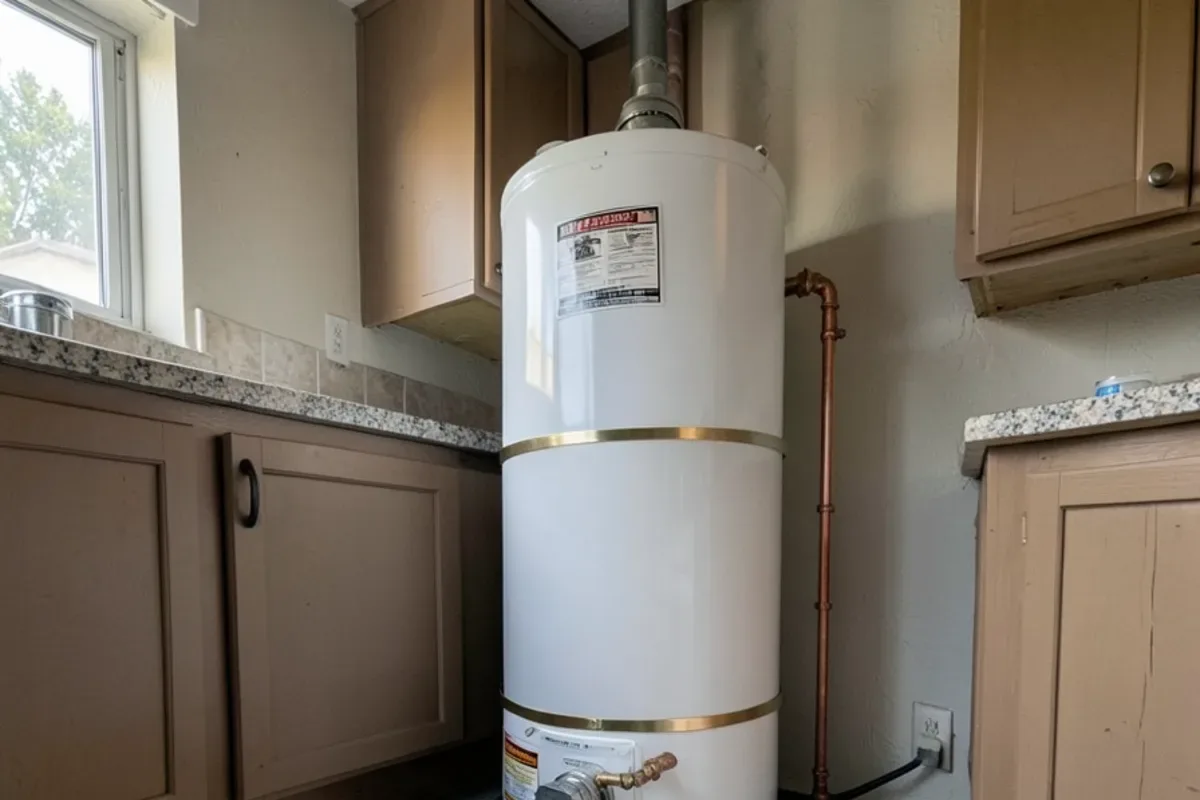
| Water heater tank or relief valve line | Garage or utility closet floor, spreading into the next room | Plumber; California’s plumbing code calls for a drain pan where a leaking heater could cause damage |
| Air conditioner condensate line | Hallway or closet near the indoor unit, often in summer | HVAC technician; units above ceilings need overflow protection |
| Washing machine hoses or drain box | Laundry room, often under the machine first | Plumber or appliance technician |
| Toilet supply line or wax ring | Around the toilet base and into the hall | Plumber |
| Rain or irrigation at the slab edge | Along an exterior wall, only after rain or sprinkler cycles | Drainage, grading or landscape contractor rather than a plumber |
| Refrigerator or ice-maker line | Kitchen floor in front of or beside the fridge | Plumber or appliance technician |
The last two rows matter for the floor decision. Water coming in from outside will keep coming back after any new floor goes down unless grading, gutters or sprinklers are corrected first, and a replacement floor is not a fix for it.
Which wet floors can be saved and which need replacing?
What happens to the floor depends on what it is and what it sits on. Concrete holds water for a long time, while a wood subfloor over a crawlspace can dry faster but may also warp.
| Floor | Over a concrete slab | Over a wood subfloor |
|---|---|---|
| Porcelain or ceramic tile | Usually stays; check for hollow-sounding tiles | Usually stays if the subfloor dries flat |
| Click-lock vinyl plank | Can often be lifted so the slab dries, then relaid | Same, once the plywood is dry |
| Glue-down vinyl | Adhesive may release; often replaced | Often replaced |
| Laminate | Edges swell; nearly always replaced | Nearly always replaced |
| Engineered wood | Often replaced if it delaminates | Sometimes saved after drying |
| Carpet and pad | Pad usually replaced; carpet sometimes saved for clean water | Same |
What happens to baseboards, walls and cabinets around a wet floor?
Water on a floor rarely stays on the floor. It wicks up drywall, swells baseboards and soaks the bottoms of cabinets and vanities that sit on it. A mitigation crew will usually deal with these edges first, because they hide moisture the floor readings miss.
- Baseboards are pulled so the wall bottoms can dry. MDF baseboard swells and is usually replaced; solid wood often goes back on.
- Drywall that wicked water is often cut away in a straight line above the wet zone so air can reach the wall cavity. The patch is repaired after drying, and paint follows.
- Kitchen and vanity cabinets sitting on the wet floor may have their toe-kicks removed to dry underneath. Particleboard bases that swelled are usually replaced.
- Door casings and jambs in older houses can wick water too, so check them for staining.
Ask the mitigation company to note every removed piece and its length, with photos. That list becomes the replacement order for trim, cabinets and flooring once the area is signed off as dry.
When is waterproof vinyl the right replacement?
After a leak, many owners want a floor that will not fail the same way twice. Waterproof vinyl flooring is a frequent choice: the planks are not damaged by water, they can float over concrete on a suitable underlayment, and a click-lock floor can be lifted for future repairs.
- It does not fix the slab. The concrete still has to be dry and within the product’s moisture limits before installation.
- Tile is the other strong option. Porcelain and wood-look tile are fully water-tolerant but take longer to install and are harder to lift.
- Plan transitions. Matching the height of the floor in adjoining rooms avoids a trip edge.
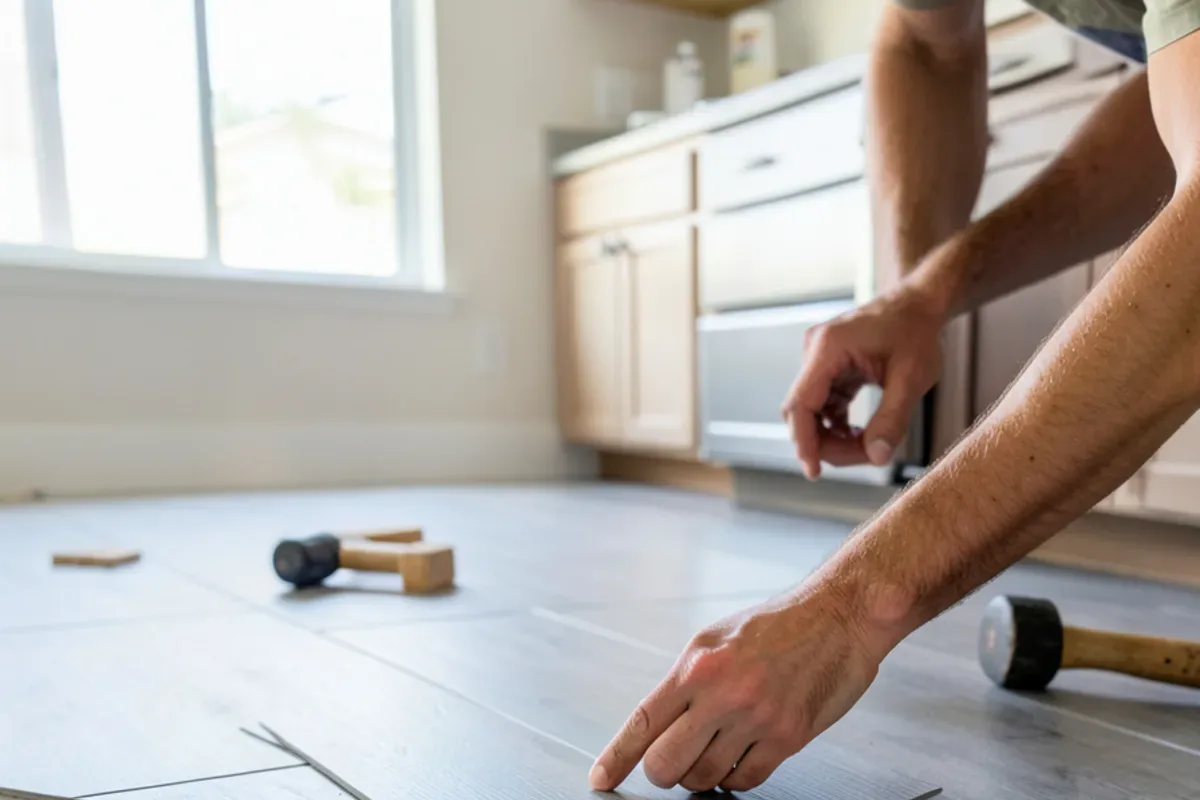
From the flooring counter: replacing part of a floor
Partial replacement is where most post-leak flooring questions land. A few points help:
- Bring a loose plank or tile. Matching color, thickness and locking profile is easier with the actual piece.
- Expect discontinued products. If the old floor is no longer made, replacing a whole connected area may look better than a near match.
- Think in rooms, not square feet. Floors that run continuously through hallways usually need a doorway or threshold to break at.
- Installation on request. The replacement floor you choose can be installed once the structure is signed off as dry.
One more tip: before the damaged flooring is thrown away, photograph the back of a plank or tile. Many products carry a printed code or lot number on the underside, and that code can make the difference between finding the same product and settling for a near match. Keep any leftover boxes from the original install, too, even if they have been in the garage for years.
Slab homes in Santa Clarita and Los Angeles
Many Santa Clarita Valley neighborhoods are built on concrete slabs, and Santa Clarita sits about 30 minutes (20 miles) north of the showroom; the city has its own building division for repipe permits. Across Los Angeles, slab homes in the Valley and raised-foundation homes in older hillside and central neighborhoods dry and repair differently, so tell the mitigation company which you have.
Getting your floors back
Once the leak is repaired and the drying company confirms readings are normal, visit the water-damaged flooring page for replacement options, and the damage repair overview for cabinets and insurance-claim work. Bring your adjuster’s scope and photos so materials can be matched to it.
Quick answers
How long does a concrete slab take to dry after a leak?
It varies from days to several weeks, depending on how much water soaked in, the slab’s thickness and whether dehumidifiers are running. Concrete looks dry long before it is. A mitigation company measures moisture with meters, and flooring makers publish moisture limits their products must meet before installation over a slab.
Can wet vinyl plank be reused after the floor dries?
Often, if it is a click-lock floating floor. The planks themselves resist water, so an installer can unlock and stack them, let the slab or subfloor dry, then relay them. Glue-down vinyl and planks with an attached pad that stayed wet are less likely to be reused.
Does homeowners insurance pay to repair a slab leak?
Policies differ. Many cover sudden water damage to floors and walls and may pay to access the pipe, while the failed pipe itself is sometimes treated separately. Gradual leaks can be limited or excluded. Read your policy, ask your insurer, and use the California Department of Insurance consumer resources if you need help.
What does a leak detection service actually do?
It finds the exact location of a hidden leak without opening floors at random. Technicians use acoustic listening devices, thermal cameras and pressure tests on each supply line. Knowing the spot lets the plumber choose between a targeted slab repair and a reroute, and limits how much flooring has to come up.
Sources
- U.S. EPA: Mold — Drying wet building materials quickly to limit mold
- California Department of Insurance — Homeowners insurance consumer help
- Contractors State License Board (CSLB) — Verify plumbers and water-damage contractors
- IAPMO: Uniform Plumbing and Mechanical Codes — Basis of the California Plumbing and Mechanical Codes (water heater pans, condensate overflow)
About this guide
Written by the team at Adcom Kitchen & Flooring, a kitchen cabinet, countertop, tile and flooring showroom at 13259 Sherman Way in North Hollywood. Rules and figures from outside sources are attributed; confirm current requirements with your building department or the agency named.
Related services
Service areas
More on this topic: Fire & Water Damage Repair
Talk to the showroom before you buy
Call with your measurements and photos, or stop by Sherman Way to compare cabinets, counters, tile and flooring side by side.
Adcom Kitchen & Flooring · 13259 Sherman Way, North Hollywood, CA 91605 · Get directions · Showroom hours
- Showroom at 13259 Sherman Way, North Hollywood
- 20 Google reviews
- BBB rating A+
- Cabinets, counters, tile & floors in one place