
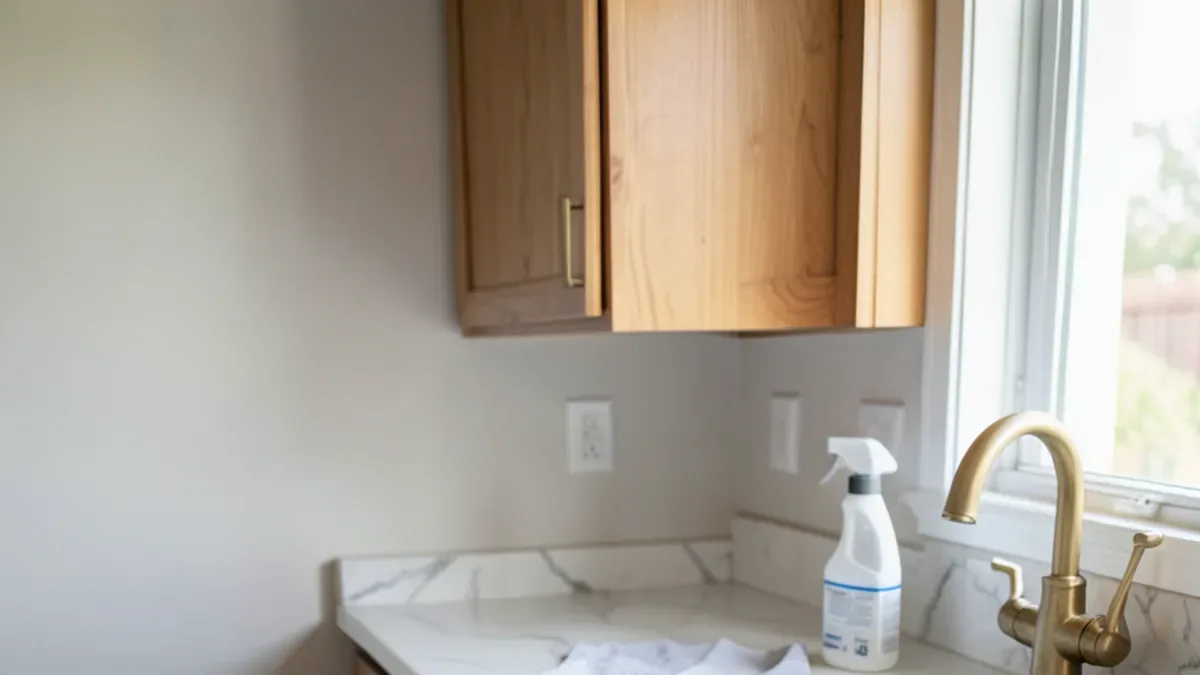
Does your granite or marble actually need sealing?
Not every stone absorbs at the same rate. Many dark, dense granites take in so little liquid that they rarely need sealing, while lighter granites and most marbles absorb faster. Some slabs are also treated with a resin at the factory. Rather than sealing on a calendar, test the stone.
- Pour a small puddle of water, about the size of a coin, in a few spots, including near the sink and cooktop.
- Wait 10 to 15 minutes, then wipe the water away.
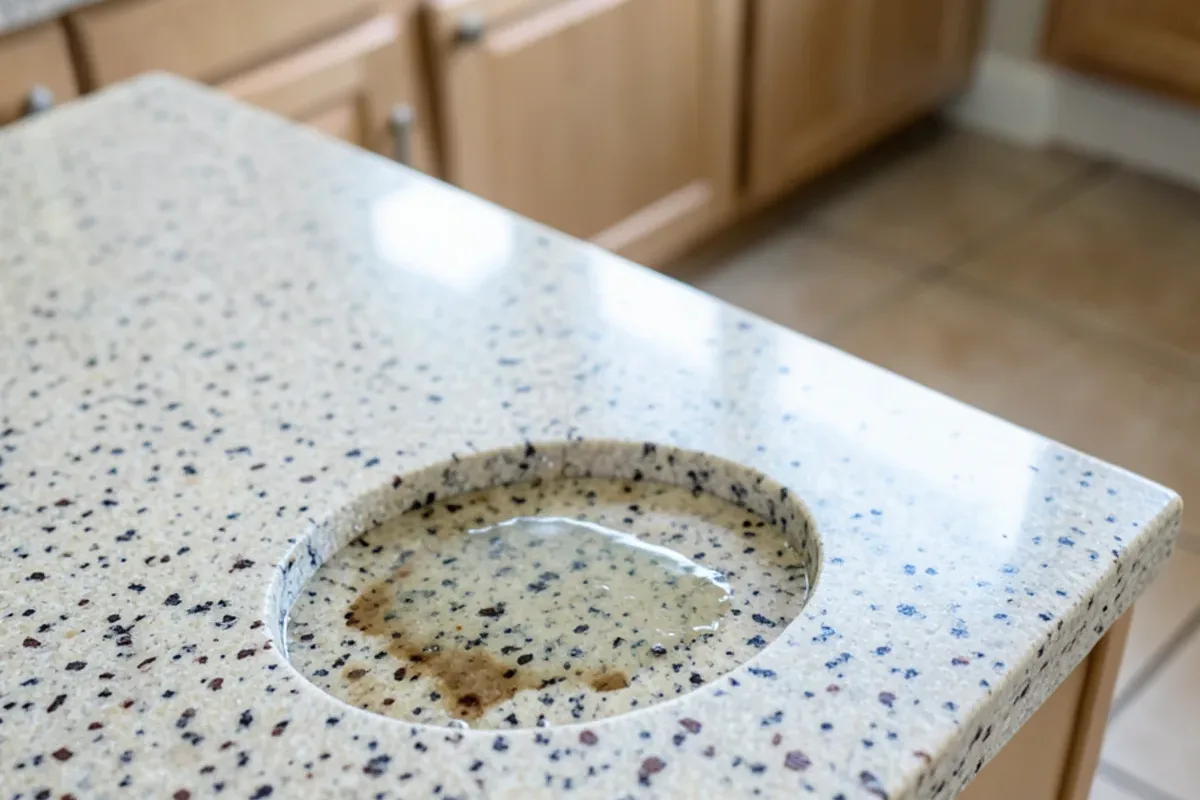
- If the stone darkened under the puddle, it is absorbing and will benefit from sealing. If it looks unchanged, the current seal or the stone itself is holding.
- Repeat the test every few months on the busiest areas, since sealer wears fastest where you cook and wash.
Want to see the options in person?
The Sherman Way showroom has cabinets, counters, tile and flooring on display side by side. Call before you come and say what you're working on.
- Showroom at 13259 Sherman Way, North Hollywood
- 20 Google reviews
- BBB rating A+
- Cabinets, counters, tile & floors in one place
How to seal granite countertops, step by step
Choose a penetrating sealer
Use an impregnating sealer labeled for natural stone countertops and food-prep areas. Topical coatings that sit on the surface are a different product and are not what you want on a kitchen top.
Clean thoroughly
Wash with a pH-neutral stone cleaner, rinse, and remove any oil stains first; sealing over a stain locks it in.
Let the stone dry
Give it several hours, ideally overnight, so trapped moisture doesn’t block the sealer. The Valley’s dry air helps here.
Apply evenly
Work in small sections with a clean cloth or applicator, keeping the surface wet with sealer for the dwell time on the label.
Wipe off all excess
Buff away every bit of surface sealer before it dries. Leftover sealer leaves a hazy, sticky film that is harder to remove than to prevent.
Let it cure
Keep water and cooking off the counter for the cure time listed, often a day, then repeat the water test.
Ventilate the room while you work and follow the product label for gloves and drying times.
Why does marble etch even after sealing?
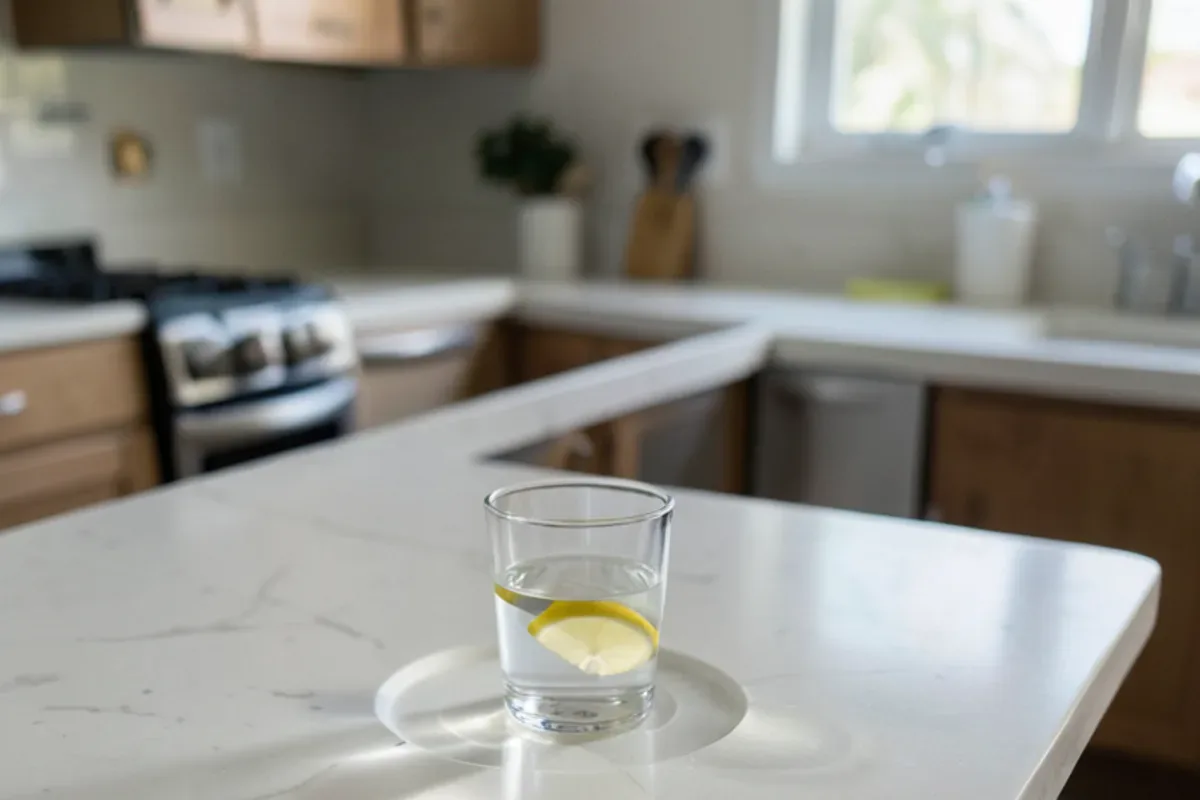
Marble is mostly calcite, a mineral that reacts with acids. Lemon juice, vinegar, wine, tomato sauce and many bathroom cleaners dissolve a microscopic layer of the surface and leave a dull, slightly rough spot called an etch. Sealer works inside the pores to block stains; it doesn’t protect the surface from a chemical reaction. That is why a sealed marble counter can still etch, and why many people choose a honed finish, where light etches blend into the matte surface.
| What you see | Likely cause | What to do |
|---|---|---|
| Dull, lighter spot that you can feel | Etch from an acid | Light etches can be buffed with a marble polishing compound; deep ones need a stone restoration professional |
| Dark spot that doesn’t fade | Oil or grease absorbed | Apply a poultice to draw the oil out, then reseal |
| Dark ring that fades as it dries | Water absorbed temporarily | Let it dry; test and reseal if it happens often |
| Orange or brown staining | Rust from a can or iron mineral in the stone | Use a poultice made for rust; some mineral rust can’t be removed |
| Cloudy film near the faucet | Hard-water deposits or leftover sealer | Clean with a stone-safe product; never use vinegar on marble |
Which cleaners are safe for granite and marble?
Daily care is simple: a soft cloth, warm water and a few drops of mild dish soap, or a cleaner labeled pH-neutral for stone. Dry the counter afterward to avoid water spots. Avoid these:
- Vinegar, lemon and any acidic cleaner, which etch marble and wear sealer on granite.
- Bleach and ammonia used regularly, which can dull the surface over time.
- Abrasive powders and scrubbing pads, which scratch polished stone.
- General-purpose bathroom and glass sprays that list acids in their ingredients.
How often to test, stone by stone
A fixed “seal every year” rule over-treats dense stone and under-treats the porous kind. Test on a rhythm that matches the material and how hard the counter works, and seal only when the water test says so.
| Stone and finish | How often to run the water test | What usually happens |
|---|---|---|
| Dark, dense granite (black, deep blue, dark green) | Once a year | Often never darkens; sealer may not even absorb |
| Light or coarse-grained granite | Every 6 months near the sink and range | Needs resealing in the busiest zones first |
| Polished marble | Every 3 to 4 months | Holds a seal moderately; etches regardless |
| Honed marble or limestone | Every 3 months | The open matte surface absorbs faster than polished |
| Quartzite | Every 6 months until you learn the slab | Ranges from nearly sealed-for-life to fairly thirsty |
Keep a note of the date and which spots darkened. After a year or two you will know your stone’s real pattern, and most owners find they reseal the sink zone more often than the rest of the run.
Testing stone before you buy it
The best time to learn how a stone behaves is before it is in your kitchen. At our showroom, granite and marble samples sit near the cabinet doors and tile, and a sample is the perfect place to try the water test and to compare polished and honed finishes under the same light. If you love marble but cook with a lot of citrus and tomato, a honed finish or a quartz with marble-style veining may be the better long-term choice. If a granite darkens almost at once in the water test, plan on sealing it from day one.
Hard water rings, cloudy sealer and other mistakes the showroom sees
Most stone that comes back looking tired was not damaged by cooking. It was damaged by care. The three patterns that come up again and again are worth knowing before you pick up a bottle of anything.
Mineral rings around the faucet
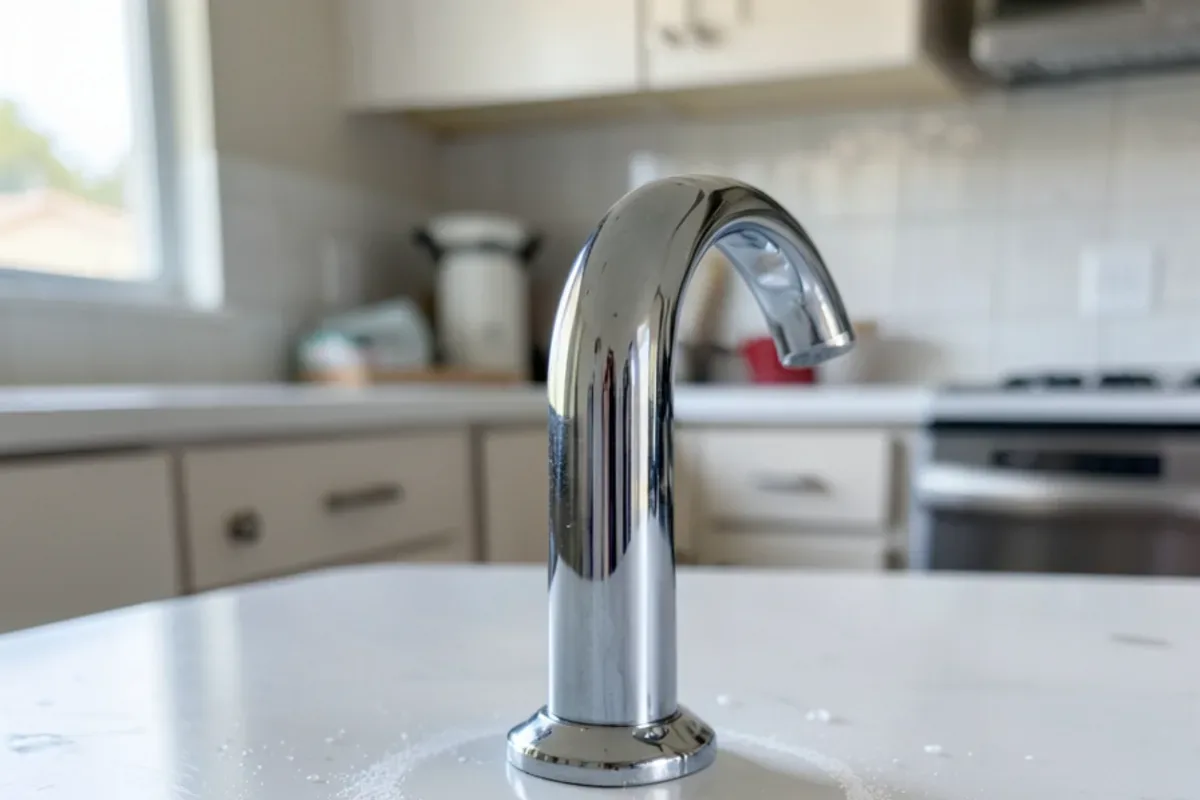
Much of Southern California’s imported water, especially Colorado River supply, is hard, and LADWP’s annual water quality report lists hardness by service area. Drips that evaporate around a faucet leave a white crust. The instinct is vinegar, which etches marble and strips sealer from granite. Use a hard-water remover labeled safe for natural stone, or soften the deposit with a damp cloth and lift it with a plastic scraper, then dry the area after each use.
Too much sealer
Applying a second coat over an un-wiped first coat, or resealing dense stone that cannot absorb more, leaves a streaky film that grabs fingerprints. It is removed with a solvent or stripper recommended by the sealer maker, not with more sealer.
Not knowing what was used at installation
Many fabricators seal natural stone when they install it. Ask which product went on, so a later application is compatible, and follow its label for cure time before heavy use.
Caring for stone in older, larger homes
Natural stone has a long history in the area’s established homes. In Beverly Hills, marble kitchens and baths are common in both remodeled estates and newer builds, and polished marble shows every etch under strong daylight. In San Marino, larger older homes may still have original marble in bathrooms that has been resealed many times; buildup of old sealer and wax can make stone look cloudy, and stripping it is a job for a stone care specialist.
Choosing and protecting your next stone counter
See how different stones look and behave on the granite countertops and marble countertops pages, and compare them with quartz in our quartz vs. granite guide. Bring a cabinet door and try a sample before you commit.
Quick answers
How often should granite countertops be resealed?
Reseal when the water test shows the stone absorbing, not on a fixed schedule. Some lighter granites need it about once a year near the sink and cooktop, while many dark, dense granites go several years or never need it. Testing the busiest spots every few months is the reliable way to know, especially after heavy cooking seasons.
Can I use vinegar to clean marble?
No. Vinegar is an acid, and marble’s calcite reacts with it, leaving dull etch marks even on sealed stone. Use warm water with a little mild dish soap or a pH-neutral stone cleaner instead. The same caution applies to lemon-based sprays and many bathroom cleaners, so read the label before using any product on a marble vanity or counter.
What is a poultice and when should I use one?
A poultice is a paste of absorbent powder and a chemical agent that you spread over a stain, cover and let dry so it pulls the stain out of the stone. It works for oil, grease, some organic and some rust stains in granite and marble. Match the chemical to the stain type, and reseal once the stain is gone.
Is honed marble easier to live with than polished?
For most kitchens, yes. Honed marble has a matte surface, so light etches and fine scratches blend in rather than showing as dull spots on a mirror finish. It can show oil stains a little more readily, so keep it well sealed. Polished marble resists staining slightly better but makes every acid mark visible in strong light.
Does hard water damage granite or marble countertops?
Hard water does not harm the stone itself, but the white mineral rings it leaves are often cleaned the wrong way. Vinegar and acidic descalers etch marble and wear sealer off granite. In Los Angeles, where much of the supply is hard imported water, wipe the faucet area dry daily and use a stone-safe hard-water remover for buildup that has already formed.
Sources
- Natural Stone Institute — Industry care and maintenance guidance for granite and marble
- Use Natural Stone (Natural Stone Institute consumer site) — Homeowner care, sealing and cleaning advice
- LADWP Drinking Water Quality Report — Annual report listing hardness and minerals by service area
About this guide
Written by the team at Adcom Kitchen & Flooring, a kitchen cabinet, countertop, tile and flooring showroom at 13259 Sherman Way in North Hollywood. Rules and figures from outside sources are attributed; confirm current requirements with your building department or the agency named.
Related services
Service areas
More on this topic: Countertops
Talk to the showroom before you buy
Call with your measurements and photos, or stop by Sherman Way to compare cabinets, counters, tile and flooring side by side.
Adcom Kitchen & Flooring · 13259 Sherman Way, North Hollywood, CA 91605 · Get directions · Showroom hours
- Showroom at 13259 Sherman Way, North Hollywood
- 20 Google reviews
- BBB rating A+
- Cabinets, counters, tile & floors in one place