
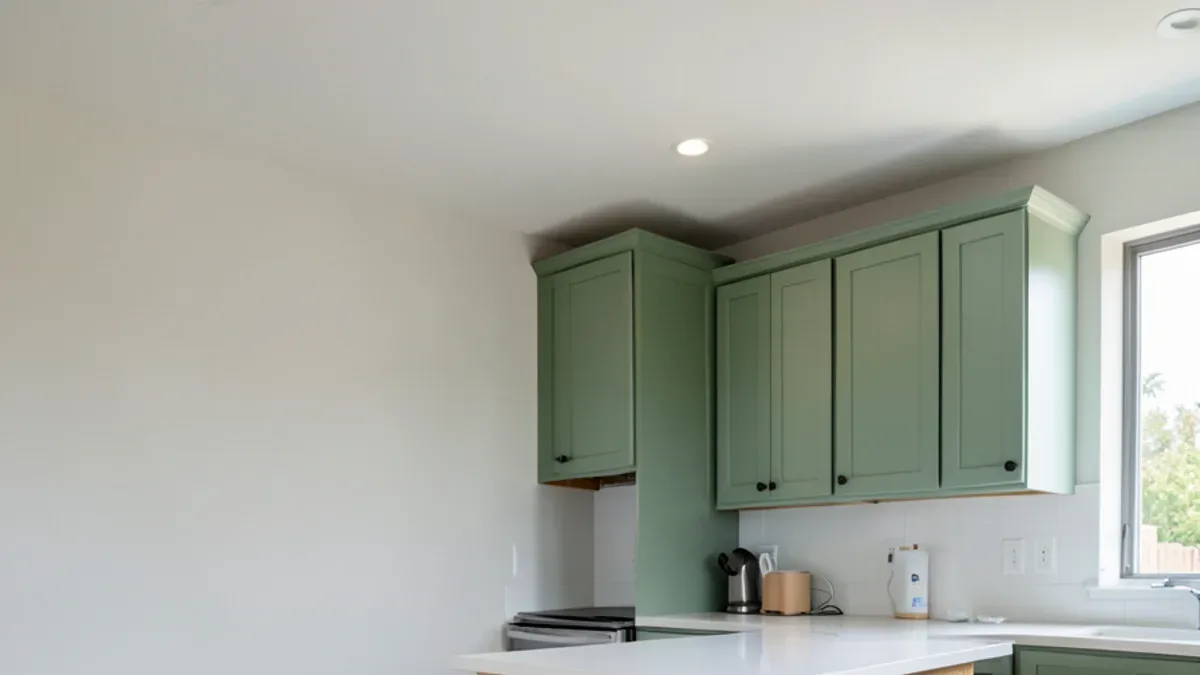
What actually separates a painted finish from a stained one?
A stain is a colorant that soaks into the wood and is sealed under a clear topcoat, so you are looking at the grain through the color. Paint is an opaque layer that sits on the surface and hides the grain completely. That one difference drives almost everything else: how damage shows, how repairs blend and which woods make sense.
| Finish | How it looks | How wear shows | Touch-ups | Good match |
|---|---|---|---|---|
| Painted | Solid, uniform color; grain hidden | Chips at edges, hairline lines at door joints | Small chips fill with matching touch-up paint, but sheen can differ | Maple or MDF doors, Shaker and slab styles |
| Stained | Grain visible; tone from honey to espresso | Scratches blend into the grain pattern | Touch-up markers and fill sticks hide most nicks | Oak, hickory, cherry, maple |
| Thermofoil | Smooth vinyl skin over MDF, painted look | Edges can lift if overheated | Hard to repair; a damaged door is usually replaced | Budget kitchens, rentals, laundry rooms |
Thermofoil earns a place in the comparison because it gives the painted look for less money. It wipes clean easily, but a self-cleaning oven or a toaster pushed against an end panel can soften the glue and lift the skin, so ask about heat shields if a thermofoil door will sit beside an oven.
Want to see the options in person?
The Sherman Way showroom has cabinets, counters, tile and flooring on display side by side. Call before you come and say what you're working on.
- Showroom at 13259 Sherman Way, North Hollywood
- 20 Google reviews
- BBB rating A+
- Cabinets, counters, tile & floors in one place
Which wood species take paint, and which look best stained?
- Maple has a tight, quiet grain, so it takes paint smoothly and also stains evenly in lighter tones. Dark stains can look blotchy on maple unless the finisher uses a conditioner or toner.
- Cherry is almost always stained or left natural. It deepens toward a reddish brown with sunlight, which is part of the appeal and a reason to keep sample doors out of a sunny window when you compare.
- Oak has open, pronounced grain. Under paint that texture still telegraphs through, which some people like and others don’t; under stain it reads warm and traditional.
- Hickory shows the strongest color variation, from cream to dark brown in one door. It is chosen for a rustic look and is rarely painted.
- MDF is not a wood species, but it is the usual core for painted slab and Shaker doors because it stays flat and shows no grain.
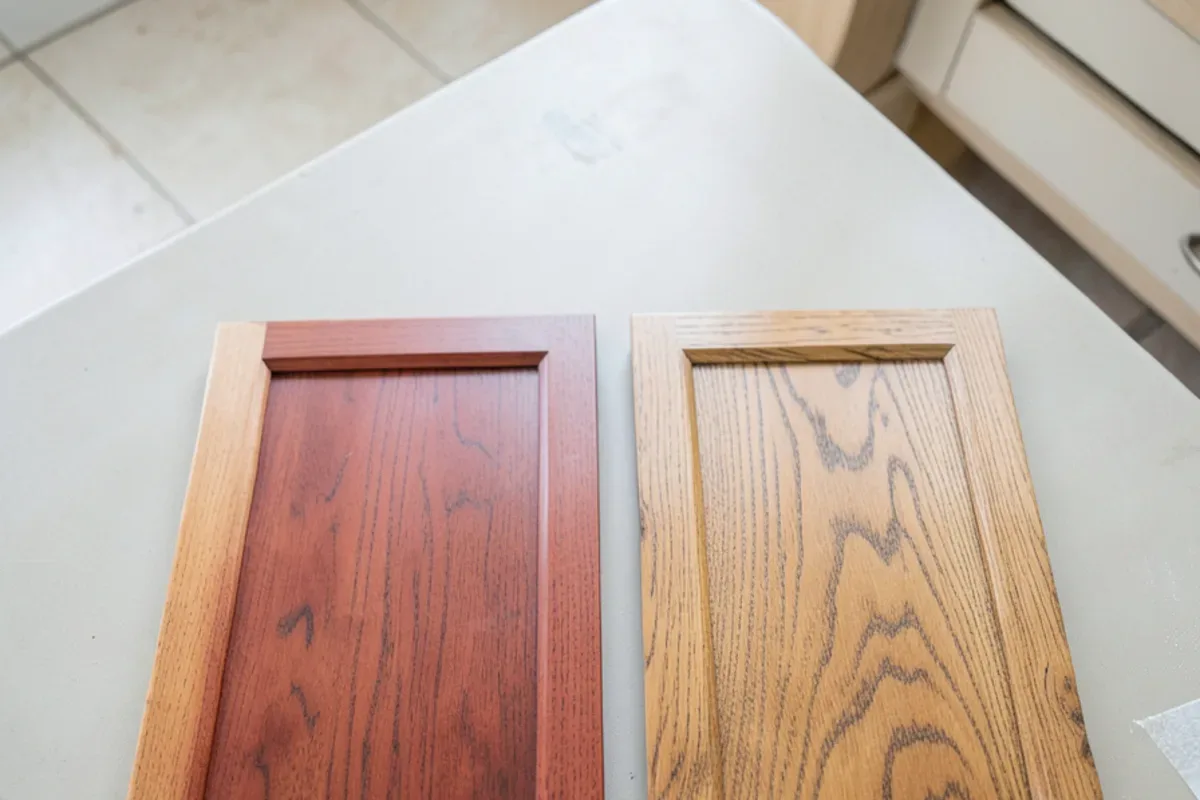
Why do painted doors show hairline cracks at the corners?
A five-piece door is made of four frame parts around a center panel. Solid wood swells and shrinks across its grain as humidity changes, and the San Fernando Valley swings from mild, damp winter days to very dry summer heat and Santa Ana wind events. The USDA Forest Products Laboratory documents this kind of movement in its wood research. Under stain the moving joint is invisible. Under paint a thin line can appear where the rail meets the stile.
That line is a normal characteristic of painted solid-wood doors, not a defect, but it bothers some owners. If it would bother you, consider an MDF center panel, a slab door, or a stained finish. Keeping the kitchen out of the direct blast of a heater or swamp cooler helps too.
Notes from the cabinet door wall
The fastest way to settle the paint-or-stain question is to stand in front of both at once. On our showroom floor the maple, cherry, oak and hickory doors hang near the thermofoil and painted samples, and a few habits help people decide in one visit.
- Run a fingernail lightly along the edge of a painted door and a stained one. That is roughly the contact a belt buckle, a vacuum or a dog’s paw makes, and you can judge which finish hides it better.
- Carry the door to a window. Warm whites can turn creamy and grays can turn blue in strong afternoon sun, while a mid-tone stain changes less.
- Lay the door on a countertop sample and a floor plank. A busy granite with a busy hickory door can fight; a quiet quartz often calms a strong grain.
- Look at the inside of the door and the box edge. Some lines finish the interior to match, and some leave it natural.
Painted vs stained cabinets in older Los Angeles houses
Period homes often point the way. A Craftsman bungalow in South Pasadena tends to look right with stained oak or cherry and a simple flat panel, echoing the original built-ins. Spanish Revival kitchens in Glendale carry painted cabinets well, especially in creamy whites or deep greens against terracotta or patterned tile. Postwar ranch houses across the Valley can go either way, so the floor and counter choice usually decides it.
Mixing is common too: painted perimeter cabinets with a stained island, or stained lowers with painted uppers. A two-finish kitchen works best when one finish clearly leads and the other covers a smaller area.
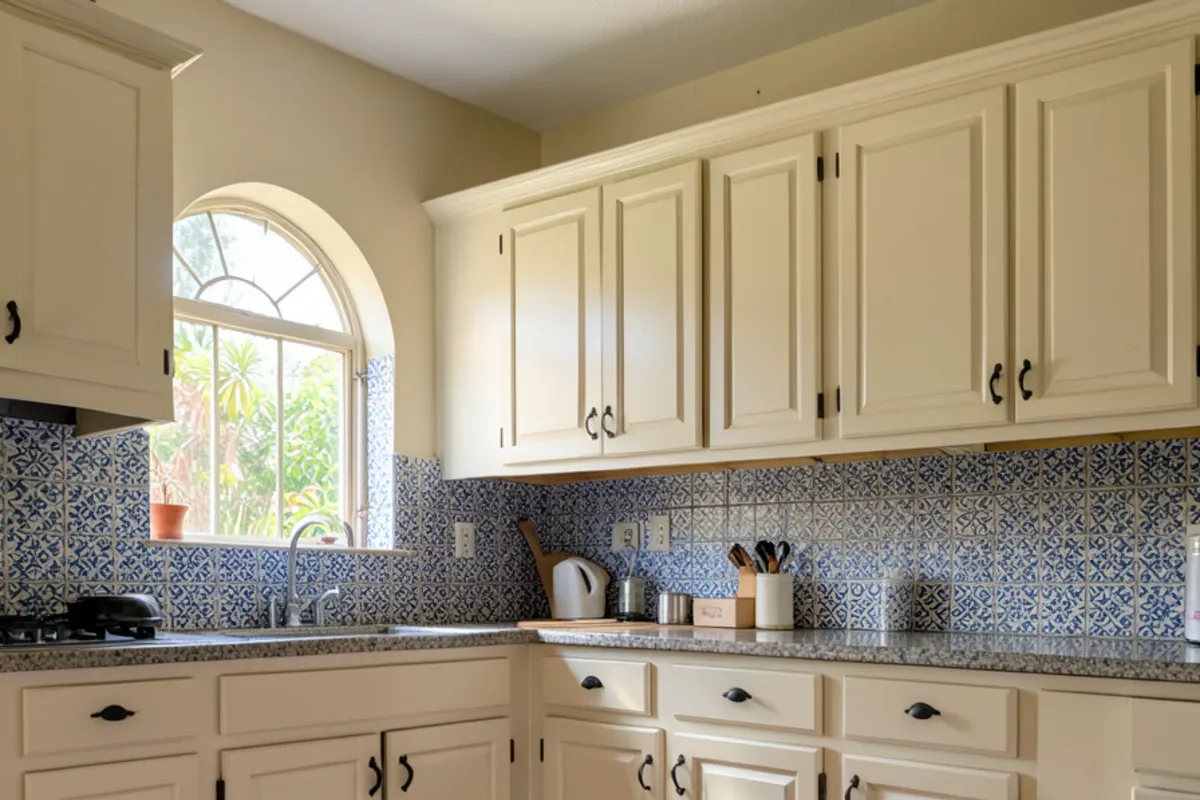
Does a factory finish outlast paint applied in the kitchen?
Usually, yes, and the reason has little to do with color. Factory finishes are sprayed in a controlled booth and cured before the doors ship, often with catalyzed coatings that harden chemically. Paint applied in your kitchen, whether on new raw doors or over old cabinets, has to cure in the room, in whatever dust, temperature and humidity the house has that week.
| Factor | Factory-applied finish | Site-applied paint |
|---|---|---|
| Typical coating | Catalyzed lacquer or conversion varnish, cured before delivery | Waterborne enamel or alkyd-type cabinet paint |
| Hardness on install day | Fully cured | Dry to the touch, still curing for weeks |
| Surface quality | Even spray, no brush marks | Depends on prep, spraying setup and dust control |
| Best use | New cabinets and replacement doors | Updating sound existing cabinets in a new color |
| Watch for | Matching touch-ups later; keep the kit | Chips on doors handled before the paint has cured |
If you are keeping existing cabinets and changing their color, cabinet refinishing covers how that work is prepared. Either way, go easy on newly painted doors for the first few weeks: no adhesive hooks, no harsh cleaners and gentle closing.
Which sheen suits a working kitchen?
- Matte or flat: modern and soft, but marks and burnishes where hands touch it most.
- Satin: the common middle ground; wipes clean and hides small imperfections in the door surface.
- Semi-gloss or gloss: the toughest to scrub, but every dent and brush mark catches the light, especially under under-cabinet LEDs.
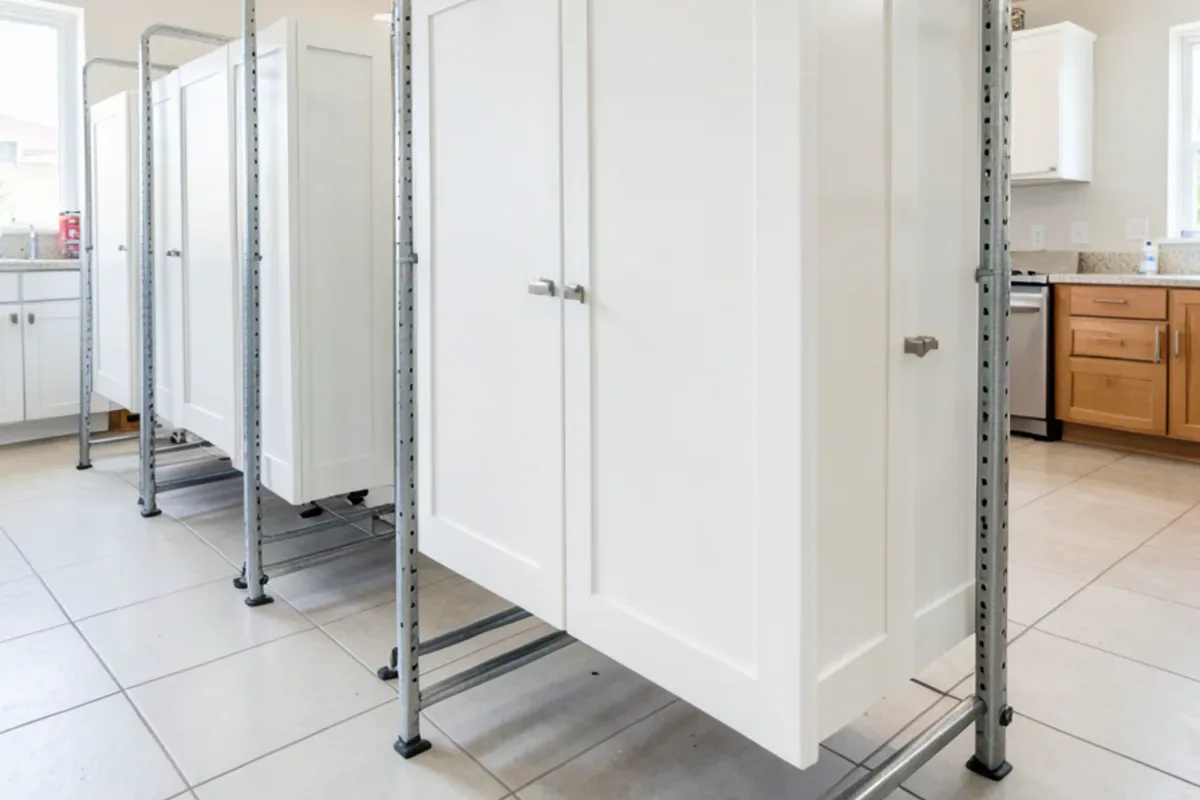
How should each finish be cleaned and maintained?
Both finishes want the same basics: a soft cloth, warm water with a drop of dish soap, and drying right away. Skip abrasive pads, ammonia and oil soaps that leave residue on the topcoat. Painted doors near the trash pull-out and sink base take the most touching, so keep the matching touch-up kit the cabinet line supplies. Stained doors benefit from a quick look each year at the sink base and dishwasher sides, where steam and drips dull the clear coat first.
Choosing the finish first, then the door
Settle the finish before you fall for a door profile, because some profiles look better painted and others only make sense stained. Our guide to cabinet door styles and finishes walks through each option, and the Shaker cabinets page covers the door style that suits both paint and stain. When you are ready to compare them in person, the full range of kitchen cabinets is on display in North Hollywood next to counters, tile and flooring.
Quick answers
Do painted cabinets chip more easily than stained ones?
Painted cabinets don’t chip more often, but the chips are easier to see because the bright color sits over a different-colored substrate. A nick in a stained door usually blends into the grain. In busy kitchens, paint holds up best on MDF or maple doors with a factory-applied, cured finish rather than a brush-on coat applied on site.
Can stained cabinets be painted later?
Yes, stained cabinets can be painted later if the boxes are sound, though the prep matters more than the paint. The old clear coat needs cleaning, scuff sanding and a bonding primer, and open-grain oak may need grain filler for a smooth look. In pre-1978 homes, ask how any older coatings will be tested before sanding begins.
Is a white painted kitchen hard to keep clean?
A white painted kitchen is not hard to clean, but it shows smudges sooner. Most factory paint finishes wipe clean with mild soap and water. The real wear spots are the doors under the sink, beside the range and around the trash pull-out, so a slightly off-white or a satin sheen hides fingerprints better than a bright gloss.
Which cabinet finish handles a sunny Valley kitchen best?
A mid-tone stain on oak or maple usually handles strong Valley sun best, because gradual color change is less noticeable than on cherry or a bright white. Cherry darkens noticeably, and some painted whites can yellow slightly over years of direct light. Window film or blinds on west-facing glass slow the change for any finish.
Sources
- USDA Forest Products Laboratory — Research on wood moisture and dimensional movement (Wood Handbook)
- EPA Renovation, Repair and Painting Program — Lead-safe work rules for pre-1978 homes
- Kitchen Cabinet Manufacturers Association — Industry performance standards for cabinet finishes
About this guide
Written by the team at Adcom Kitchen & Flooring, a kitchen cabinet, countertop, tile and flooring showroom at 13259 Sherman Way in North Hollywood. Rules and figures from outside sources are attributed; confirm current requirements with your building department or the agency named.
Related services
Service areas
More on this topic: Kitchen Cabinets
Talk to the showroom before you buy
Call with your measurements and photos, or stop by Sherman Way to compare cabinets, counters, tile and flooring side by side.
Adcom Kitchen & Flooring · 13259 Sherman Way, North Hollywood, CA 91605 · Get directions · Showroom hours
- Showroom at 13259 Sherman Way, North Hollywood
- 20 Google reviews
- BBB rating A+
- Cabinets, counters, tile & floors in one place