
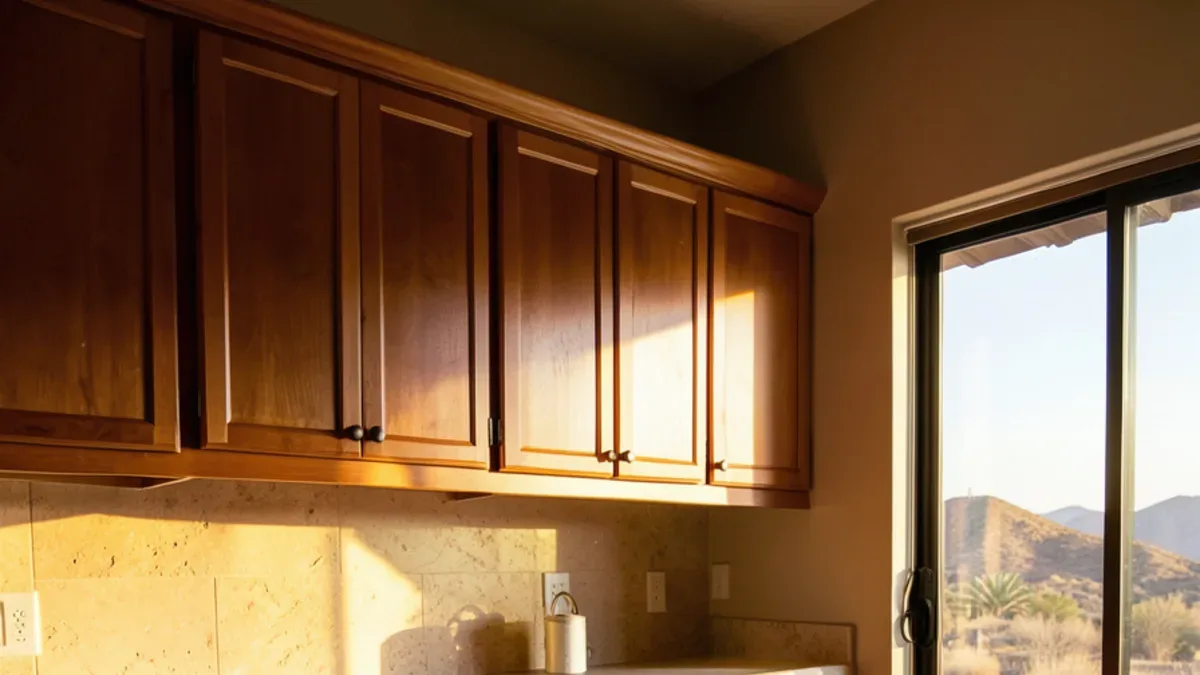
What does dry heat actually do to wood cabinets?
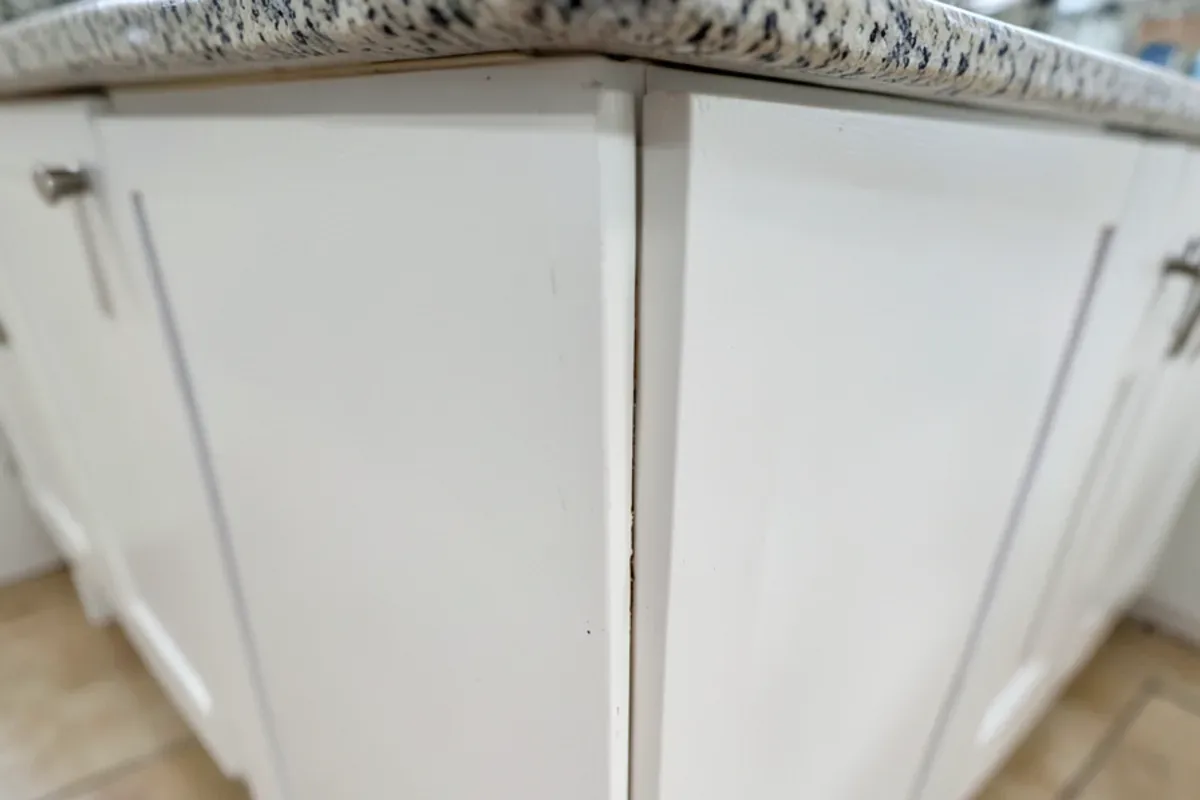
Wood takes on and gives up moisture until it matches the air around it. When relative humidity drops sharply, as it does during Santa Ana events that the National Weather Service in Los Angeles warns about each fall and winter, solid-wood parts shrink across the grain. A center panel can pull back and show a thin unfinished strip at its edge. Painted frame joints can open a hairline. A tall pantry door may bow slightly and stop meeting the box evenly.
The opposite happens in the damp weeks of winter, when the same parts swell a little. Most of this movement is normal and reversible. Damage starts when the swing is extreme or fast, for example when a heater blows straight at a run of doors or a west window bakes one end panel every afternoon.
Want to see the options in person?
The Sherman Way showroom has cabinets, counters, tile and flooring on display side by side. Call before you come and say what you're working on.
- Showroom at 13259 Sherman Way, North Hollywood
- 20 Google reviews
- BBB rating A+
- Cabinets, counters, tile & floors in one place
A seasonal kitchen cabinet care routine
| Season | What tends to happen | What to do |
|---|---|---|
| Late spring | First hot spell; doors start to shrink | Check hinge screws and drawer fronts; tighten anything loose |
| Summer | Steady dry heat, strong sun on west walls | Close blinds on afternoon windows; keep cooler vents off the doors |
| Fall wind season | Very low humidity for days at a time | Keep space heaters away from cabinets and look for new panel gaps |
| Winter | Damper air, boiling pots, more cooking steam | Use the hood while cooking; wipe condensation off upper doors |
| Any time | Leaks at the sink and dishwasher | Look under the sink monthly; replace swollen supply lines early |
Many cabinet makers list an indoor humidity range in their care instructions, and keeping close to it matters more than any polish. If your home runs very dry, a small room humidifier on the worst wind days is a reasonable step, as long as it isn’t aimed at the cabinets.
Which cleaners are safe on cabinet finishes?
- Use a soft microfiber cloth with warm water and a small amount of dish soap, then dry immediately.
- Degrease the doors near the range every few weeks; cooking film traps dust and makes a finish look dull.
- Avoid ammonia, bleach, abrasive pads and magic-eraser style sponges, which cut through clear coats and paint sheen.
- Skip oil soaps and spray polishes with silicone; they build a sticky layer and can interfere with later refinishing.
- Wipe drips down the sink base and dishwasher sides the same day, before water reaches the raw edge of the box.
Why do the sink base and dishwasher side fail first?
Dry air shrinks cabinets, but water destroys them. The sink base sees slow leaks from supply lines, faucet seals and garbage disposal connections, and a particleboard bottom can swell and crumble before anyone notices. The panel beside a dishwasher gets a puff of steam every time the door opens mid-cycle. The EPA’s guidance on mold is blunt about the fix: dry wet materials within 24 to 48 hours and stop the source.
- Put a waterproof mat or tray on the sink base floor so a drip stays visible.
- Let the dishwasher finish its dry cycle before opening it, or open it fully so steam clears above the counters.
- Check the caulk line where the countertop meets the sink; a gap lets water run down inside the box.
- If a box bottom has already swollen, plan on replacing that box rather than painting over it.
How should new cabinets be treated in their first year?
New cabinets settle into a house over their first full cycle of seasons, and the habits of that first year decide how they look in the tenth. A short list for a newly installed kitchen in a dry inland home:
Store the cartons somewhere conditioned if you can
In a Valley summer, a closed garage gets far hotter and drier than the kitchen. A spare room keeps the wood closer to the conditions it will live in.
Let the finish finish curing
Factory finishes arrive cured, but site-applied paint and touch-ups keep hardening for weeks. Hold off on adhesive hooks and harsh cleaners.
Check hinges and drawer fronts after the first hot spell
Small drift is normal as the wood adjusts. A quarter turn on the hinge screws usually brings doors back into line.
Keep the touch-up kit and the order details
Write down the cabinet line, door style and finish name. A replacement door years from now is far easier to match with that record.
Watch the sink base closely
New plumbing connections are most likely to weep in the first weeks. A look under the sink every few days at first catches a drip early.
What the refinishing counter teaches about wear
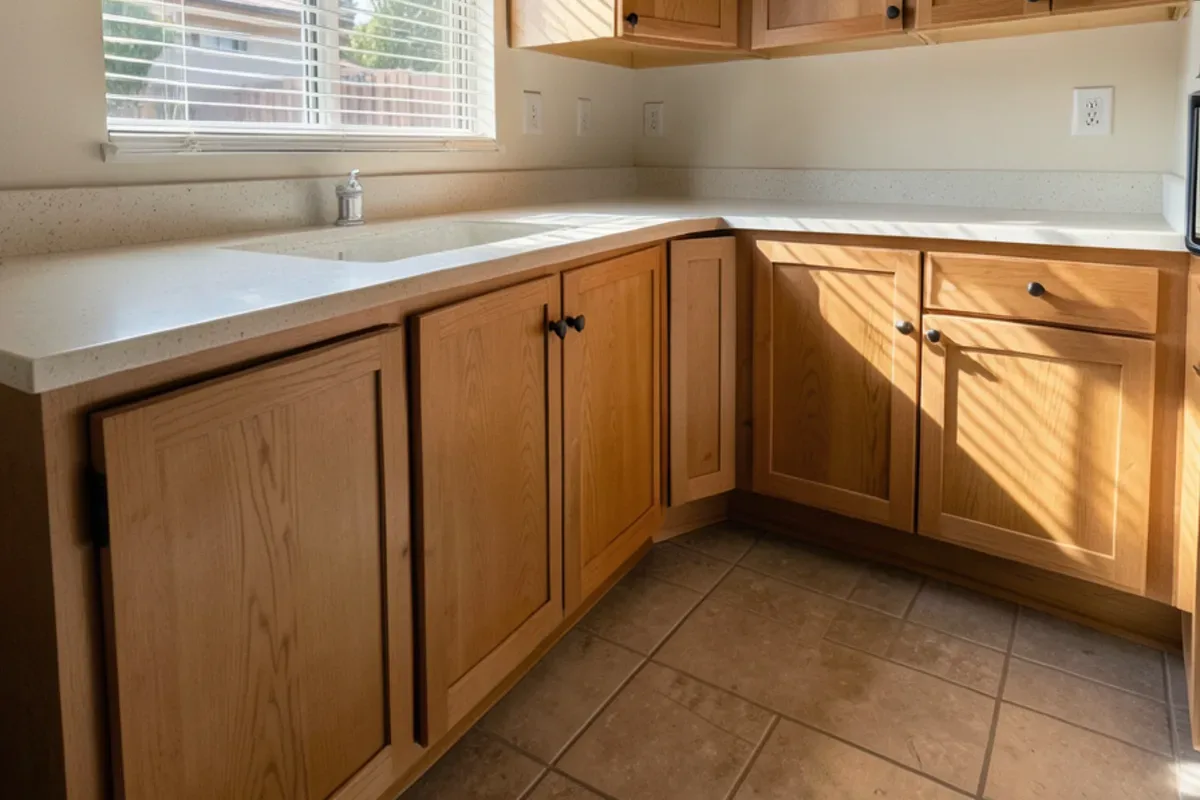
When people ask our team about refreshing cabinets, the same wear patterns come up. The doors on either side of the range are usually dulled by grease and heat, while the rest of the kitchen still looks fine. Thermofoil end panels next to wall ovens lift at the edges. Painted doors under the sink get chipped by trash pull-outs and cleaning buckets. Stained oak kitchens from earlier decades tend to look orange because the clear coat has ambered with sun.
The useful takeaway is that wear is local. Before you replace a whole kitchen, look at which doors are actually damaged. Sometimes a handful of new doors, a heat shield beside the oven or a refinished set of lowers solves the problem, and the boxes stay.
Small fixes that buy cabinets years
Most of the damage that brings people back to the cabinet aisle is preventable with inexpensive parts. The ones worth adding to any kitchen:
- Soft bumper pads inside each door, so doors do not slam against the face frame and crack paint at the corners.
- Drawer and shelf liners in the sink base and under the dish rack area, to keep drips off raw edges.
- Braided supply lines under the sink, replaced on the plumber’s recommended schedule rather than after they fail.
- Heat shields on cabinets beside a wall oven or range, especially thermofoil or painted ones.
- A water sensor on the sink base floor that alarms at the first drop.
Kitchen cabinet care in hotter inland valleys
Homes farther inland usually face bigger temperature swings than the basin. In Santa Clarita, summer afternoons are long, hot and dry, and newer tract kitchens often have a big west-facing slider near the cabinets. In Simi Valley, the same dry heat meets houses that may sit closed up all day while owners commute. Both situations favor blinds on afternoon glass, an HVAC setting that avoids big swings, and finishes and door styles that tolerate movement, such as slab doors or MDF-panel Shaker doors.
When care isn’t enough: refinishing or new cabinets
If the boxes are solid and square but the finish is tired, cabinet refinishing can restore the color and topcoat without a tear-out. If boxes are swollen, delaminated or out of square, it is time to look at new kitchen cabinets, ideally chosen next to the countertop and floor they will live with. For sound boxes with dated faces, cabinet refacing sits in between.
Quick answers
Should I run a humidifier to protect wood cabinets?
A humidifier can help on the driest days, but it is rarely needed year-round in the Valley. Use a small unit in the kitchen or nearby room during Santa Ana wind events, keep it a few feet from the cabinets, and turn it off when the weather breaks. Steadier humidity reduces gaps at door panels and hairline lines at painted joints.
How often should cabinet hinges be adjusted?
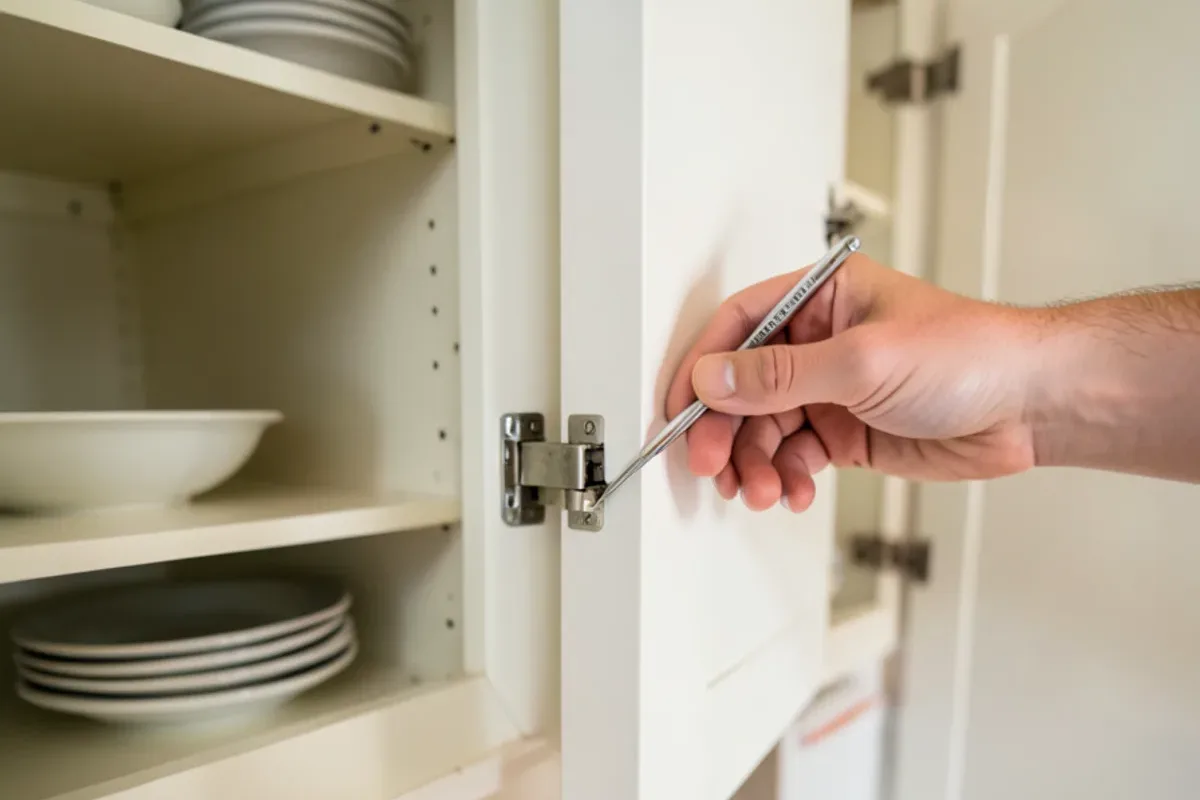
Most kitchens need a hinge check about twice a year, usually after the first hot spell and again in winter. Concealed hinges have adjustment screws for side, height and depth; a quarter turn often realigns a drifting door. If a screw spins without tightening, the hole is stripped and needs a dowel or a slightly larger screw.
Can a dull cabinet finish be revived without refinishing?
Often it can. Much of what looks like a worn finish is cooking grease and dust bonded to the surface. A thorough degreasing with a mild cleaner made for cabinets, followed by drying, can bring the sheen back. If the color itself has faded or the clear coat is worn through to bare wood, refinishing is the real fix.
Why is the cabinet panel next to my oven peeling?
Peeling beside an oven is usually heat damage to a thermofoil or laminate skin. Self-cleaning cycles and poorly vented wall ovens soften the adhesive, and the vinyl lifts at the edges. Replacing that panel or door and adding a heat shield, which many cabinet lines offer for oven cabinets, keeps it from happening again.
Sources
- National Weather Service Los Angeles/Oxnard — Forecasts and advisories for Santa Ana wind and low humidity events
- USDA Forest Products Laboratory — Wood moisture content and shrinkage research
- EPA: Mold — Guidance on drying water-damaged materials
About this guide
Written by the team at Adcom Kitchen & Flooring, a kitchen cabinet, countertop, tile and flooring showroom at 13259 Sherman Way in North Hollywood. Rules and figures from outside sources are attributed; confirm current requirements with your building department or the agency named.
Related services
Service areas
More on this topic: Kitchen Cabinets
Talk to the showroom before you buy
Call with your measurements and photos, or stop by Sherman Way to compare cabinets, counters, tile and flooring side by side.
Adcom Kitchen & Flooring · 13259 Sherman Way, North Hollywood, CA 91605 · Get directions · Showroom hours
- Showroom at 13259 Sherman Way, North Hollywood
- 20 Google reviews
- BBB rating A+
- Cabinets, counters, tile & floors in one place