
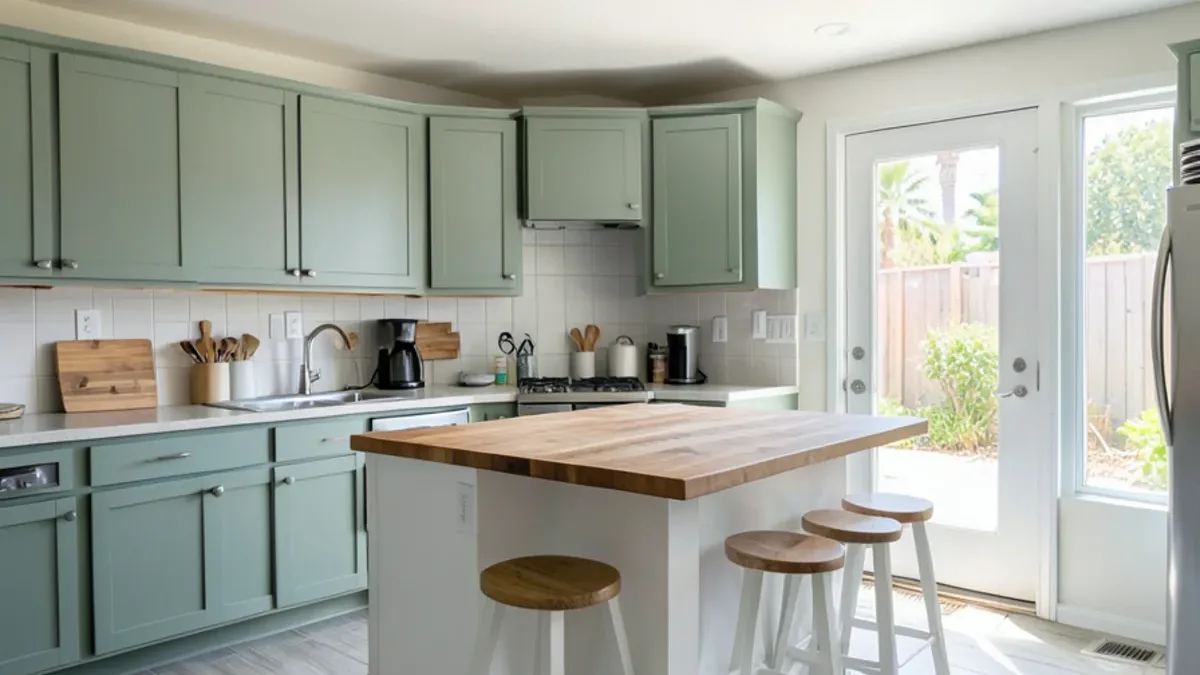
What should a kitchen floor be good at?
A kitchen floor gets more abuse than any other room. Before comparing materials, rank what matters in your house:
- Water and spills: dishwashers, ice makers and sinks all leak eventually, often slowly.
- Drops and impacts: cast-iron pans, cans and glass bottles fall.
- Traffic and grit: the kitchen is often the path from the garage or yard.
- Comfort: people stand at the counter for an hour at a time.
- Slip resistance: wet floors and socks are a common combination with kids or older relatives.
- Looks over time: the floor should still look right in ten years, ideally flowing into adjoining rooms.
Want to see the options in person?
The Sherman Way showroom has cabinets, counters, tile and flooring on display side by side. Call before you come and say what you're working on.
- Showroom at 13259 Sherman Way, North Hollywood
- 20 Google reviews
- BBB rating A+
- Cabinets, counters, tile & floors in one place
Best kitchen flooring options, rated
| Material | Spills and leaks | Drops and dents | Comfort and sound | Upkeep |
|---|---|---|---|---|
| Porcelain tile | Excellent; seal cement grout | Very good, though a dropped glass will break | Hard and cool; can be loud | Low |
| Waterproof vinyl plank | Excellent at the surface | Good; heavy points can dent | Warm, soft, quiet | Low |
| Laminate | Fair to good; depends on the line | Very good scratch resistance | Firm; needs a good pad | Low, but keep it dry |
| Engineered or solid hardwood | Fair; wipe spills fast | Dents and scratches show | Warm and comfortable | Moderate; periodic recoat |
| Natural stone tile | Good when sealed | Hard; some stones chip or etch | Hard and cool | Higher; reseal and avoid acids on marble |
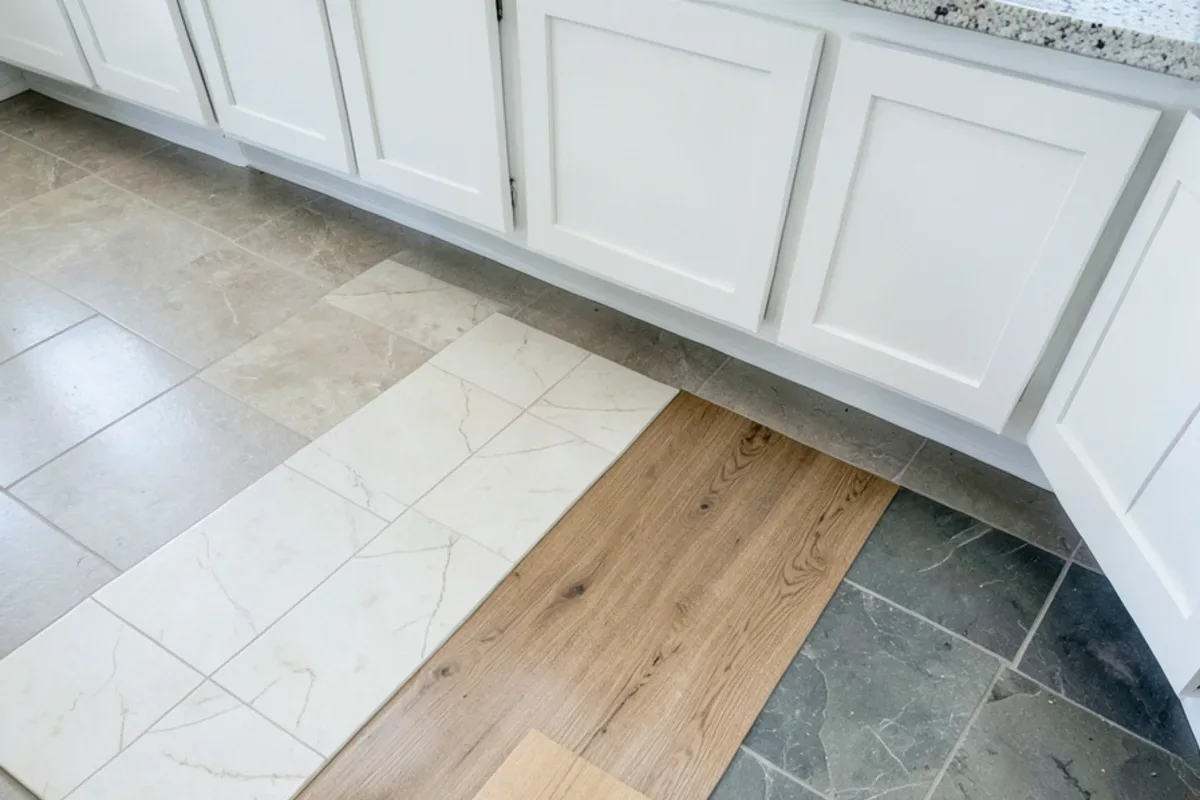
How does each material hold up in a real kitchen?
Porcelain and ceramic tile
Porcelain is dense and absorbs almost no water, and wood-look and stone-look planks mean you are no longer limited to 12-inch squares. For kitchens, ask about the tile’s wet dynamic coefficient of friction (DCOF); the American standard for tile sets a minimum value for level interior spaces expected to be walked on when wet. Pick a grout color that hides kitchen dirt.
Waterproof vinyl
Rigid-core waterproof vinyl flooring is the practical favorite for families and rentals. It is softer underfoot than tile, quieter, and spills do not hurt the planks. Use wide furniture pads under stools and islands with legs, and do not let water sit at the edges where it could reach the subfloor.
Laminate
Laminate handles scratches from grit and pets better than most floors and looks convincingly like wood. Choose a line the manufacturer specifically rates for kitchens, and treat any leak as urgent.
Hardwood
Wood brings warmth and lets the kitchen flow into living areas, which is why it remains popular in open plans. A durable factory finish, mats at the sink and dishwasher, and quick cleanup make it workable. A leaking supply line left for a week will damage it.
Natural stone
Slate, limestone, travertine and marble look beautiful in period homes. They need sealing, and marble and limestone etch when lemon juice, vinegar or wine sit on them.
Which kitchen floor fits your household?
Ratings by material only go so far. The same porcelain floor that is perfect for one family is a daily annoyance for another, so it helps to start with who uses the kitchen and how.
| Household | Usually the best fit | Why | Watch for |
|---|---|---|---|
| Young kids | Waterproof vinyl plank | Spills don’t matter, dropped cups bounce, quieter play | Dents from high-chair and stool legs; use pads |
| Serious home cook | Porcelain tile with a mat at the range | Hot oil, dropped pans and daily mopping don’t faze it | Standing fatigue and broken glassware |
| Large dogs | Porcelain or textured laminate | Claws barely mark them | Water bowls on laminate seams |
| Older relatives at home | Matte vinyl or a textured tile | Grip when wet; vinyl is softer if someone falls | Rugs and thresholds that catch feet |
| Rental or ADU | Rigid-core vinyl | Fast to replace a plank between tenants | Keep spare boxes from the same run |
| Open plan into living room | One material through both rooms | No transition strip in the middle of the space | Choose for the wettest room, not the driest |
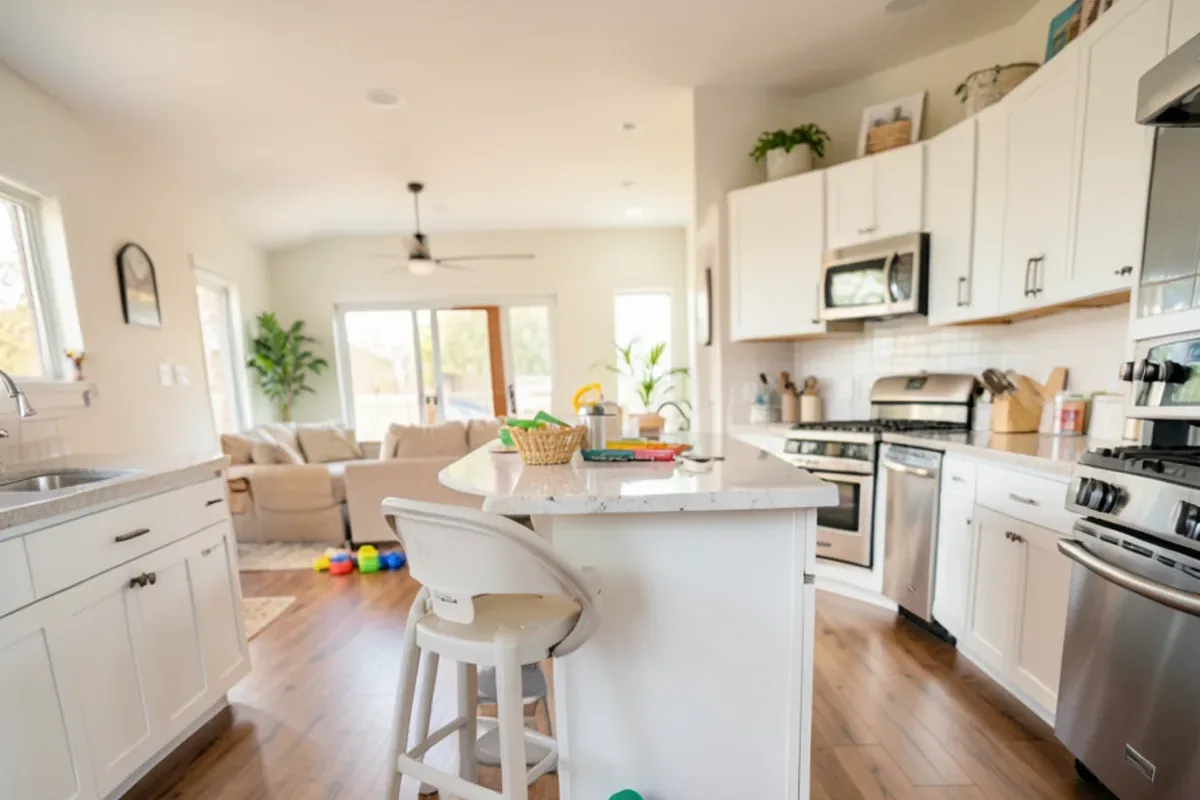
Should the floor go in before or after the cabinets?
In a full remodel this decision affects both cost and future flexibility. Running tile under the cabinets uses more material but makes it easy to change the layout later. Installing tile up to the cabinet base saves material, and it is the normal approach with floating floors, since floating vinyl and laminate generally should not be pinned under heavy cabinets and islands.
Either way, check the dishwasher opening. Adding a thick tile and mortar bed in front of an existing dishwasher can trap it under the counter. Measure the finished floor height before you order, and plan for the appliance to slide out over the new floor.
A sample test for your own kitchen
Seeing cabinet doors, countertops, backsplash tile and flooring in one showroom lets you build the whole kitchen palette in a single visit, rather than buying a floor that fights the counter. A simple sequence works well:
Start with the fixed pieces
If cabinets or a counter are staying, bring a door or a photo in daylight. If they are new, pick them first.
Narrow to two materials
Decide whether you are choosing between tile and vinyl, or vinyl and wood, before looking at colors.
Lay samples on the floor, not the counter
Floors read darker on the ground and at a distance than they do in your hand.
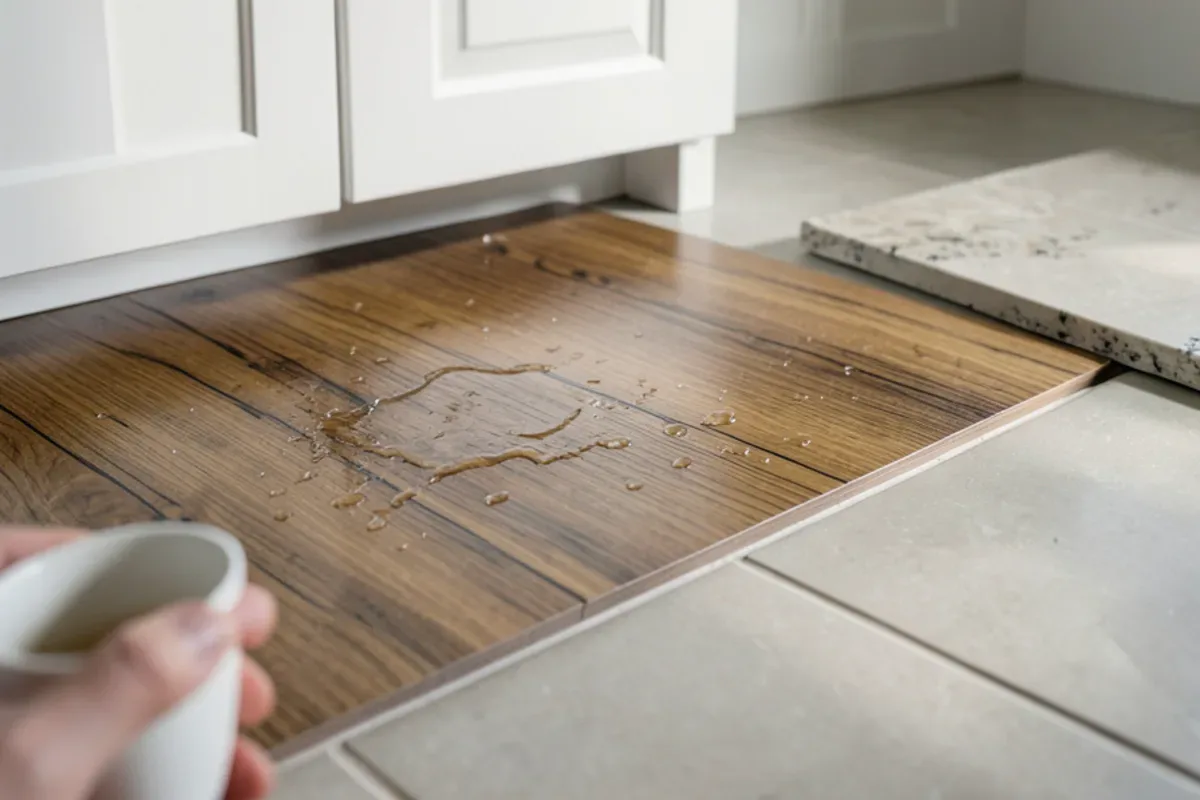
Try it wet
Splash a little water on the samples. You will see how slick each surface feels and how the color shifts.
Check the transitions
Look at how the kitchen floor will meet the next room, and whether one material can run through both.
Kitchen floor lessons from the flooring counter
People who replace a kitchen floor after only a few years rarely picked a bad product. They picked a good product without checking the conditions under and around it. A few minutes with this list before choosing saves most of those second purchases.
- Look inside the sink base for old water stains or soft wood. A past leak means the subfloor needs checking before anything new goes down.
- Find the refrigerator’s ice maker line. Thin plastic tubing is a common source of slow leaks; ask a plumber about a braided replacement while the fridge is out.
- Bounce on your heels in front of the sink on a raised floor. Movement there can crack tile grout and should be stiffened first.
- Note any door from the kitchen to the yard or pool. Wet feet and sprinkler overspray favor porcelain or vinyl over wood and laminate.
- Check whether the floor will run under the refrigerator and range, and how heavy appliances will be rolled back without denting it.
- Decide on mats now. A cushioned mat at the sink and range matters most on tile, and the backing must suit the floor.
One more honest note: “waterproof” describes the vinyl plank, not the floor system. Water from a slow dishwasher leak can still run under the planks and sit on the subfloor unseen, so a leak sensor under the sink costs little next to replacing a floor.
Matching the floor to the house
House style matters as much as performance. In Pasadena Craftsman bungalows, a hexagon or small-format tile or a warm wood can suit the period better than a gray rigid-core plank. In the post-war slab tracts common across the San Fernando Valley and much of Los Angeles, long-plank tile or vinyl that runs through the kitchen and family room ties a once-divided floor plan together. Rentals and ADUs favor waterproof vinyl for easy turnover.
Choosing kitchen floors at Adcom
See the kitchen flooring options and the waterproof vinyl range next to cabinets and counters, and compare wood-look tile for a kitchen that has to survive kids, dogs and a pool. Installation of the flooring you choose is available on request.
Quick answers
Is tile or vinyl better for a kitchen with young kids?
Vinyl usually wins for young families. It is softer and quieter, dropped sippy cups and plates are less likely to break, and spills do not harm the planks. Tile is more durable over decades and handles heavy wear and pets brilliantly, but it is hard on dropped dishes and knees. Many families choose vinyl now and revisit tile when the kids are older.
Can I put an anti-fatigue mat on a vinyl kitchen floor?
Yes, but choose the backing carefully. Some rubber and latex backings can react with vinyl and leave a yellow stain over time. Look for mats labeled safe for vinyl floors, or use a mat with a non-staining backing, and lift it now and then so moisture does not stay trapped against the surface near the sink.
Does kitchen flooring need to match the rest of the house?
It does not have to match, but it should relate. In an open plan, one continuous floor usually looks best, so many homeowners choose a material that suits both the kitchen and the living room, such as plank tile or vinyl. In a closed kitchen with a doorway, a different floor is fine if its tone works with the adjoining room.
What grout color hides kitchen dirt best?
Mid-tone grays, warm taupes and colors close to the darker tones in the tile hide everyday kitchen dirt best. Bright white grout in a kitchen shows every coffee drip and needs frequent cleaning. If you prefer a light look, ask about stain-resistant grout formulas, which hold color better than standard cement grout in busy rooms.
Which kitchen flooring is easiest on your feet and back?
Vinyl plank, cork-backed products and wood are the most forgiving, because they have slight give underfoot. Porcelain and stone are hard, so people who stand for long stretches usually add cushioned mats at the sink and range. In Valley homes where the kitchen sits directly on a concrete slab, that difference is more noticeable than over a raised wood floor.
Sources
- Tile Council of North America (TCNA) — Tile standards, including wet slip resistance (DCOF) guidance
- Resilient Floor Covering Institute (RFCI) — Vinyl and resilient flooring care and installation information
- National Wood Flooring Association (NWFA) — Wood floors in kitchens and moisture guidance
- Los Angeles Department of Building and Safety (LADBS) — Permits for kitchen plumbing, gas and electrical changes in the City of Los Angeles
About this guide
Written by the team at Adcom Kitchen & Flooring, a kitchen cabinet, countertop, tile and flooring showroom at 13259 Sherman Way in North Hollywood. Rules and figures from outside sources are attributed; confirm current requirements with your building department or the agency named.
Related services
Service areas
More on this topic: Flooring
Talk to the showroom before you buy
Call with your measurements and photos, or stop by Sherman Way to compare cabinets, counters, tile and flooring side by side.
Adcom Kitchen & Flooring · 13259 Sherman Way, North Hollywood, CA 91605 · Get directions · Showroom hours
- Showroom at 13259 Sherman Way, North Hollywood
- 20 Google reviews
- BBB rating A+
- Cabinets, counters, tile & floors in one place